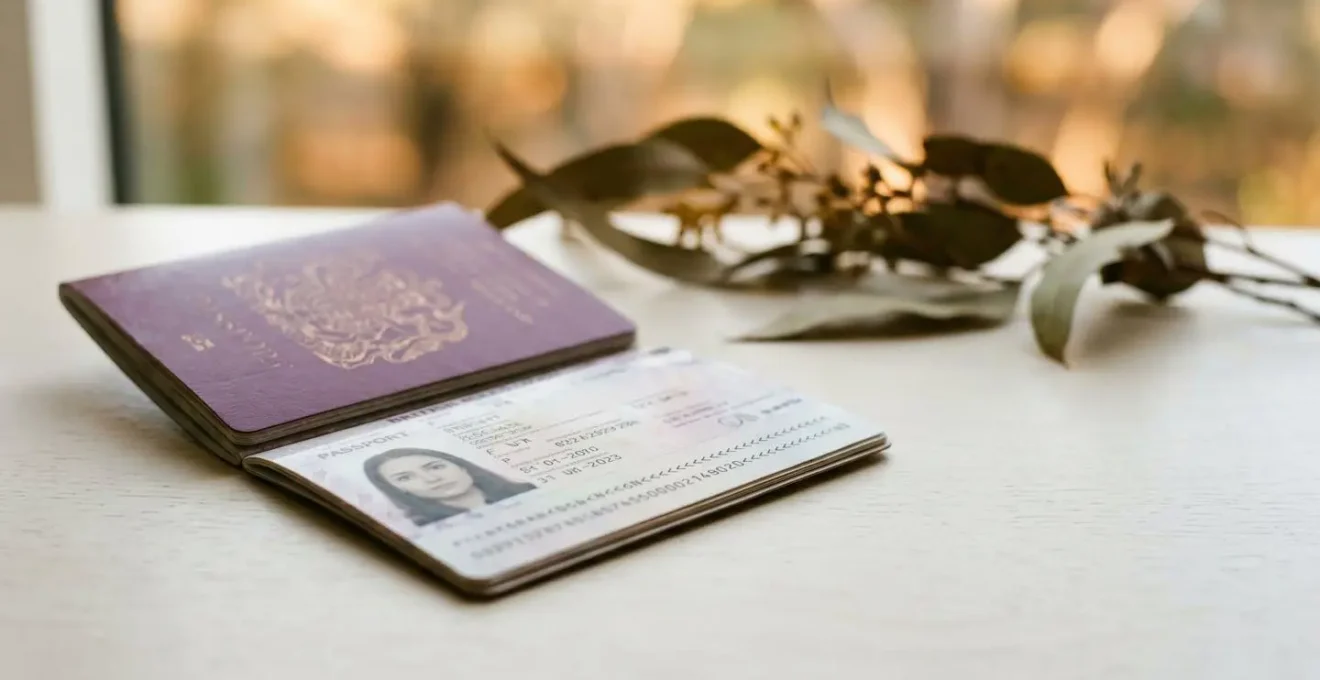
Contrary to the widespread travel myth, Australia does not require British citizens to have six months of validity on their passport for entry. However, your passport must be valid for the entire duration of your intended stay. The real, non-negotiable requirements are a valid passport for your trip and a mandatory, pre-approved eVisitor (subclass 651) visa, which is electronically checked by the airline before you can even board your flight.
The scene is a familiar one for any seasoned traveller: a long queue, the check-in desk finally in sight, and a sudden, cold wave of panic. Is my passport valid? That « six-month rule » you’ve heard about from friends and seen on internet forums suddenly echoes in your mind. For British citizens heading to Australia, this anxiety is common, but it’s largely misplaced. The fear isn’t just about a single rule; it’s about the entire ecosystem of regulations, from temporary documents to the condition of your passport photo.
Most advice simply points to dense government websites or offers the unhelpful suggestion to « just renew it to be safe. » This ignores the immediate question and the true mechanics of international travel. The key to a stress-free journey lies not in memorizing myths, but in understanding the digital systems that connect you, your airline, and the Australian border. The critical gatekeeper is not a calendar, but a real-time digital handshake that verifies your eligibility before you even leave the ground.
This guide acts as your diplomatic liaison, clarifying the specific rules that govern entry for UK citizens. We will dismantle the common myths and explain the actual systems at play, from the mandatory eVisitor visa and airline liability protocols to how Australian SmartGates scrutinise your identity. By understanding this process, you can replace panic with confident preparation.
To navigate this complex but clear-cut system, this article breaks down each potential point of failure, from the document in your hand to the visa on your record. The following sections will guide you through the official requirements and practical realities of travelling to Australia as a UK citizen.
Summary: Your Guide to Australian Entry Requirements for UK Citizens
- Emergency Travel Documents: Will Australia Accept a Cream Temporary Passport?
- Water Damaged Passport: Will a Smudged Photo Get You Denied Boarding?
- Child Passports: Why Do They Expire Faster Than Adult Ones?
- SmartGates: Why Does the Machine Reject Some Valid Passports?
- Onward Ticket: Do You Need a Return Flight to Enter on a One-Way Ticket?
- Criminal Records: Does a Drink Driving Charge Affect Your ETA?
- Why Is the eVisitor Visa (Subclass 651) Critical for UK Citizens?
- ETA Processing Delays: Why Is Your « Instant » Visa Taking 3 Days?
Emergency Travel Documents: Will Australia Accept a Cream Temporary Passport?
In a travel emergency, a British Emergency Travel Document (ETD) can feel like a lifeline, but for a holiday to Australia, it’s a non-starter. The core issue lies in its intended function and technology. ETDs are designed for one purpose: repatriation. They are issued for a pre-approved, one-way itinerary to get you back to the UK, not to start a new leisure trip. This is a critical distinction that airlines and immigration officials strictly enforce.
Technologically, the ETD lacks the sophisticated security features of a modern passport. It is a non-biometric document, meaning it does not contain the e-passport chip (RFID) that is fundamental to modern border control systems like Australia’s SmartGate. This absence automatically flags the document for high scrutiny. Airlines, operating under the IATA’s Timatic system, are acutely aware of this. They face significant financial penalties for transporting passengers who are ultimately denied entry—a concept known as inadmissible passenger liability. Consequently, a check-in agent will almost certainly deny boarding for a UK-to-Australia flight to a traveller presenting an ETD for a holiday, as it falls outside the document’s permitted use and fails the electronic verification standards.
Water Damaged Passport: Will a Smudged Photo Get You Denied Boarding?
When it comes to passport damage, « normal wear and tear » is acceptable, but any damage that compromises the document’s machine-readability is a critical failure. The physical booklet is secondary to its ability to communicate with border control systems. Water damage, a common culprit, is judged on its « materiality »—does it interfere with the two most important data zones?
The first is your photo. While a slightly faded image may be fine, any smudging, bubbling of the lamination, or distortion that prevents a clear visual match with your face can be interpreted as a sign of tampering. The second, and arguably more critical, zone is the Machine-Readable Zone (MRZ) at the bottom of the bio-data page. These two lines of text and chevrons contain your essential data. Any ink bleed, smudging, or physical damage here will cause the airline’s and airport’s scanners to fail, triggering an immediate red flag. Similarly, the embedded RFID chip is sensitive. Significant bending, flexing, or exposure to strong magnets can render it unreadable, leading to a system failure even if the passport looks perfect.
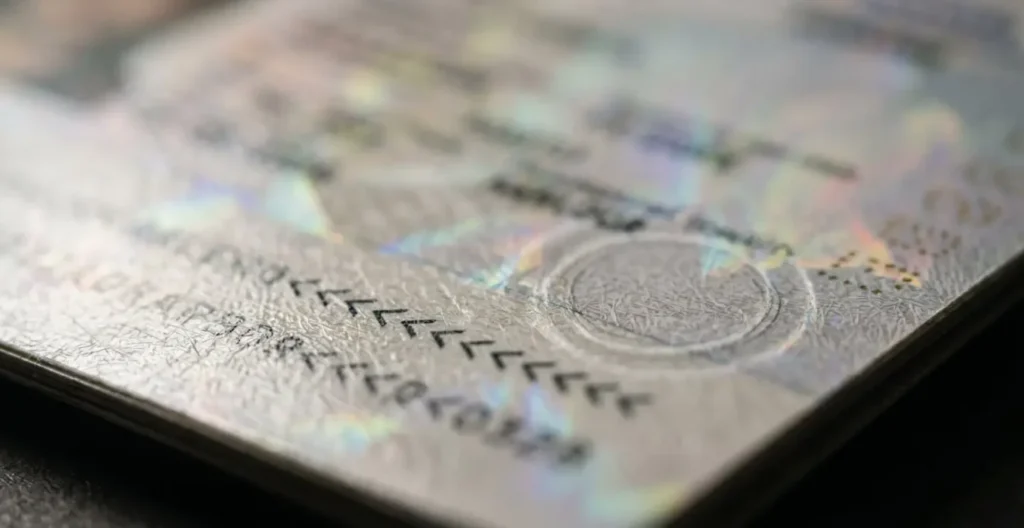
Because airlines are liable for passengers they transport, a check-in agent will err on the side of caution. If they cannot electronically validate your passport, they are trained to deny boarding rather than risk a fine at the destination. It’s not a personal judgment but a protocol-driven decision based on the system’s ability to read the document.
Action Plan: Passport Damage Self-Audit
- MRZ Integrity: Examine the two lines of text at the bottom of your photo page. Any smudging or ink bleeding is a major red flag as it will cause automated scanners to fail.
- RFID Chip Functionality: Check for physical damage around the chip’s location (often the back cover). Bending or flexing can render it unreadable by SmartGates.
- Photo Page Lamination: Inspect for any separation, bubbling, or lifting of the laminate film around your photo. This can be interpreted as tampering.
- Binding and Page Integrity: Ensure all pages are securely attached. A loose or separated binding suggests the passport may have been compromised.
- Water Damage Severity: Go beyond « normal wear. » Wrinkled, swollen pages or visible ink bleeding are indicators that you should replace your passport before travelling.
Child Passports: Why Do They Expire Faster Than Adult Ones?
The reason UK child passports are valid for only five years, compared to ten for adults, is purely down to biometrics and identification. A child’s facial features change rapidly in their first decade. A passport photo taken at age one will bear little resemblance to the same child at age six. The shorter validity period ensures that the passport photo remains a credible tool for identification, minimising the risk of misidentification and protecting against child abduction.
When travelling to Australia with children, border officials are particularly stringent due to their strong child protection protocols. Having a valid passport and the correct visa is just the starting point. Airlines and immigration authorities may request additional documentation to establish the relationship between the child and the accompanying adults. It is highly recommended to carry a comprehensive set of documents to avoid any delays or difficult questions at the border.
This documentation should include:
- The child’s valid passport and eVisitor visa.
- The child’s full original birth certificate showing the names of both parents.
- If travelling with only one parent, a notarised letter of consent from the non-travelling parent, including their contact details.
- If applicable, certified copies of any court orders related to custody or travel arrangements for the child.
Failing to provide these documents can lead to significant delays and questioning by Australian Border Force officials, whose primary duty is to ensure the welfare of the child.
SmartGates: Why Does the Machine Reject Some Valid Passports?
Arriving at an Australian airport and being rejected by the SmartGate can be disconcerting, but it is rarely a cause for alarm. This automated system is not denying you entry; it is simply referring you to a human officer for manual processing. Anecdotal evidence suggests that between 5-8% of SmartGate attempts fail at the facial recognition stage, a normal part of the system’s operation.
The SmartGate process involves two steps: a kiosk scans your e-passport chip, and then a gate compares a live photo of you with the photo stored on that chip. The system’s algorithm maps biometric data points on your face and calculates a match score. A rejection—often a red ‘X’ on the screen—occurs when this score falls below a certain threshold. This is a referral, not a refusal. Common reasons for this include:
- Appearance Changes: Significant changes since your passport photo was taken, such as growing a beard, substantial weight gain or loss, or even just looking very tired after a long flight.
- Accessories: Wearing glasses (even if you wear them in your photo), hats, or scarves can interfere with the camera’s ability to map your face.
- Photo Age: The older your passport photo, the more likely your appearance has naturally changed, increasing the chance of a mismatch.
- Damaged Chip: The RFID chip in your passport can be damaged, preventing the gate from accessing your photo data for comparison.
If the SmartGate refers you to an officer, simply proceed to the designated desk. The officer will perform the same check manually—comparing your face to your passport—and, assuming all is in order, will process your entry. It is a standard procedure and does not imply you are under any suspicion.
Onward Ticket: Do You Need a Return Flight to Enter on a One-Way Ticket?
The requirement for an « onward ticket » is another source of anxiety, but it’s directly linked to the conditions of your visa, not an arbitrary rule. For a UK citizen entering on a free eVisitor (subclass 651) visa, you are granted permission to stay for a specific period. The core condition of this visa is that you are a genuine visitor who intends to leave Australia at the end of your trip. An onward ticket is the primary way you prove this intention.
The airline check-in agent is the first line of enforcement. Their system will flag a passenger on a one-way ticket, and they are required to verify that you have the means and intent to depart. Failure to do so could make you an « overstayer, » another category of inadmissible passenger for which the airline can be fined. The eVisitor visa allows for a stay of up to 3 months per entry, so your proof of departure must be within this timeframe.
However, « onward travel » doesn’t exclusively mean a return flight to the UK. Airlines and Australian Border Force will accept several forms of proof that you plan to leave the country, including:
- A confirmed flight ticket to another country (e.g., continuing your travels to New Zealand or Southeast Asia).
- A confirmed booking for a cruise departing from an Australian port.
- In some cases, if you have a credible itinerary and can show substantial proof of funds to purchase a ticket at any time, this may be accepted, though it invites more scrutiny.
Without any of these, an airline is highly likely to deny boarding to a passenger on a one-way ticket to avoid liability. This isn’t an Australian rule, but an airline industry protocol to comply with Australian immigration law.
Criminal Records: Does a Drink Driving Charge Affect Your ETA?
The question of how a criminal record affects entry to Australia is sensitive and often misunderstood. The key is to understand Australia’s « Character Test, » governed by Section 501 of the Migration Act. For tourist visas like the eVisitor (651), the threshold for concern is high. The application doesn’t ask for a blanket declaration of all past offences; it specifically asks if you have been convicted of a crime with a sentence of 12 months or more.
This is the critical « threshold of materiality. » A single, minor drink driving conviction that resulted in a fine and a driving ban, but no prison time, falls well below this threshold. For the purposes of the eVisitor (651) application, if you have not been sentenced to 12 months or more in prison, you can legally and truthfully answer « no » to the character question. The system is designed to screen for individuals with a « substantial criminal record, » which generally indicates a pattern of serious offending or a significant custodial sentence.
It’s vital to distinguish between visa types. While the eVisitor (651) and ETA (601) have this simple, high-threshold question, applications for other, more complex visas (like the Visitor visa Subclass 600 or any residency visa) have much stricter declaration requirements. On those applications, you would likely be required to disclose all convictions, regardless of the sentence. Honesty is paramount on any visa form, so reading the question carefully is essential. For the vast majority of UK tourists with minor, non-custodial convictions from their past, the character test for an eVisitor visa will not be an issue.
Key Takeaways
- The 6-Month Rule is a Myth: Australia does not require UK citizens to have 6 months’ passport validity. Your passport only needs to be valid for your intended length of stay.
- The eVisitor Visa is Mandatory: This free electronic visa (subclass 651) is non-negotiable. Airlines will deny boarding if a valid visa isn’t electronically linked to your passport via the Advance Passenger Processing (APP) system.
- Airlines are the First Gatekeepers: Check-in agents follow strict protocols (IATA/Timatic) to avoid fines for transporting inadmissible passengers. They will scrutinise damaged passports, onward tickets, and non-standard documents.
Why Is the eVisitor Visa (Subclass 651) Critical for UK Citizens?
Of all the requirements for a UK citizen travelling to Australia, the eVisitor (subclass 651) visa is the most critical and least forgiving. It is not a visa-waiver program like the US ESTA; it is a mandatory electronic visa that must be applied for and granted before you travel. Without it, your trip ends at the airline check-in desk, regardless of your passport’s validity or your flight ticket.
The enforcement mechanism is a powerful automated system called Advance Passenger Processing (APP). When an airline agent scans your passport, the APP system sends an instant query to the Australian Department of Home Affairs database. It asks a simple question: « Is there a valid visa linked to this passport number? » If the answer is « yes, » the agent gets a « Board » message. If the answer is « no, » the system returns a « Do Not Board » directive. The agent has no discretion to override this. This digital handshake is the absolute gatekeeper.
It is crucial for UK citizens to apply for the correct visa. The eVisitor (subclass 651) is free and specifically for UK and many other European passport holders. Travellers must avoid third-party websites that charge for this free service and apply directly through the official Department of Home Affairs portal. They must also avoid mistakenly applying for the Electronic Travel Authority (ETA), which is for other nationalities (like US and Canadian citizens) and carries a service charge. Applying for the wrong visa will result in refusal and travel disruption.
ETA Processing Delays: Why Is Your « Instant » Visa Taking 3 Days?
While the eVisitor visa is often advertised as having « instant » or near-instant approval, this can set a dangerous expectation. Although many applications are indeed processed within minutes or hours, a significant portion—sometimes up to 20%—are flagged for manual review by a human immigration officer. This is a normal part of the process, and understanding what triggers it can help manage travel planning and anxiety.
When you submit your application, it first passes through an automated gauntlet of checks against security, immigration, and data-matching databases. An instant approval means you passed every check without a single flag. However, a manual review can be triggered for many benign reasons:
- A simple data entry error, like a mistyped passport number or date of birth.
- Having a common name that matches a name on a security watchlist, requiring a human to verify you are not the person of interest.
- Any previous visa refusals for Australia or other countries.
- Random selection for quality control and system integrity checks.
Once flagged, your application enters a queue, and the official processing time can be up to 3 days or even longer during peak periods like the run-up to Christmas. This potential for « bureaucratic friction » is why the single most important rule of Australia travel planning is to never book non-refundable flights or accommodation until you have the visa grant notice in your email inbox. The advertised speed is a best-case scenario, not a guarantee.
Ultimately, the key to a stress-free journey to Australia is preparation and understanding the system. By ensuring your passport is in good condition, applying for your free eVisitor visa well in advance, and having proof of your travel plans, you can approach the check-in desk with confidence, knowing you have fulfilled your side of the contract.