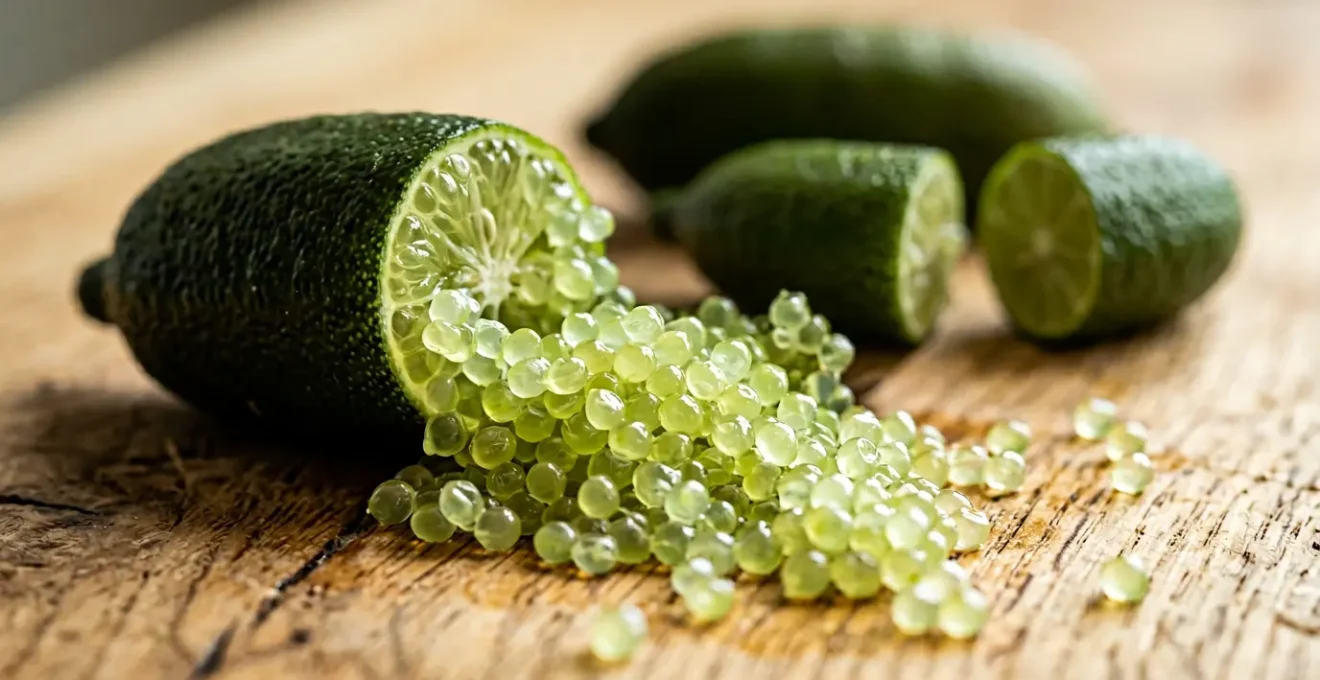
The high price of finger limes isn’t about marketing hype; it’s the direct result of the economics behind its unique ‘textural architecture’.
- The cost is driven by extremely labour-intensive harvesting from thorny trees and a delicate structure that requires careful handling.
- Its value lies in the ‘citrus caviar’ pearls that provide a bursting textural sensation and a controlled release of acidity that regular citrus cannot replicate.
Recommendation: Treat it as a high-impact finishing ingredient. Use it sparingly to add a final burst of acidic pop to seafood, salads, desserts, or cocktails, where its texture can truly shine.
Walking through a high-end grocer or farmers’ market, you’ve likely seen them: small, gherkin-like fruits with a shocking price tag that can reach $80 per kilogram. This is the finger lime, often dubbed ‘citrus caviar’. For many shoppers, the immediate question is one of justification. Is it simply a rare novelty, or is there something more to this expensive ingredient? Most advice stops at generic suggestions like using it for cocktails or seafood, but this barely scratches the surface of its true purpose in the kitchen.
From a produce buyer’s perspective, the story of the finger lime is one of painstaking agriculture and unique biology. The cost isn’t arbitrary; it’s a reflection of harvest economics—the difficult, manual labour required to pick fruit from dense, thorny bushes. But beyond the farm gate, its real value is revealed in its function. This isn’t just another citrus fruit; it’s a piece of culinary engineering. The magic lies in its internal structure, a ‘textural architecture’ of tiny, juice-filled vesicles that pop on the tongue, delivering a clean, intense flavour payload.
To truly understand the value proposition of a product like this, we must deconstruct it. This guide moves beyond the simple ‘what’ and explains the ‘why’. We’ll explore how to preserve its unique texture, why it pairs so perfectly with certain foods, and how to select the right variety. To put its price in context, we will also draw surprising parallels with other premium niche products, like single-origin Geisha coffee and saltwater Barramundi, to reveal the universal principles of what makes a luxury ingredient worth the investment.
This comprehensive overview will guide you through every facet of the finger lime, transforming your understanding from a priced-out shopper to an informed connoisseur ready to unlock its culinary potential. The following sections break down everything you need to know.
Summary: Understanding the True Value of Culinary Caviar
- Freezing Finger Limes: Does It Ruin the Caviar Texture?
- Oysters and Finger Lime: Why Is This the Ultimate Australian Pairing?
- Growing Finger Limes in Pots: Can You Do It on a UK Balcony?
- Green vs Pink vs Red: Which Finger Lime Variety Is Sweetest?
- Seasonality: Why Can’t You Find Finger Limes in August?
- Saltwater vs Freshwater: Which Barramundi Fillet Has Better Texture?
- Why Does Geisha Coffee Cost $15 a Cup in Sydney?
- Wattleseed in Baking: How to Substitute It for Coffee in Cakes?
Freezing Finger Limes: Does It Ruin the Caviar Texture?
One of the biggest concerns with a high-cost, perishable ingredient is waste. So, can you freeze finger limes? The answer is a resounding yes, but only if you do it correctly. The primary fear is that freezing will destroy the delicate membranes of the vesicles, turning the prized ‘caviar’ into a mushy pulp upon thawing. This is a valid concern, as slow freezing allows large ice crystals to form, which rupture the cell walls—the very essence of the fruit’s textural architecture.
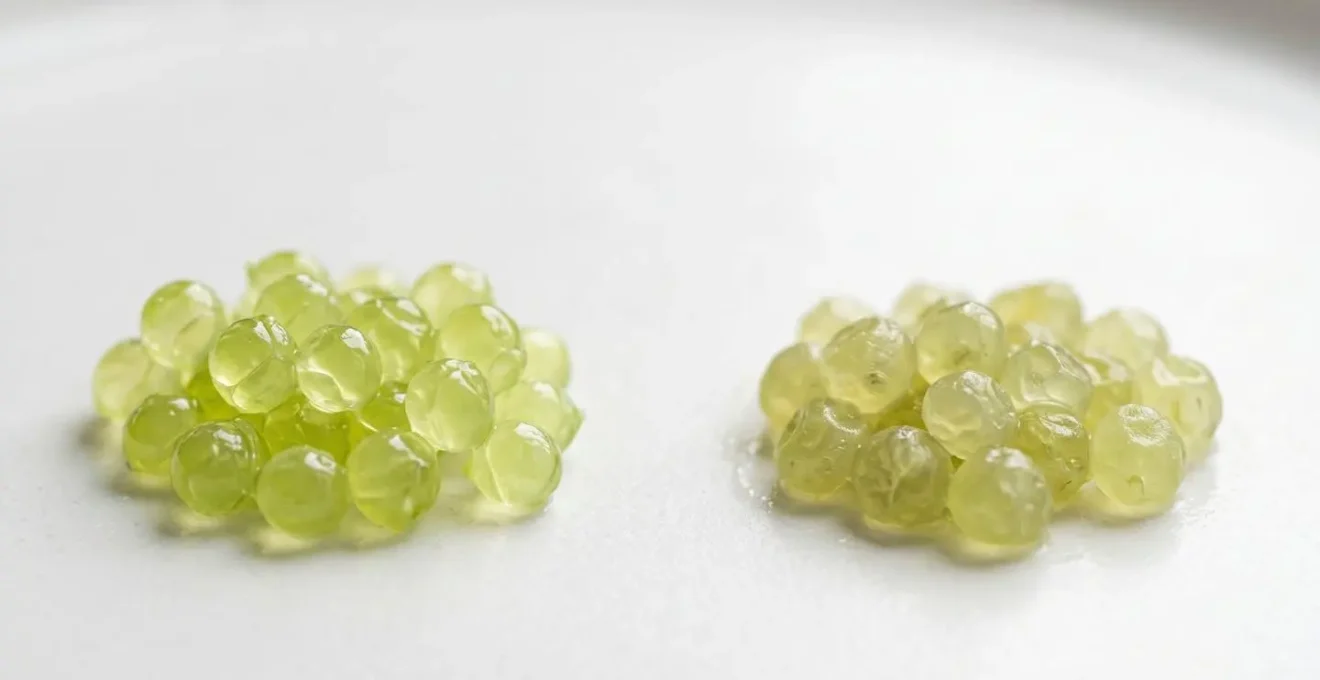
The key is flash-freezing. By freezing the pearls quickly and individually, you encourage the formation of micro-crystals that leave the cell walls largely intact. This preserves the signature ‘pop’ that makes the fruit so special. In fact, according to PokPokSom Culinary Research, when done correctly, the freezing methodology is ideal for long-term storage, with no discernible change in texture or flavour. This makes it possible to buy finger limes in season when they are most abundant and preserve them for use throughout the year, maximizing your investment.
Action Plan: Preserving Finger Lime Caviar Texture
- Preparation & Extraction: Cut the finger limes in half and gently squeeze to release the pearls into a chilled bowl, ensuring they remain separate and intact.
- Initial Freeze: Spread the collected pearls in a single, even layer on a parchment-lined baking sheet and place it in the freezer.
- Integrity Check: Flash-freeze for 30-60 minutes until each pearl is solid. This rapid process is crucial for maintaining the individual vesicle structure.
- Long-Term Storage: Carefully transfer the frozen pearls into an airtight container or a vacuum-sealed bag, removing as much air as possible to prevent freezer burn.
- Thawing Protocol: To use, submerge the sealed bag of frozen pearls in a bowl of ice water. This allows them to thaw gently from the inside out, perfectly preserving their pop.
Oysters and Finger Lime: Why Is This the Ultimate Australian Pairing?
The pairing of oysters and finger lime has become a hallmark of modern Australian cuisine, moving beyond a trend to become a culinary staple. But why does this combination work so much better than a simple squeeze of lemon or a traditional mignonette? The answer lies in flavour mechanics and textural contrast. An oyster is briny, creamy, and slightly fatty. While lemon juice provides acidity, it mixes with the oyster’s liquor, altering the entire flavour profile at once. The finger lime, however, acts differently.
Case Study: The Sydney Rock Oyster Ritual
As documented by Gourmet Traveller, high-end Australian restaurants have perfected a ritual around serving Sydney Rock oysters. Freshly shucked oysters are presented on ice, often with a small spoon of finger lime pearls or a light mignonette incorporating the vesicles. The diner experiences the smooth, rich oyster first, followed by the surprising and delightful bursting of the lime pearls on the palate. Chefs describe this as an ‘explosive flavour finish’ that provides a sequence of sensations rather than a single, blended taste, connecting modern gastronomy with the historical use of native ingredients.
The « citrus caviar » doesn’t blend; it punctuates. As the culinary experts at Three Friends Cook note, the magic is in how it interacts with the oyster’s richness. They explain:
The burst of acidity from the lime pearls cuts through the oyster’s briny, fatty profile, ‘cleansing’ the palate and amplifying flavor in a way lemon juice cannot.
– Three Friends Cook
This palate-cleansing effect happens in micro-bursts, with each pop of a vesicle releasing a concentrated flavour payload. This allows the clean, oceanic taste of the oyster to remain the star, with the finger lime providing a bright, textural counterpoint that resets the palate between each bite. It’s a masterclass in culinary engineering, where texture is used to control and elevate flavour.
Growing Finger Limes in Pots: Can You Do It on a UK Balcony?
Given the high price, a common thought is, « Can I just grow my own? » For those in non-native climates like the UK, the answer is yes, but with significant caveats. Finger limes are subtropical Australian natives, meaning they are not adapted to cold, damp winters. However, their compact size and thorny nature make them surprisingly well-suited for container growing on a sunny balcony or patio, provided you can offer winter protection.
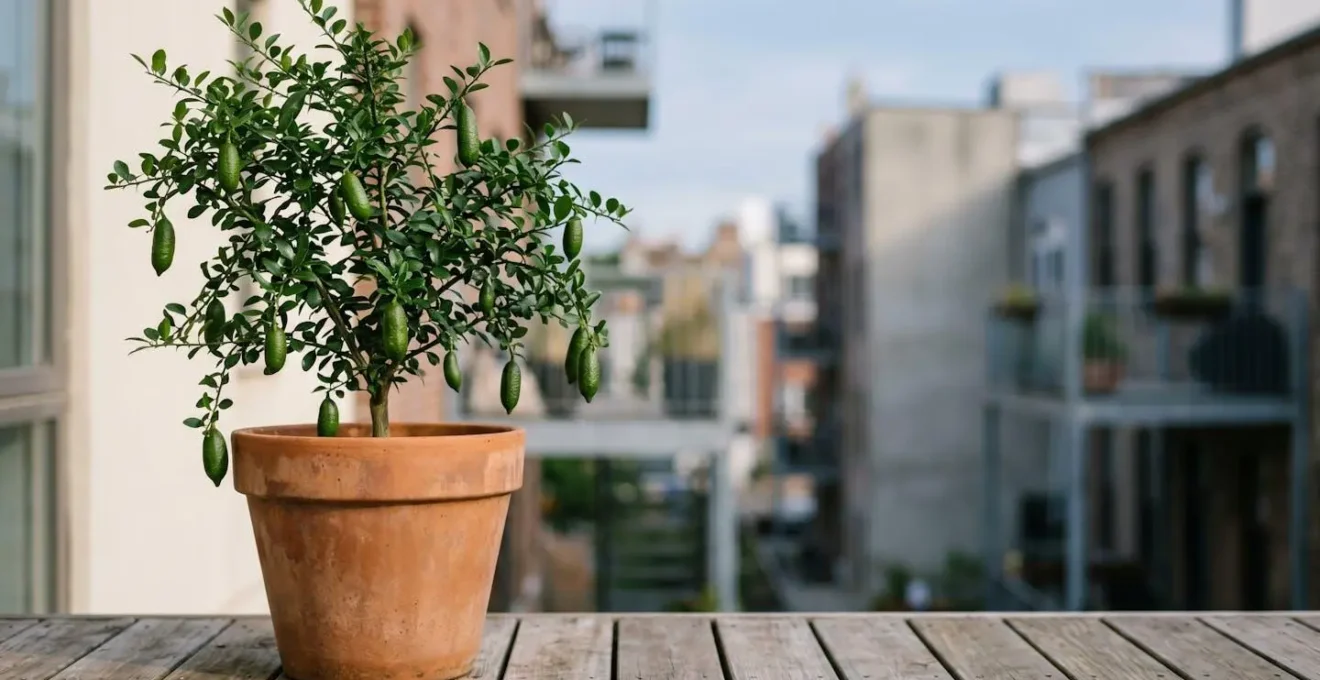
The first critical decision is your plant source. Attempting to grow from a seed is a multi-decade commitment; horticultural research from Australia shows that grafted varieties can fruit within 1-2 years, versus up to 15 years for seed-grown plants. This is a key part of the harvest economics; commercial growers exclusively use grafted stock to ensure a viable and timely return on investment. For the home grower, buying a grafted plant is non-negotiable if you want to see fruit this decade.
The main challenge in the UK is overwintering. The plant needs at least six hours of direct sun daily during the growing season (spring and summer) but must be brought indoors when temperatures dip below 5°C. A south-facing balcony is ideal. You’ll also need a well-draining soil mix (citrus-specific potting soil with added perlite works well) and be vigilant about watering—they are sensitive to both root rot from overwatering and drought stress. With proper care and a commitment to moving the pot indoors from roughly November to March, a UK-based gardener can successfully harvest their own citrus caviar.
Green vs Pink vs Red: Which Finger Lime Variety Is Sweetest?
Walking up to a stall selling finger limes can be a confusing experience. They come in a variety of skin colours, from green and yellow to pink, purple, and near-black. The colour of the skin, however, is not always a reliable indicator of the colour of the pearls inside. More importantly, the variety dictates the flavour profile, from intensely sour to surprisingly sweet. Choosing the right one is crucial for your culinary application. You wouldn’t use a sour, acidic variety for a delicate dessert, nor a sweet one for a sharp ceviche.
Generally, the colour of the vesicles (the ‘caviar’) offers a clue to the taste. Lighter green and clear pearls tend to be the most acidic and intense, while deeper pinks and reds signal a higher sweetness and more complex, often floral or berry-like notes. This isn’t just a matter of preference; it’s a tool for culinary engineering. As one horticultural guide from Fig Boss notes when discussing certain varieties, « The flavor is highly aromatic and has been rated superior by Chefs, » indicating that professionals select varieties with specific aromatic profiles in mind.
To make an informed choice, it’s helpful to understand the flavour profiles of a few common commercial varieties. The following table breaks down some popular types and their best uses.
| Variety Name | Skin Color | Vesicle Color | Flavor Profile | Sweetness Level | Best Culinary Use |
|---|---|---|---|---|---|
| Crystal (Green) | Green | Light green/clear | High acidity, pine/herbal notes | Low sweetness | Ceviche, gin tonics, seafood with bright acid needs |
| Pink Ice | Green to pink | Pink | Balanced sweet-tart, subtle grapefruit notes | Medium sweetness | Salads, grilled seafood, balanced vinaigrettes |
| Crimson Tide (Red) | Dark brown | Large red vesicles | Sweet with floral/berry undertones | Highest sweetness | Desserts, cocktails, aromatic garnishes |
| Chartreuse | Light green | Yellow | Bitter, intense citrus | Low sweetness | Specialty cocktails, bitter flavor applications |
Seasonality: Why Can’t You Find Finger Limes in August?
The question of availability is directly tied to the fruit’s cost and perceived rarity. If you’re in the Northern Hemisphere, finding fresh finger limes in late summer (August) can be a challenge if you’re only looking at Australian imports. This is because, like any agricultural product, finger limes have a distinct harvest season. In their native Australia, the season is opposite to that of Europe and North America. According to Gourmet Traveller Australia, the peak harvest season for Australian finger limes runs from December to June. By August, Australian trees are in their winter dormancy.
However, the global culinary demand has led to cultivation in other parts of the world, most notably in the United States (California and Florida) and the Mediterranean (Spain and Italy). This has created a more complex global supply chain, extending the fruit’s availability. While you may not find an Australian finger lime in August, you are increasingly likely to find one from a grower in California, where the season is just hitting its stride. This global production is a direct response to market demand, but it comes with its own set of harvest economics and quality variables.
The following table, based on global production data, illustrates how different growing regions fill the calendar, creating a near year-round supply for those willing to pay for international shipping. But it also answers the core question: if your local supplier only sources from Australia, they will be unavailable during the Northern Hemisphere’s summer and autumn.
| Growing Region | Peak Harvest Season | Secondary Season | August Availability |
|---|---|---|---|
| Australia (Origin) | December – May | Extended to June | Not available (winter dormancy) |
| California, USA | May – December | July peak in Central Valley | Available (mid-season) |
| Spain/Mediterranean | June – November | September-October peak | Available (early-mid season) |
| Florida, USA | July – January | October-December peak | Available (early season) |
Saltwater vs Freshwater: Which Barramundi Fillet Has Better Texture?
At first glance, a discussion about fish seems out of place. However, to truly grasp the concept of premium ingredients, we must look at parallels. The debate over saltwater versus freshwater Barramundi offers a perfect analogy for understanding how origin defines quality—a concept I call the terroir of texture. Barramundi, an iconic Australian fish, can live in both environments, but the resulting fillets are remarkably different. Saltwater-farmed or wild-caught Barramundi live in a more demanding environment with currents and predators, leading to leaner, firmer muscle tissue. The flesh is often described as having a clean, briny flavour and a meaty texture that holds up well to grilling or pan-searing.
Freshwater Barramundi, typically farmed in controlled ponds or dams, live a more sedentary life. Their flesh tends to be softer, with a higher fat content marbled throughout the muscle. This results in a richer, more buttery mouthfeel, but it can also come with an « earthy » or « muddy » flavour if the water quality isn’t pristine. Neither is definitively « better, » but they are different products for different culinary purposes. A chef wanting a firm, clean-tasting fillet for a delicate crudo would choose saltwater, while one looking for a rich, fatty fillet to bake or smoke might prefer freshwater.
This is precisely the same principle that applies to finger limes. A finger lime grown in one region with specific soil and climate conditions will have a different vesicle size, skin thickness, and acidity level than one grown elsewhere. Just as the water defines the fish’s texture, the environment defines the finger lime’s textural architecture. The price and application are dictated by these subtle, origin-based nuances.
Why Does Geisha Coffee Cost $15 a Cup in Sydney?
Continuing our exploration of value, let’s look at another premium product: Geisha coffee. Seeing a $15 price tag for a single cup of coffee can be as jarring as seeing an $80/kg price on a fruit. The economics behind both are nearly identical and provide a clear blueprint for understanding luxury agricultural goods. Geisha coffee’s cost is not arbitrary; it’s a direct result of a specific set of factors that mirror the finger lime’s story. It all starts with origin and variety. The Geisha varietal is a low-yield plant that produces its best, most aromatic beans only when grown at very high altitudes in specific microclimates, like those found in Panama or Colombia.
The next cost driver is labour. The coffee cherries must be hand-picked at peak ripeness—a far more intensive process than mechanical harvesting. But the real value is added during processing. Top-tier Geisha coffees often undergo experimental fermentation methods (like anaerobic or carbonic maceration) that are incredibly labour-intensive and risky. These processes develop the coffee’s signature floral and tea-like tasting notes, which are then verified in cupping competitions like the « Best of Panama, » where winning lots can sell for thousands of dollars per pound at auction. This creates extreme scarcity and a reputation-driven market.
This model is a perfect reflection of the finger lime’s harvest economics. You have a specific native variety, a difficult and manual harvest process (thorny bushes), and a unique final attribute (the ‘caviar’ pop) that cannot be easily replicated. Both products command a high price because they offer a sensory experience that is qualitatively different from their mainstream counterparts (standard coffee, regular limes). They are not just products; they are the result of agricultural and processing artistry.
Key Takeaways
- The high cost of finger limes is justified by the manual, labour-intensive harvest and the fruit’s unique ‘textural architecture’ that cannot be replicated.
- Colour is a key indicator of flavour: green varieties are typically more acidic and tart, while pink and red varieties are sweeter with more complex notes.
- With proper flash-freezing techniques, the ‘citrus caviar’ can be preserved for months without losing its signature bursting texture, maximizing the value of your purchase.
Wattleseed in Baking: How to Substitute It for Coffee in Cakes?
Our final parallel brings us to the concept of substitution. On the surface, the question asks how to swap wattleseed for coffee in baking. The simple answer is to use it in a similar ratio. But this misses the entire point, just as saying « use finger lime instead of lemon » misses the point of the finger lime. This question forces us to think about an ingredient’s functional role beyond just its flavour profile. Wattleseed, another Australian native, has a nutty, chocolatey, and coffee-like aroma when roasted, making it a natural flavour substitute. However, it functions very differently. It contains no caffeine, has a different solubility, and imparts a slightly thicker texture to batters and liquids.
A baker who understands this doesn’t just substitute; they re-engineer the recipe. They recognize that they are not just changing a flavour, but also a chemical component. This is the final and most important lesson in understanding finger limes. It is not a substitute for a lemon. To treat it as such is to fundamentally misunderstand its purpose. A squeeze of lemon juice provides acidity by lowering the pH of an entire dish. It infuses everything it touches. It is a blunt instrument of flavour.
The finger lime is a surgical instrument of flavour and texture. Its function is to provide a contained, explosive burst of acidity at the very last moment, on the palate. Its textural architecture is its primary function; the flavour is the payload. You use it when you want to add a bright, acidic highlight without turning the entire dish sour. You use it when you want to introduce a surprising textural element that pops and delights. It is not a substitute for anything, because nothing else can perform its specific function.
Now that you understand the what, why, and how of this incredible fruit, the next logical step is to experiment. Start by acquiring just a few from a quality supplier, and transform a simple dish of grilled fish, a fresh oyster, or even a vanilla panna cotta with the bright, surprising pop of citrus caviar.