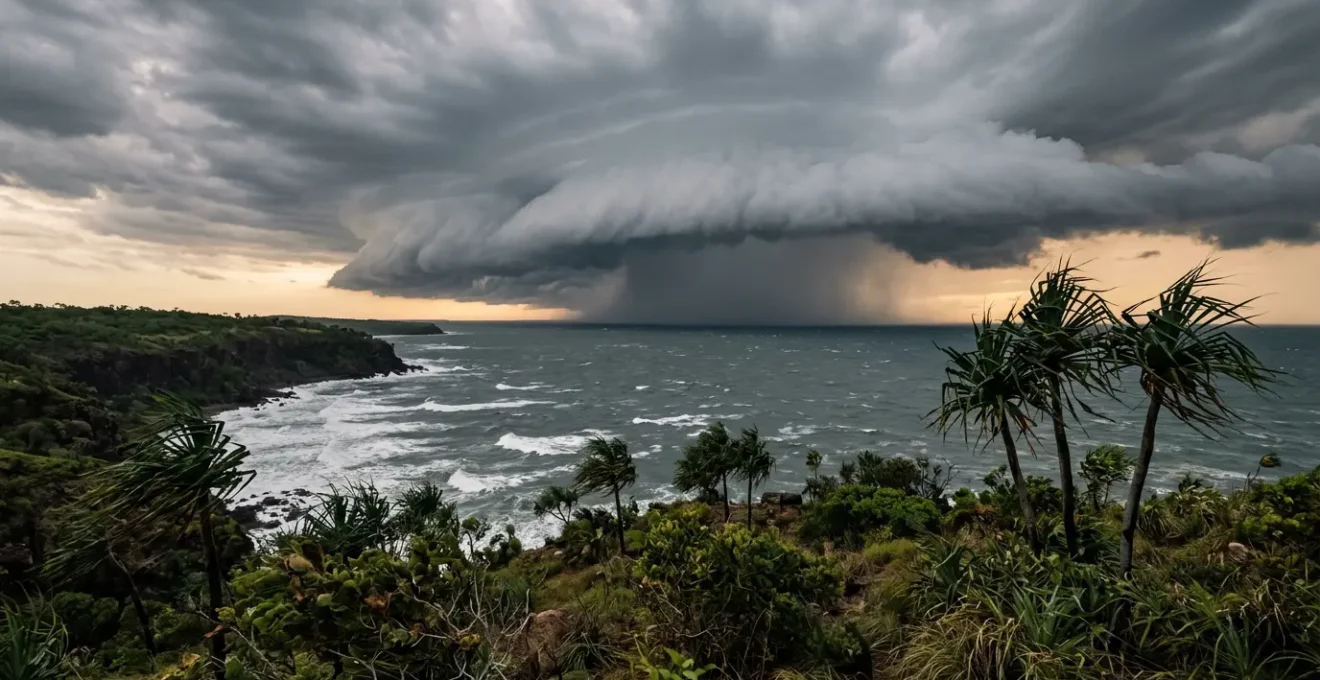
Your cheap wet season trip to Australia is only a bargain if you correctly price in the risks of environmental disruption.
- Major hazards like cyclones have a low statistical probability but catastrophic impact, requiring firm contingency plans.
- More common risks (localised flooding, mould, activity closures) are highly probable and can derail an itinerary without proper mitigation.
Recommendation: Incorporate a ‘risk buffer’ into your budget and itinerary for alternative transport, accommodation, and activities to absorb the financial and logistical shocks of inevitable disruptions.
That off-season flight deal to Darwin in January looks tempting. The prospect of experiencing the Top End’s dramatic electrical storms and lush landscapes at a fraction of the peak season price is a powerful lure. However, this is a classic high-reward scenario that comes with significant, quantifiable risks. The primary query on every planner’s mind is the threat of a tropical cyclone—a low-probability, high-impact event that could not just disrupt, but entirely obliterate a travel itinerary.
From a risk analyst’s perspective, focusing solely on the cyclone threat is a critical error. A comprehensive assessment of an Australian holiday, especially one spanning different regions, requires a portfolio approach. The country’s vastness means you can be dealing with flood risk in the north and extreme fire danger in the south on the same day. The real cost of a « cheap » trip is often found in the unbudgeted expenses caused by more probable, lower-impact events: washed-out roads, mould-ruined gear, or closed attractions.
This analysis moves beyond the simple « will a cyclone hit? » question. We will deconstruct the mechanisms of the most common environmental and logistical hazards across Australia. We will assess the probability and potential impact of each, providing a framework to help you build a resilient itinerary. This is not about avoiding risk; it is about understanding it, pricing it in, and transforming a potential travel disaster into a manageable inconvenience.
To properly assess the full spectrum of hazards, this guide breaks down the most critical risk factors you may encounter. We will analyse each scenario, from flooded tropical roads to unexpected southern cold snaps, providing the data and context needed to make informed decisions for your entire Australian journey.
Summary: The Wet Season Gamble: Will a Cyclone Cancel Your Darwin Trip in January?
- Flooded Roads: Why Does « If It’s Flooded, Forget It » Apply to 4WDs Too?
- Mould in Luggage: How to Stop Your Clothes Rotting in the Tropics?
- Bushfire Season: How to Read the « Fire Danger Rating » Signs?
- Skiing in Australia: Is July or August Better for Snow Cover?
- The « Southerly Buster »: What Is This Sudden Drop in Temperature?
- Ubirr in the Wet Season: Is It Accessible When the Floodplains Rise?
- Whitsundays in Stinger Season: Is It Safe to Swim Without a Suit?
- How to Plan a 3-Week Australia Trip from the UK for Under £4,000?
Flooded Roads: Why Does « If It’s Flooded, Forget It » Apply to 4WDs Too?
The most immediate and common danger during the northern wet season is not the cyclone itself, but the water it leaves behind. The mantra « If it’s flooded, forget it » is a national safety campaign, yet overconfidence in a rented four-wheel drive (4WD) remains a primary cause of tourist incidents. The physics of buoyancy are non-negotiable. It is a dangerous misconception that a heavy vehicle can withstand significant water flow. In fact, research shows that as little as 10 to 12 cm of flowing water is enough to make a typical passenger vehicle lose traction and float.
For a larger 4WD, this threshold may be slightly higher, but the principle remains the same. The critical mistake is underestimating the force of the water and overestimating the vehicle’s capability. The risk is not just about being swept away. The true hazard lies in what is not visible beneath the opaque, brown surface of a flooded causeway. Assessing this risk requires understanding these hidden factors.
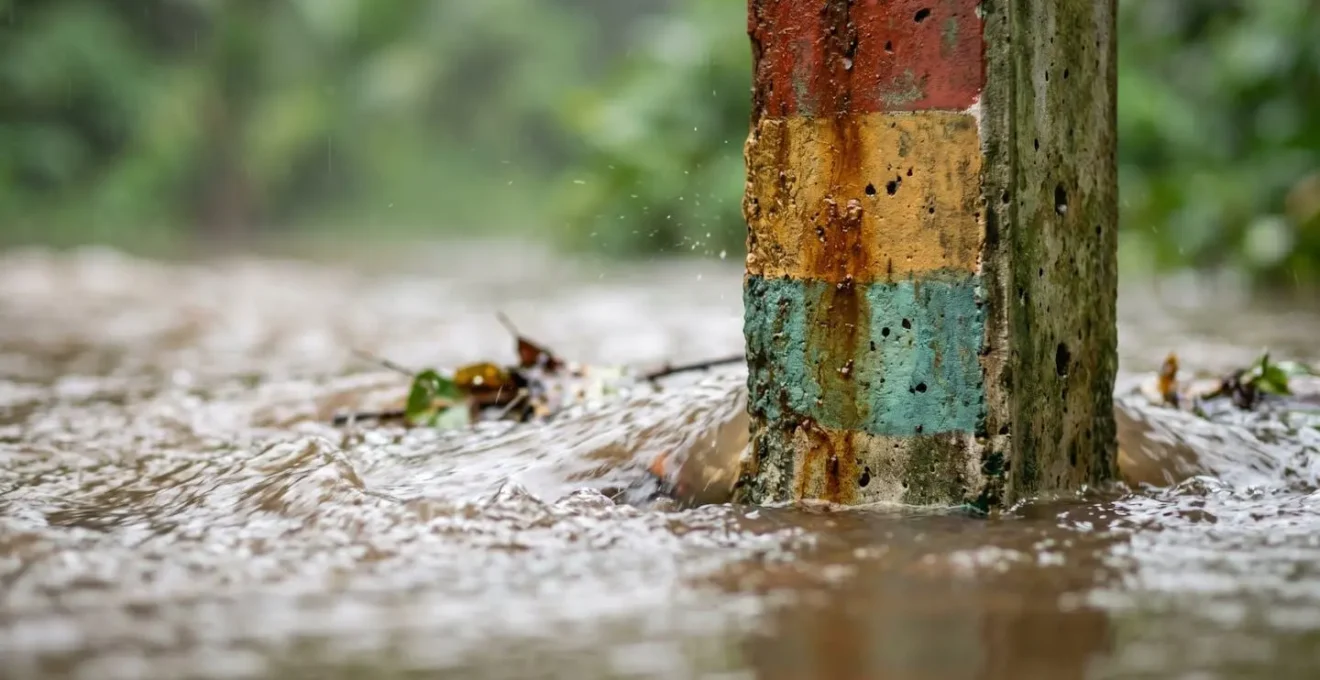
The image above illustrates a typical scenario. What you cannot see is more dangerous than what you can. The Northern Territory government warns of several invisible threats in any floodwater crossing:
- Submerged debris: Logs, rocks, and even lost vehicle parts can be hidden in the murky water, capable of stopping a vehicle dead or puncturing a fuel tank.
- Road surface erosion: The road you drove on yesterday may not exist today. Fast-flowing water can completely wash away the road base, creating a deep, impassable chasm.
- Contaminated water: Floodwaters are frequently contaminated with agricultural runoff, sewage, and chemicals, posing a health risk.
- Crocodiles: In the Top End, any body of water, permanent or temporary, must be considered potential crocodile habitat. They use floodwaters as highways to move between areas.
The only correct risk mitigation strategy is avoidance. No schedule is worth a life-threatening situation. Always have an alternative route or be prepared to wait for water levels to recede, which can sometimes take days.
Mould in Luggage: How to Stop Your Clothes Rotting in the Tropics?
While less dramatic than a flooded river, the insidious risk of mould poses a high-probability threat to your belongings in the tropics. During the wet season, ambient relative humidity in the Top End frequently hovers between 80-90%. This is well above the threshold required for mould spores to activate and thrive, which is generally accepted to be above 50% relative humidity. Your suitcase, packed with organic materials like cotton clothing and sealed in a warm, dark hotel room, becomes an ideal incubator.
The impact is not just aesthetic; it’s financial and logistical. Mould can permanently stain and ruin clothing, requiring costly replacement. More importantly, it can damage expensive luggage and electronics and pose a health risk to those with allergies or respiratory sensitivities. Preventing this requires a disciplined, daily routine to manipulate the micro-environment of your hotel room and luggage.
Effective mitigation is about constant airflow and dehumidification. When you are out for the day, your sealed hotel room can quickly become a petri dish. A proactive approach is essential. Consider implementing these steps as part of your daily routine:
- Set the air conditioning to a cool, dry setting (around 22°C) to actively pull moisture from the air.
- Ensure ceiling or portable fans are left running to keep air circulating, preventing stagnant, humid pockets.
- Leave wardrobe doors and drawers ajar to allow air to flow around your clothes.
- Avoid pushing luggage right into corners or against walls; leave a gap for air movement.
- Proactively place desiccant products like DampRid inside your suitcase and in the wardrobe.
Action Plan: Your Daily Hotel Room Mould Audit
- Points of contact: Identify all fabric items at risk—clothes in the suitcase, the bag’s lining, and any leather goods. Check walls near the air conditioning unit for condensation.
- Collecte: Perform a daily « sniff test » on your luggage and inside wardrobes. A musty odour is the first indicator of a problem, often appearing before visible mould.
- Cohérence: Cross-reference the feel of the air. If it feels sticky or damp despite the air conditioning running, your mitigation is failing. The system may need servicing or is inadequate for the conditions.
- Mémorabilité/émotion: Distinguish between the earthy « tropical smell » of outdoors and the sharp, dank « mouldy smell » of indoors. This sensory shift is a critical trigger for immediate action.
- Plan d’intégration: At the first sign of a musty smell, deploy desiccant packs. If the odour persists after 24 hours, use a local laundry service for all packed clothes and request a different, drier room.
Ultimately, treating your hotel room as a dynamic environment to be managed, rather than a static box, is the key to protecting your property from the relentless humidity of the tropics.
Bushfire Season: How to Read the « Fire Danger Rating » Signs?
Shifting our risk analysis from the tropical north to the southern and eastern parts of Australia, we encounter a different but equally potent hazard: bushfires. While a January trip to Darwin is focused on rain, a 3-week itinerary could easily include regions like Victoria or New South Wales, where January is the peak of the bushfire season. The risk is communicated to the public via a standardized Australian Fire Danger Rating system, displayed on roadside signs across the country.
Understanding this system is not optional; it is a critical safety requirement for any tourist travelling outside major city centres. The ratings are not just a weather report; they are a predictive analysis of how a fire, if it were to start, would behave. As a traveller, your required actions change dramatically with each level. Ignoring a rating of ‘Extreme’ or ‘Catastrophic’ is a gamble with potentially fatal consequences, as emergency services may be unable to reach you.
The table below, based on official guidance from Australian fire agencies, outlines what each level means and the minimum action required from a tourist’s perspective. The key is to understand that at the highest levels, the official advice is not to « wait and see, » but to leave the area entirely, often the day before the rating comes into effect.
| Rating Level | Conditions | Actions for Tourists |
|---|---|---|
| Moderate | Most fires can be controlled | Plan and prepare. Stay updated and be ready to act if fire starts. |
| High | Fires can be dangerous | Be alert for fires in your area. Decide what you will do if a fire starts. Avoid bushfire risk areas if possible. |
| Extreme | Fires will spread quickly and be very dangerous | If fire starts, your life and property may be at risk. Reconsider travelling into areas at risk. Leave for a safer location early in the day. |
| Catastrophic | Most dangerous conditions – lives and properties will likely be lost | For your survival, do not be in bushfire risk areas. Leave the night before or early morning. As confirmed by official fire agency advice, help may not be available. |
Your itinerary must be flexible enough to be completely re-routed based on these forecasts. Check the rating for your destination region every morning via the state’s official fire service app or website (e.g., RFS for NSW, CFA for Victoria).
Skiing in Australia: Is July or August Better for Snow Cover?
To demonstrate the universal application of risk analysis in travel planning, let’s pivot to a completely different Australian scenario: skiing. While it seems counter-intuitive on a continent known for deserts and tropical reefs, Australia has an established ski season (June-September) in the alpine regions of Victoria and New South Wales. For prospective skiers, a common planning dilemma is choosing between July and August. This decision is a classic risk/reward calculation, balancing the probability of optimal conditions against factors like cost and crowds.
Unlike the life-or-death decisions of a bushfire rating, this is a financial and experiential risk analysis. The primary goal is to maximise the likelihood of good snow cover. Australian alpine resorts operate at low altitudes and have highly variable natural snowfall, making them heavily reliant on snow-making technology. The investment in a ski trip is significant, so choosing the month with the highest probability of a deep, stable snow base is critical for return on investment.
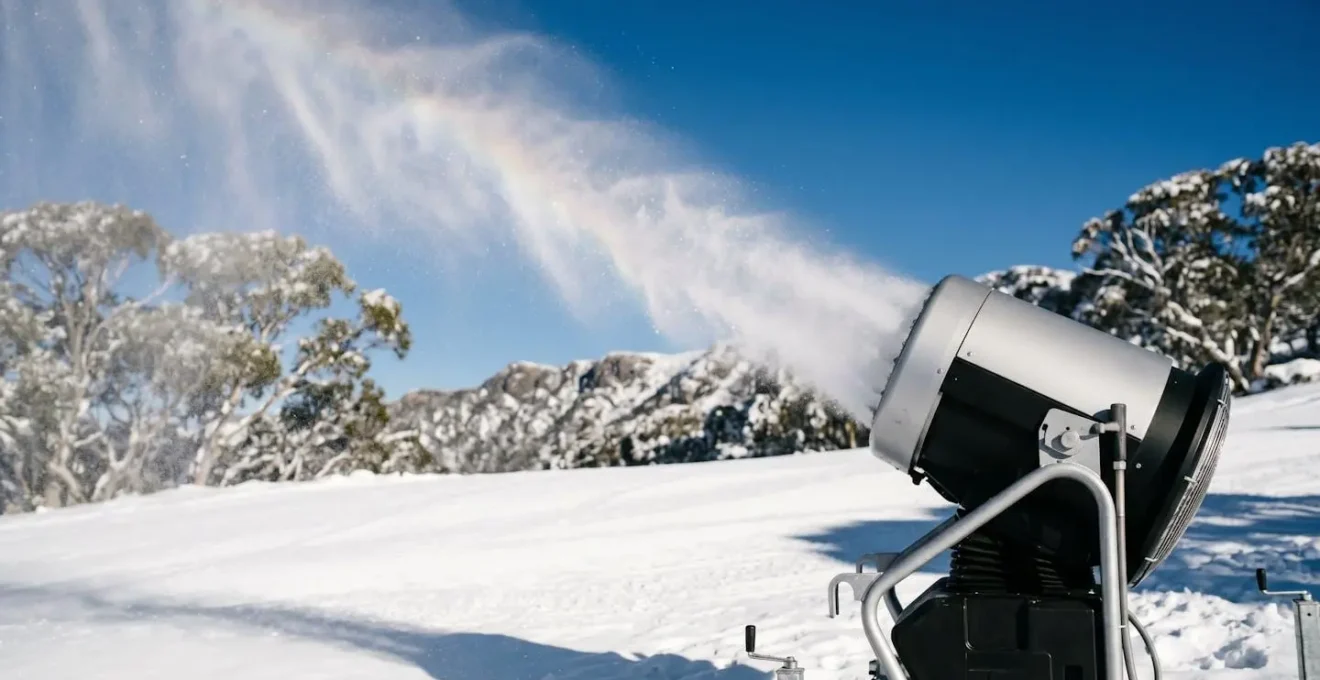
Historical data provides a clear basis for this analysis. While July is the coldest month, ideal for snowmaking and the potential for dry powder, August typically holds the advantage for overall snow depth. The snow base built during June and July usually peaks in mid-to-late August, providing more reliable coverage across a wider range of runs.
| Factor | July | August |
|---|---|---|
| Average Temperature | 1.4°C (coldest month) | 1.8-2.4°C (slightly warmer) |
| Snow Quality | Cold, dry powder potential | Slightly better due to deeper base |
| Base Depth | Building throughout month | Peak depth (average 38 inches) |
| Crowd Levels | Very busy (mid-July school holidays) | Busy but more consistent |
| Cost | Most expensive (peak rates) | High but slightly less than July |
| Best For | Fresh powder, peak winter conditions | Deepest base, reliable coverage |
From a risk analyst’s viewpoint, August presents the lower-risk option for guaranteeing skiable terrain. While you might miss a huge powder day in July, you are more likely to avoid the disappointment of widespread closures due to poor cover. The trade-off for this reduced risk is slightly less cold temperatures and consistently busy slopes.
The « Southerly Buster »: What Is This Sudden Drop in Temperature?
Continuing our portfolio of regional risks, we examine a weather phenomenon unique to the southeast coast of Australia, particularly affecting Sydney during the summer months: the « Southerly Buster. » This is not a storm in the tropical sense, but an abrupt and violent cool change that follows a hot day. For a tourist, the primary risk is its suddenness and the dramatic temperature drop it causes, which can catch the unprepared off guard.
The mechanism is a vigorous cold front moving up from the Southern Ocean. On a hot summer day in Sydney, temperatures can reach 35-40°C with hot, dry northwesterly winds. The arrival of the Southerly Buster is marked by a squally, gale-force southerly wind and a temperature drop that can be as much as 15-20°C in under an hour. The sky can turn from clear blue to dark and menacing with astonishing speed.
The impacts on a traveller are multifaceted. A pleasant day at the beach can turn into a dangerous situation with high winds creating hazardous surf and blowing sand. Outdoor activities like coastal walks or harbour cruises can become extremely uncomfortable and even risky. The most underestimated risk is hypothermia, particularly for children or those who were dressed for 40°C heat and are suddenly exposed to 20°C with wind chill and, often, rain.
Mitigation for this specific hazard involves situational awareness and simple preparation. When a hot day is forecast for Sydney or the NSW coast, a savvy traveller anticipates the possibility of a Southerly Buster in the late afternoon or evening. This means:
- Monitoring forecasts: The Bureau of Meteorology (BOM) will specifically forecast the arrival time of a « late southerly change. »
- Packing layers: Even on the hottest day, carrying a light waterproof jacket or fleece in a backpack is a crucial contingency.
- Planning flexible afternoons: Be prepared to cut beach time short or move indoors when the wind shift is forecast.
Unlike a cyclone, a Southerly Buster won’t cancel your trip, but being unaware of its potential can certainly ruin a day and create a genuine safety risk if you are caught exposed by the sudden plunge in temperature.
Ubirr in the Wet Season: Is It Accessible When the Floodplains Rise?
Returning to the Top End, let’s analyse a specific logistical risk: access to key attractions like the Ubirr rock art site in Kakadu National Park. During the wet season, accessibility is not guaranteed. The main road to Ubirr involves crossing the East Alligator River at Cahills Crossing, a causeway that is frequently and impassably flooded from December to April. This presents a high-probability risk of a major itinerary disruption.
The closure of Ubirr is a perfect example of a manageable risk if planned for. For many, seeing the ancient rock art and the view from the escarpment is a primary reason for visiting Kakadu. Arriving to find it closed can be a major disappointment. As an official tourism guide notes, this is a double-edged sword. As Northern Territory Tourism explains in its weather guide:
many areas of Kakadu are closed in the Wet due to flooding, seeing it in all its glory is a special treat.
– Northern Territory Official Tourism, Northern Territory Weather & Seasons Guide
This highlights the risk/reward trade-off. The landscape is at its most spectacular, but access is compromised. A successful visit requires building contingencies directly into your plan. Relying on a single method of access is poor risk management. A resilient itinerary will include a hierarchy of options:
- Primary Plan (Ground Access): Daily, check the official Kakadu National Park road report website for the status of Cahills Crossing and the Arnhem Highway before you even start your vehicle.
- Contingency A (Air Access): Pre-research helicopter or light aircraft scenic flights. These often still operate when roads are closed and offer a completely different, and arguably more spectacular, perspective of the flooded floodplains and isolated rock formations.
- Contingency B (Alternative Sites): Identify and plan a visit to Nourlangie (Burrungkuy). This is another major rock art site in a different part of the park which is generally more accessible during the wet season.
- Contingency C (Specialist Tours): In the early or late stages of the wet season, some accredited tour operators with high-clearance vehicles may have permits to access areas closed to the general public.
The key takeaway is to shift from a mindset of « Is Ubirr open? » to « How can I experience the Ubirr region? » This opens up possibilities like scenic flights that may end up being a highlight of the trip, turning a potential disruption into an opportunity.
Whitsundays in Stinger Season: Is It Safe to Swim Without a Suit?
A classic Australian travel risk, particularly for those visiting Queensland’s coast and the Whitsunday Islands, is « stinger season. » This typically runs from October to May, coinciding with the warmer water temperatures. The risk concerns two specific types of jellyfish: the large, visible Box Jellyfish (Chironex fleckeri) and the tiny, near-invisible Irukandji jellyfish. While the probability of a life-threatening sting is extremely low, the impact can be catastrophic, making risk mitigation non-negotiable.
The question « Is it safe to swim without a suit? » has a simple, unequivocal answer from a risk analysis standpoint: no. Swimming without a protective « stinger suit » (a full-body lycra suit) in the Whitsundays during stinger season is an unacceptable and unnecessary risk. The suits are not a fashion statement; they are a critical piece of safety equipment. They work by creating a physical barrier between the skin and the jellyfish tentacles, which fire their stings upon chemical, not physical, contact. Lycra does not provide the chemical trigger that skin does.
Here’s a breakdown of the risk profile:
- Hazard: Box Jellyfish and Irukandji jellyfish stings.
- Probability: Low. Millions of people swim in these waters with very few serious incidents. However, the presence of the animals is a given.
- Impact: Potentially catastrophic. A major Box Jellyfish sting can be fatal in minutes. An Irukandji sting, while rarely fatal, causes excruciating pain and a set of symptoms known as Irukandji Syndrome, requiring immediate hospitalisation.
- Mitigation: Wearing a full-body stinger suit. This is a highly effective, cheap, and simple measure that reduces the risk to a near-zero level.
Most commercial boat tours to the Great Barrier Reef or around the Whitsundays will mandate the use of these suits and provide them for hire. The risk is highest on mainland beaches, especially near river mouths after rain. Swimming inside the netted enclosures found at some popular beaches (like Airlie Beach) offers protection from large Box Jellyfish, but Irukandji are small enough to pass through the mesh. Therefore, even in a netted area, a suit is the only comprehensive protection.
Refusing to wear a suit is a gamble with a low chance of occurring but a devastatingly high potential cost. For a risk analyst, it’s an equation that never adds up. Wear the suit.
Key takeaways
- Every travel decision, from choosing a season to an activity, is a risk/reward calculation that can be analysed.
- The most effective risk mitigation is often avoidance (flooded roads) or simple, low-cost preparation (stinger suits, packing a jacket).
- A resilient travel plan requires built-in contingencies, such as alternative activities and a budget buffer for unexpected costs.
How to Plan a 3-Week Australia Trip from the UK for Under £4,000?
This final section synthesises our risk analysis into the most practical of constraints: the budget. The goal of a 3-week trip from the UK for under £4,000 (approx. £190/day after flights) is achievable, but only through rigorous planning that treats the budget itself as a risk management tool. A cheap headline price can quickly evaporate when faced with the unbudgeted costs of the hazards we’ve discussed.
A conventional budget might allocate funds to flights, accommodation, food, and tours. A risk-adjusted budget goes further. It acknowledges the probability of disruption and allocates a specific contingency fund—a ‘risk buffer’—to absorb the financial shocks. For a trip mixing high-risk (wet season in the Top End) and lower-risk elements, this buffer is not optional.
Consider the potential unbudgeted costs from our previous analyses:
- Weather Disruption: A cyclone warning in Darwin might necessitate a last-minute flight to a different city (e.g., Brisbane), costing £200-£400. Being stranded by a flooded road for two days requires paying for two extra nights of accommodation (£150-£300).
- Gear Failure: If mould ruins half your clothes, replacement costs could easily reach £100-£200.
- Activity Closure: If Ubirr is closed, booking a last-minute scenic flight to see it from the air could be a £150-£250 expense per person.
To stay under the £4,000 threshold, you must proactively build savings in lower-risk areas to fund the contingency buffer. This involves making strategic trade-offs: choosing hostels or budget motels over hotels, prioritising self-catering, utilising public transport, and seeking out free activities like hiking or beach days. The money saved on these certainties is then re-allocated to cover the uncertainties. A reasonable risk buffer for a 3-week trip with a wet-season component would be 10-15% of the daily budget, equating to roughly £400-£600 of the total £4,000.
Planning a budget trip to Australia isn’t about finding the cheapest option for every item. It’s about building a financial structure that is robust enough to handle the inevitable curveballs a continent of such environmental extremes will throw at you. Your best investment is a contingency fund.