In summary:
- Never eat a plant unless you are 100% certain of its identity; a « 10/10 » certainty is the only acceptable level.
- Safe identification is a protocol involving visual checks, sensory tests (smell, sap), and cross-referencing with reliable guides.
- Authentic knowledge comes from First Nations custodians; seek out Indigenous-led tours and businesses over commercialised « dude food. »
- Foraging legality is zoned: your garden (with permission), council land (check local rules), and National Parks (strictly prohibited).
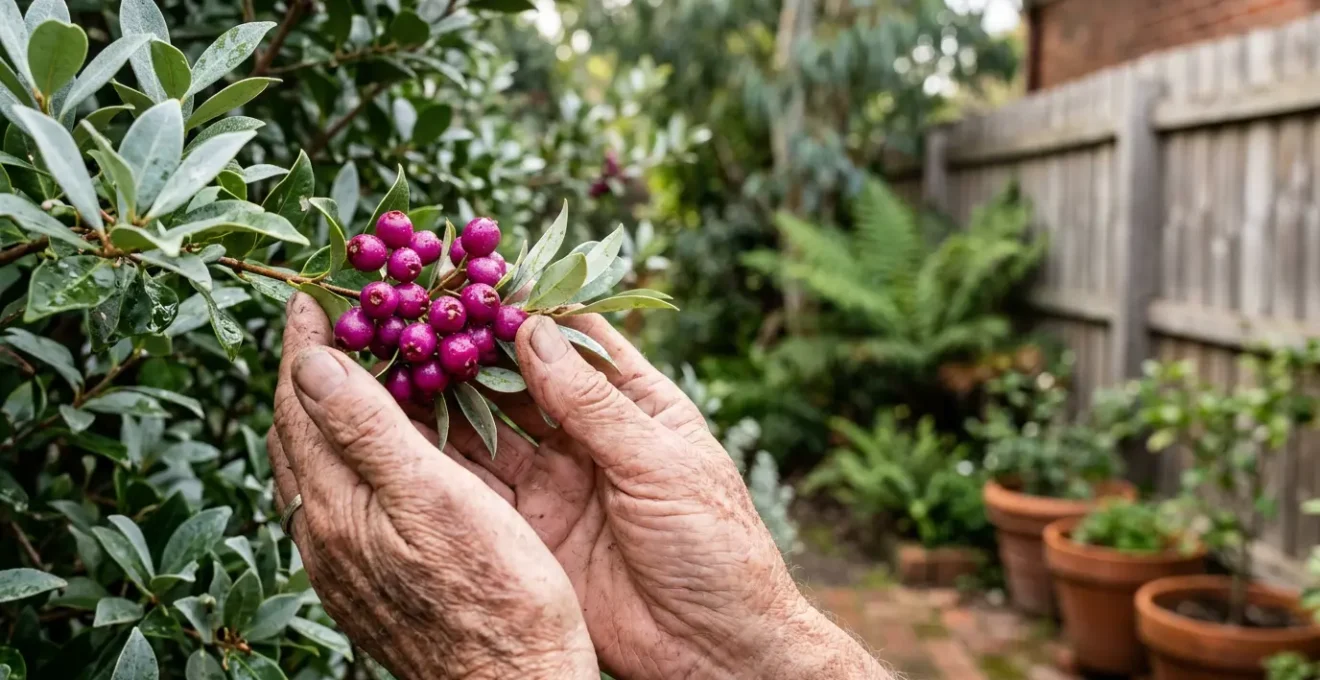
You’re standing in the sun-dappled garden of a Melbourne Airbnb, a cup of coffee in hand. Your eyes land on a shrub laden with glossy, magenta-coloured berries. They look tantalising, almost jewel-like. A thought flashes through your mind: « Is this bush tucker? Can I eat it? » This moment of curiosity is quickly followed by a wave of uncertainty and a healthy dose of fear. What if it’s poisonous? The common advice is to « be careful » and « never eat anything you can’t identify, » but that doesn’t help you when you’re standing right there, faced with the unknown.
The growing interest in urban foraging and connecting with local food systems is powerful. It pulls us out of the supermarket and into the living ecosystem around us. But this journey from curious visitor to confident forager is paved with potential hazards. The key isn’t to memorise an encyclopaedia of plants. Instead, it’s about developing a « forager’s eye »—a systematic process of observation, verification, and deep respect for the environment and its traditional custodians.
This guide moves beyond simple lists of « edible » or « toxic. » It provides you with a foundational protocol for safe identification, explores the cultural significance of bush foods, clarifies the legalities of harvesting, and introduces you to the incredible flavours of the Australian landscape. We will arm you with the knowledge to turn that moment of uncertainty into an opportunity for safe and respectful discovery.
This article provides a structured path to understanding the world of urban foraging. Follow along as we break down the essential skills and knowledge you need to explore with confidence.
Summary: A Forager’s Guide to Australian Native Foods
- Lilly Pilly vs Oleander: How to Avoid Poisoning Yourself?
- Supermarket Bush Food: Is the « Native » Dude Food Brand Actually Indigenous Owned?
- Saltbush Leaves: How to Use Them as a Chip Alternative?
- The Taste of Davidson Plum: Why Is It Too Sour to Eat Raw?
- Foraging in National Parks: What Is the Fine for Picking Plants?
- Bush Tucker Knowledge: How Do Custodians Identify Edible Plants?
- Why Touching the Gympie-Gympie Stinging Tree Is a Medical Emergency?
- Finger Limes: Why Do They Cost $80/kg and How Do You Use Them?
Lilly Pilly vs Oleander: How to Avoid Poisoning Yourself?
The Lilly Pilly (Syzygium species) is one of Australia’s most common hedging plants, and its crisp, tart berries are a forager’s delight. However, its widespread use in urban gardens puts it in close proximity to one of the most dangerous plants in the world: Oleander. Every part of the Oleander plant is highly toxic, and misidentification can have severe consequences. This is where developing a rigorous identification protocol becomes your most critical skill. Australia is home to over 1,000 toxic plant species, so guesswork is not an option. The forager’s mindset requires a shift from casual observation to detailed forensic analysis.
A true forager doesn’t just look at the fruit; they assess the entire plant. Oleander leaves are long, narrow, and leathery, arranged in whorls of three around the stem. Lilly Pilly leaves are typically shorter, glossier, and grow in opposite pairs. Another key tell is the sap. Breaking an Oleander stem will reveal a sticky, milky white sap—a classic red flag for toxicity in many plant families. Lilly Pilly stems do not produce this milky sap. The fruit structure is also different: Lilly Pilly berries are fleshy with a single seed, while Oleander produces a dry, pod-like fruit.
Mastering this process of comparison is the first step in training your « forager’s eye. » It’s about building a mental checklist of characteristics and cross-referencing them until you have zero doubt. If your certainty level isn’t a 10 out of 10, it’s a 0, and you walk away.
Your Field Identification Safety Checklist: Developing a Forager’s Eye
- Certainty Rule: Never eat anything you aren’t 100% certain about the correct ID of—if it’s not a 10 out of 10, it’s a 0.
- Growth Pattern: Observe the overall structure. Is it a tree or shrub? Check the leaf arrangement (opposite, alternate, or whorled).
- Sensory Check (Smell): Perform the crush-and-smell test on leaves to detect characteristic aromas or warning signs like acrid scents.
- Sap Test: Check for milky sap by breaking a small, insignificant stem—this is often a major red flag for toxicity.
- Fruit & Flower Structure: Examine the fruit’s form (single seed vs. clusters, shape, colour) and the flower’s structure.
- Cross-Reference: Verify your identification with multiple reliable sources, such as professional botanical guides, university extension websites, or ideally, an in-person foraging course.
Supermarket Bush Food: Is the « Native » Dude Food Brand Actually Indigenous Owned?
As native ingredients gain popularity, supermarket shelves are filling with products flavoured with lemon myrtle, wattleseed, and Davidson plum. This mainstreaming of « bush tucker » has led to the rise of what some critics call « dude food »—brands that use native ingredients for their trendy appeal without meaningful connection or benefit to First Nations communities. The term refers to a style of branding that often feels extractive, capitalising on 60,000+ years of knowledge without acknowledging or compensating the custodians of that knowledge. For a conscious consumer, distinguishing between authentic enterprises and opportunistic brands is a crucial act of respect.
The key question to ask is: who profits? An authentic Indigenous enterprise is not just about the ingredients; it’s about regenerating culture, community, and Country. These businesses are founded and led by Aboriginal and Torres Strait Islander people, and their missions are interwoven with cultural preservation and economic self-determination. They often work directly with Indigenous communities, ensuring that the benefits of the bush food industry flow back to the traditional knowledge holders. This creates a circular economy where culture is strengthened, not just commodified.
When you encounter a « native » brand, look beyond the packaging. Check the « About Us » section on their website. Is the founder’s heritage mentioned? Do they talk about their connection to Country? Do they name the communities they partner with? True engagement is transparent and proud.
Case Study: Warndu – An Authentic Indigenous Enterprise
Warndu is a prime example of an Indigenous-owned small business making a real impact. Co-founded by Adnyamathanha man Damian Coulthard, Rebecca Sullivan, and Siobhan O’Toole, its mission is explicitly focused on regenerating culture, community, and health through authentic food production. The company name itself, meaning ‘good’ in the Adnyamathanha language, signals its deep cultural roots. Warndu curates seasonal Aboriginal foods and native fruits, sharing this knowledge through their products and acclaimed books like the « First Nations Food Companion. » By supporting Warndu, consumers participate in a system that honours and sustains tradition, rather than simply consuming a flavour.
Saltbush Leaves: How to Use Them as a Chip Alternative?
Once you’ve confidently identified a safe and abundant plant, the next step is learning how to use it. Old Man Saltbush (Atriplex nummularia) is a perfect starting point for beginner foragers. It’s a hardy, widespread native shrub, easily identifiable by its silvery-grey, slightly scaly leaves. Its natural saltiness makes it an incredibly versatile ingredient and a fantastic, healthy alternative to potato chips. The leaves are packed with minerals and protein, offering a flavour of the Australian soil itself.
The most popular way to prepare saltbush is to turn it into a crispy snack. Simply toss fresh, clean leaves in a little olive oil and bake them in a hot oven (or an air fryer) for a few minutes until they become brittle and paper-thin. They emerge as savoury, salty crisps that are deeply addictive. But its uses extend far beyond a simple snack. The culinary potential of saltbush is best unlocked by understanding how different preparation methods alter its texture and flavour profile.
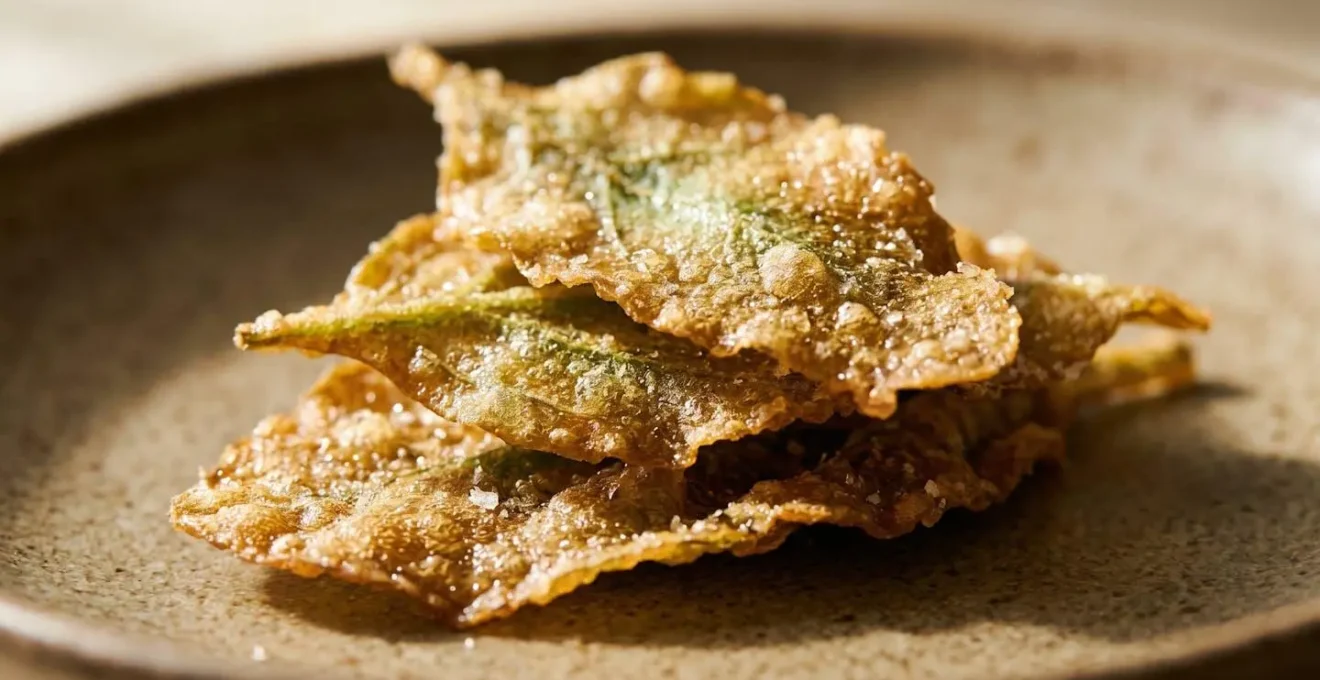
For example, dried saltbush leaves can be ground into a fine powder. This « bush salt » can be used to season everything from roasted meats to popcorn, providing a more complex, herbaceous saltiness than regular table salt. For a fresher application, blanching the leaves briefly in boiling water removes any potential bitterness while retaining their salty kick, making them a perfect addition to salads or as a wrap for grilled fish. Finally, gently infusing fresh leaves into olive oil creates a unique finishing oil, perfect for drizzling over pasta or vegetables to impart a subtle, savoury flavour of the Australian outback.
The Taste of Davidson Plum: Why Is It Too Sour to Eat Raw?
Biting into a raw Davidson Plum (Davidsonia pruriens) is an unforgettable experience, but not always for the right reasons. The fruit’s stunning deep purple skin and vibrant red flesh promise a sweet, juicy treat. Instead, you’re hit with an intense, eye-watering sourness that electrifies your entire palate. This extreme acidity isn’t a flaw; it’s a key feature of the fruit and a brilliant example of nature’s chemistry at work. The primary culprit is tartaric acid, a compound also found in grapes and tamarinds, but present in the Davidson Plum in formidable concentrations.
Just how sour is it? Scientific analysis shows that tartaric acid’s perceived acidity is significantly more potent than the citric acid found in lemons and limes. In fact, research shows that tartaric acid’s acidity intensity is 1.2 to 1.3 times stronger than citric acid, which explains the powerful pucker-up effect. This intense acidity serves a crucial biological purpose for the plant.
Tartaric acid plays an important role chemically, lowering the pH of fermenting must to a level where many undesirable spoilage bacteria cannot live, and acting as a preservative after fermentation.
– Wikipedia Contributors, Tartaric acid – Wikipedia
This natural preservative quality is precisely why the Davidson Plum is so prized in cooking. When the raw sourness is balanced with sugar, it transforms. The acidity mellows, allowing the fruit’s complex, earthy, and slightly bitter undertones to shine through. This makes it perfect for creating intensely flavoured jams, sauces, and syrups that have a beautiful tang and a remarkably long shelf life. Understanding this chemical property is part of a deeper foraging knowledge—it’s not just about what’s edible, but *how* and *why* it’s best prepared.
Foraging in National Parks: What Is the Fine for Picking Plants?
A forager’s responsibility extends beyond personal safety to the health of the ecosystem. This means understanding and respecting the legal framework that governs where you can and cannot harvest. While the thought of being poisoned is a primary fear for beginners, the reality is that fatalities are incredibly rare. In fact, for children aged 0-14, official records show only 3 deaths in 35 years related to plant poisoning in Australia. The rules against foraging in certain areas are less about preventing immediate personal harm and more about protecting fragile ecosystems and preserving biodiversity for everyone.
Urban and wild spaces in Australia are generally divided into three legal zones for foraging, and knowing which zone you are in is non-negotiable.
- Zone 1 – Private Property: This includes your Airbnb garden. You must have explicit permission from the property owner before you pick anything. Never assume that because you are staying there, you have the right to harvest. Always ask first.
- Zone 2 – Public Council Land: This covers most local parks, nature strips, and verges. The rules here vary dramatically between local councils. Some may have a permissive approach to personal foraging, while others may require permits or ban it outright. You must research the specific regulations for the local council area you are in.
- Zone 3 – National and State Parks: The rule here is simple and absolute: foraging is strictly prohibited. Removing any plant material—be it a flower, a leaf, or a fruit—is illegal and carries significant fines. These parks are protected sanctuaries for native flora and fauna, and their ecosystems are carefully managed. « Leave No Trace » is the guiding principle.
Respecting these boundaries is a fundamental part of ethical foraging. It demonstrates an understanding that we are visitors in a complex environment and that our actions have consequences beyond our own dinner plate.
Bush Tucker Knowledge: How Do Custodians Identify Edible Plants?
The « forager’s eye » is more than a set of scientific rules; at its deepest level, it is a way of seeing the world rooted in thousands of years of observation and cultural transmission. For First Nations peoples, identifying a plant is not a simple checklist. It’s an act of recognizing a relative. This knowledge is holistic, weaving together an understanding of the plant’s appearance, its seasonal indicators, its relationship with other species, its medicinal uses, and its place in ceremony and story. It’s a level of intimacy with the landscape that cannot be learned from a book alone.
This is why the only authentic way to engage with traditional bush tucker knowledge is through Indigenous-led experiences. These are not just « foraging tours »; they are opportunities to learn from the custodians of the knowledge themselves. Organizations and businesses run by First Nations people are vital bridges, sharing knowledge in a way that is respectful, authentic, and culturally appropriate. They teach you to see the entire ecosystem, not just an isolated ingredient.
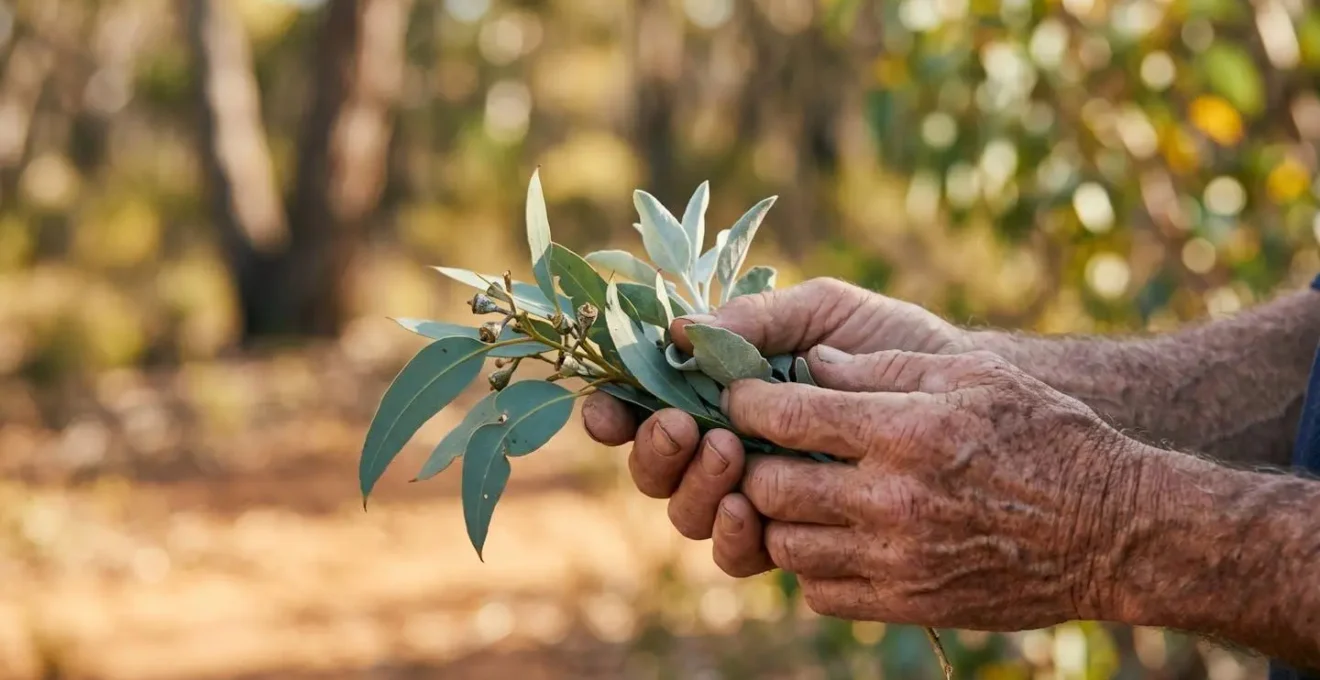
The Aboriginal Heritage Walk at the Royal Botanic Gardens Victoria is a perfect example. Here, Indigenous guides share stories and knowledge that bring the landscape to life, explaining how plants were used for food, tools, and medicine. Supporting such Indigenous-owned businesses, like Indigigrow in Sydney or the many local tour operators in Melbourne, does more than educate you. It helps to keep culture alive and strong, ensuring that this invaluable knowledge is passed on to future generations. It is a direct acknowledgment that foraging is not a new trend, but an ancient practice that we are privileged to learn about.
Learning from the Source: The Importance of Indigenous-Led Experiences
As highlighted by Australian Geographic, engaging in urban foraging helps us remember we are part of an ecosystem and have a responsibility to care for Country. The most meaningful way to fulfill this responsibility is to learn directly from Indigenous businesses that share knowledge authentically. These experiences go beyond simple plant identification. They teach a worldview where humans and nature are interconnected, fostering a sense of kinship and stewardship that is the true heart of foraging.
Why Touching the Gympie-Gympie Stinging Tree Is a Medical Emergency?
To fully appreciate why the forager’s identification protocol is so critical, one only needs to understand the Gympie-Gympie (Dendrocnide moroides). This plant, found in the rainforests of northeastern Australia, is not something you’ll encounter in a Melbourne garden, but it serves as the ultimate cautionary tale about the power of nature and the dire consequences of misidentification. It is considered one of the most painful plants in the world. The entire plant is covered in tiny, silica-tipped hairs, or trichomes, that act like hypodermic needles.
As the Sydney Children’s Hospitals Network warns, the danger is extreme. The network’s factsheet states:
Touching a leaf or twig from a stinging tree will cause the tiny stinging hairs to push through the skin. This causes intense pain that can spread and last days or months.
– Sydney Children’s Hospitals Network, Poisonous or harmful plants and children factsheet
The neurotoxin they inject, moroidin, causes a searing, burning pain that has been described as being like « being burnt with hot acid and electrocuted at the same time. » The pain can persist for months and is notoriously triggered by touch or temperature changes. The most dangerous part is that the immediate reaction can be misleadingly mild, but rubbing the area or washing it with water can drive the invisible hairs deeper into the skin, intensifying the agony. This is why a specific first-aid protocol is essential.
Your Gympie-Gympie Field First-Aid Protocol (A Cautionary Lesson)
- Do Not Rub or Use Water: This is the most critical step. Resist the instinct to rub or wash the affected area, as this will only worsen the situation.
- Hair Removal: Apply hair removal wax strips or heavy-duty adhesive tape to the skin and pull off firmly to extract the stinging hairs.
- Seek Medical Attention: Immediately seek professional medical help. The pain is severe and requires expert management.
- Emergency Call: If symptoms are severe, such as difficulty breathing, loss of consciousness, or seizures, call an ambulance on 000 without delay.
- Reassurance: Remember, the Gympie-Gympie’s habitat is restricted to northeastern NSW and Queensland rainforests. It is not found in Melbourne, but its existence underscores the importance of 100% positive identification for all plants.
Key takeaways
- The « Forager’s Eye » is a systematic protocol: never eat what you can’t identify with 100% certainty using visual, sensory, and reference checks.
- Authentic knowledge resides with First Nations custodians. Prioritise learning from and supporting Indigenous-owned businesses and tours.
- Respect the three legal zones of foraging: ask permission on private land, check council rules in public parks, and never take anything from National Parks.
Finger Limes: Why Do They Cost $80/kg and How Do You Use Them?
At the other end of the foraging spectrum from the terrifying Gympie-Gympie lies the exquisite Finger Lime (Citrus australasica). This unique fruit embodies the reward of understanding and valuing native Australian ingredients. Often called « citrus caviar, » the finger lime’s skin is cut to reveal a treasure trove of tiny, glistening pearls of juice that burst in your mouth with a bright, tangy lime flavour. Their remarkable texture and taste have made them a coveted ingredient for top chefs worldwide. But this demand, coupled with the challenges of its cultivation, explains its premium price tag, which can reach up to $80 per kilogram.
The high cost is not just a matter of trendiness; it reflects the entire value chain of a unique and labour-intensive product. Finger lime trees are thorny and slow-growing, and harvesting the delicate fruit is a meticulous process done by hand. Furthermore, a significant portion of the high-quality finger lime market is driven by ethical and sustainable farming practices, often involving Indigenous communities who are the original cultivators of this food.
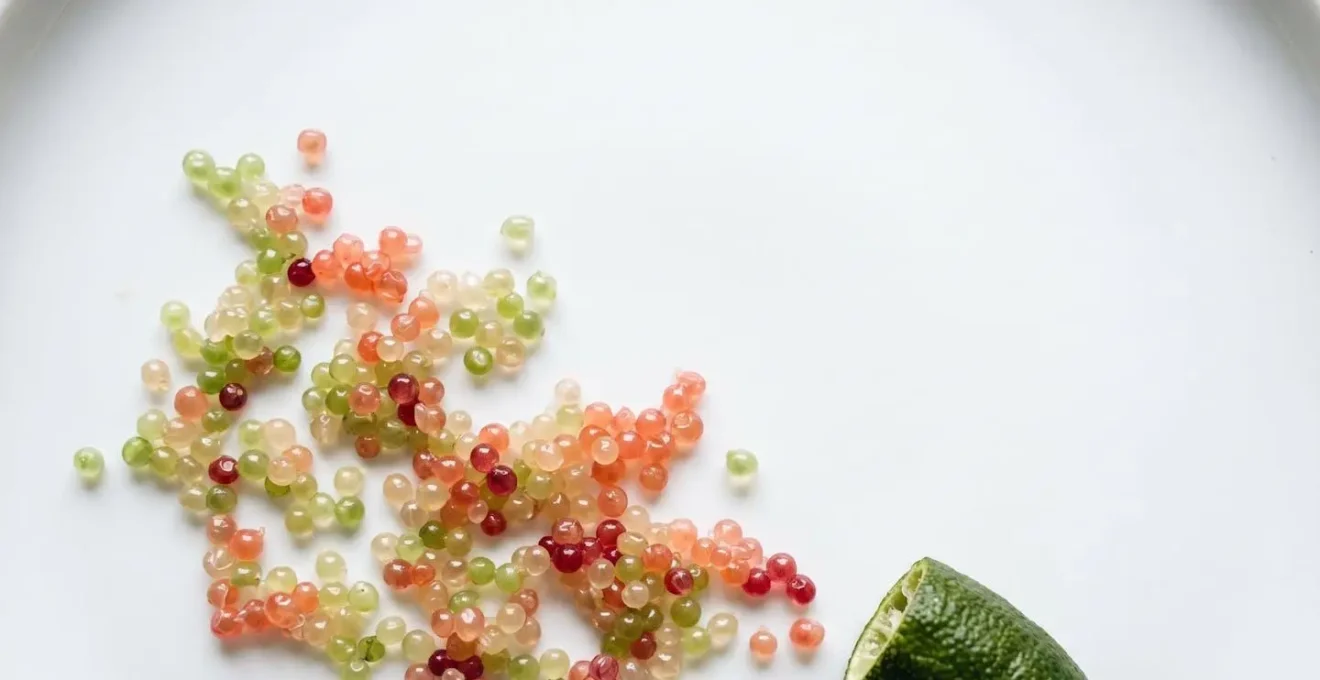
The best way to use finger limes is to treat them as a garnish that adds a final flourish of texture and flavour. The pearls should be added at the last moment to avoid « cooking » them with heat. They are spectacular scattered over freshly shucked oysters, where their acidity perfectly complements the briny flavour. They can elevate a simple gin and tonic, add a zesty pop to salads and ceviche, or provide a surprising textural contrast on top of cheesecakes and pavlovas. A little goes a long way, and their magic lies in that surprising burst of fresh citrus.
Case Study: Bakarindi Bush Foods and the Value Chain
Bakarindi Bush Foods, a proudly owned and operated enterprise of the Mudyala Aboriginal Corporation, illustrates the economic ecosystem behind native foods. As a not-for-profit, they source finger limes and other native ingredients from local Australian farmers. All proceeds from their sales are reinvested back into local Aboriginal communities. This model demonstrates that the $80/kg price reflects not just a gourmet product, but a system of community support, sustainable agriculture, and cultural enterprise that gives the fruit its true value.
By shifting your perspective from simple consumption to conscious engagement, you do more than just taste new flavours. You participate in a story of resilience, knowledge, and respect that has been growing in this land for millennia. The next time you see an unfamiliar berry, you’ll be equipped not just with caution, but with a process for confident and respectful discovery.