Contrary to popular fear, swimming safely in the Whitsundays during stinger season is not about luck; it is about systematically managing risk.
- A stinger suit provides a critical physical barrier, but it is only the first layer of your defence.
- Your choice of location (e.g., Airlie Beach Lagoon vs. open water) and, most importantly, your tour operator are critical safety controls.
Recommendation: Adopt a ‘layered defence’ mindset. The combination of a quality suit, careful operator scrutiny, and first-aid knowledge is your key to a confident and safe holiday.
The thought of visiting the idyllic Whitsundays in January often comes with a chilling image: the nearly invisible and potent Irukandji jellyfish. The question on every tourist’s mind is a stark one: is it actually safe to get in that turquoise water? Many will tell you to simply wear a stinger suit or stick to the resort pool, but this advice barely scratches the surface of true water safety. It treats the problem as a simple binary of ‘suit’ or ‘no suit’, which can foster a false sense of security or, conversely, unnecessary panic.
The reality of marine safety is more nuanced. As a safety officer, I can tell you that managing risk in a wild environment like the Great Barrier Reef is not about eliminating danger—it’s about understanding and controlling it. The key isn’t to ask if you can swim without a suit (the answer is a firm no from any professional during stinger season), but rather to ask: « What is the complete system I need to employ to make my swim as safe as humanly possible? » The answer lies in a layered defence system, a concept that moves you from a position of fear to one of informed confidence.
This system involves more than just a piece of lycra. It encompasses your choice of location, your understanding of environmental factors beyond stingers, your ethical conduct as a tourist, and your ability to vet the professionals you entrust with your safety. This guide will walk you through each of these layers, explaining not just the ‘what’ but the critical ‘why’ behind each recommendation. By the end, you will be equipped to assess and mitigate risks effectively, allowing you to enjoy the beauty of the Whitsundays with peace of mind.
This article breaks down the essential components of a comprehensive safety strategy for visiting the Whitsundays during stinger season. Explore the sections below to build your knowledge layer by layer.
Table of Contents: Whitsundays in Stinger Season: Is It Safe to Swim Without a Suit?
- Why Must You Wear Stinger Suits Between November and May?
- Hamilton Island vs Airlie Beach: Which Is Better for a Budget Holiday?
- Sunscreen Bans: Why Are Some Beaches Moving to Mineral-Only Rules?
- Whitehaven Beach Silica: Why Will It Damage Your Phone and Camera?
- Feeding Fish: Why Is Bread Bad for the Reef Fish at Tourists Spots?
- Bareboating for Beginners: Do You Need a Licence to Rent a Yacht?
- Greenwashing vs Certified: How to Spot a Truly Sustainable Lodge in Tasmania?
- Island Water Restrictions: Why Must You Conserve Showers on Resorts?
Why Must You Wear Stinger Suits Between November and May?
The first and most critical layer of your defence system is the stinger suit. To a nervous visitor, it may look like a thin piece of fabric, but its effectiveness lies in simple, brilliant science. Dangerous jellyfish like the Box Jellyfish and Irukandji don’t « bite »; they have microscopic stinging cells called nematocysts on their tentacles that fire a venomous barb upon contact with specific chemical triggers found on the surface of skin or prey. A stinger suit acts as a mechanical barrier, preventing these triggers from activating. The tentacle may brush against the smooth lycra, but without the right chemical cue, the nematocyst does not fire.
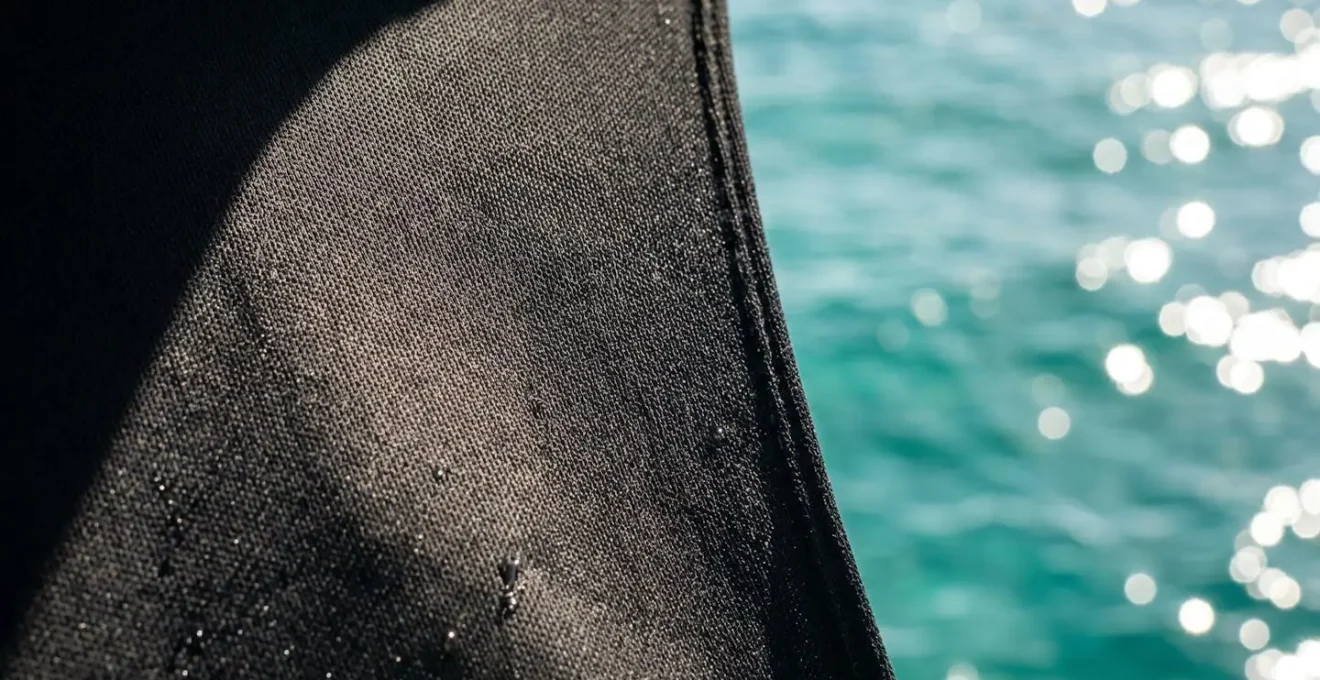
As the image above illustrates, the tight weave of the fabric is the key. It creates a surface that jellyfish tentacles simply slide over. This is why coverage is paramount; any exposed skin is a potential target. The official stinger season in the Whitsundays runs from late October to May annually, when warmer waters create ideal breeding conditions. During this period, wearing a full-body suit is non-negotiable for any in-water activity outside of protected enclosures.
Furthermore, while their primary purpose is sting prevention, these suits offer an excellent secondary benefit: UPF 50+ sun protection. This reduces the amount of sunscreen you need to apply, which is not only convenient but also better for the fragile reef ecosystem. Think of the suit not as an inconvenience, but as your personal, multi-purpose shield against the two biggest hazards in the tropical marine environment: jellyfish and the sun.
Hamilton Island vs Airlie Beach: Which Is Better for a Budget Holiday?
Your choice of home base in the Whitsundays is more than a budget decision; it’s a strategic safety decision. Where you stay directly impacts your access to stinger-safe swimming options. Hamilton Island and Airlie Beach offer fundamentally different environments for a visitor concerned about stinger season.
Hamilton Island is a self-contained resort environment. Safety is highly controlled. While it’s generally more expensive, the cost includes access to numerous large resort pools, which are the ultimate 100% stinger-free option. Catseye Beach is often fitted with a seasonal stinger net, but the pools remain the primary safe swimming location. For reef tours, you’ll depart from the island’s marina, and stinger suits will be a mandatory inclusion on any reputable tour.
Airlie Beach, on the other hand, is the mainland hub and offers a wider range of budget-friendly accommodation. Its trump card for stinger-season safety is the massive, free-to-access Airlie Beach Lagoon. This is a large, lifeguard-patrolled, man-made saltwater pool complex right in the centre of town, offering a fantastic and completely safe swimming experience year-round. It’s an equaliser that allows budget travellers to enjoy the water with zero risk. Furthermore, as the main departure point for most Whitsunday tours, there is a competitive market for tour operators and gear rental, with stinger suits being a standard and required feature on all water-based tours.
This table breaks down the key differences from a safety-conscious, budget-aware perspective.
| Feature | Hamilton Island | Airlie Beach |
|---|---|---|
| Stinger-Safe Swimming | Resort pools, Catseye Beach (netted seasonally) | Airlie Beach Lagoon (year-round safe), Boathaven Beach & Cannonvale Beach (seasonal nets) |
| Stinger Suit Availability | Available at island activity desks and tours | Rental shops on main street, provided on all tours |
| Tour Access | Tours depart from island marina; included in package pricing | Wider range of operators; suits mandatory and typically included |
| Accommodation Cost | Higher (resort-based pricing) | Lower (backpacker to mid-range options) |
| Safety Infrastructure | Controlled resort environment, medical clinic on-island | Public stinger nets Nov-May, lifeguard-patrolled Lagoon, mainland medical access |
Ultimately, for the budget-conscious traveller terrified of stingers, Airlie Beach often provides a better balance. The guaranteed safety of the Lagoon offers a daily swimming option without the anxiety, while still providing access to the full range of reef and island tours where professional safety protocols, including wearing a stinger suit which reduces your risk of being stung by 75%, are enforced.
Sunscreen Bans: Why Are Some Beaches Moving to Mineral-Only Rules?
A lesser-known, but increasingly important, part of your layered defence system involves what you put on your skin. Growing awareness of the damage caused by chemical sunscreens has led to a push for « reef-safe » mineral-based alternatives. Chemicals like oxybenzone and octinoxate, common in traditional sunscreens, have been shown to cause coral bleaching, damage the DNA of marine life, and disrupt aquatic ecosystems. While no formal « bans » are in place across the Whitsundays, choosing a reef-safe sunscreen is a core tenet of being a responsible visitor to the Great Barrier Reef Marine Park.
This is where your stinger suit plays another vital role. By providing UPF 50+ protection over most of your body, it drastically reduces the total volume of sunscreen you need to use. You only need to apply it to exposed areas like your face, neck, hands, and feet. This is a win-win: you protect your skin from UV radiation while minimising your chemical footprint on the very reef you’ve come to admire.
However, the interaction between sunscreen and your stinger suit requires a proper procedure to ensure both are effective. Applying thick mineral sunscreen and immediately pulling on a tight-fitting lycra suit can be a messy and ineffective process. There is a correct sequence to maximize protection for both yourself and the reef.
Your Action Plan: Correct Sunscreen and Stinger Suit Application
- Apply Early: Apply a generous layer of reef-safe mineral sunscreen to all exposed skin (face, hands, feet, neck) at least 20 minutes before you plan to put on your suit.
- Allow to Absorb: Let the sunscreen fully dry and absorb into your skin. Mineral formulas sit on the surface and need time to set. This prevents a greasy mess and ensures the suit fits correctly.
- Suit Up Dry: Put on your stinger suit only when your skin is completely dry. This ensures a snug fit and proper contact of the lycra, which is essential for its function as a mechanical barrier.
- Check for Gaps: Ensure the suit is snug at the wrists, ankles, and neck. These are potential entry points for small jellyfish. A well-fitting suit is a safer suit.
- Final Application: Do a final application of sunscreen to any small areas still exposed, like the back of your hands or around your face, just before you enter the water.
By following this sequence, you integrate sun safety and stinger safety into one seamless process, protecting yourself while acting as a steward for the delicate coral ecosystem.
Whitehaven Beach Silica: Why Will It Damage Your Phone and Camera?
Developing a comprehensive safety mindset in the Whitsundays means looking beyond the biological threat of stingers and considering the environmental risks as well. Nowhere is this more apparent than on the world-famous Whitehaven Beach. Its breathtakingly white sand is not ordinary sand; it is composed of 98% pure silica, which gives it its unique colour and texture. This silica is incredibly fine and soft to the touch, but it is also highly abrasive at a microscopic level.

As the macro image reveals, the individual grains have sharp, crystalline edges. This ultra-fine powder can easily work its way into the smallest crevices of electronic devices like smartphones and cameras. Once inside, it can scratch delicate lens elements, jam zoom mechanisms, damage sensors, and grind away at moving parts. The salt-laden, humid air only exacerbates the problem, turning the fine dust into a corrosive paste. A single, careless moment on Whitehaven can lead to a permanently damaged device.
Protecting your gear requires the same level of procedural discipline as protecting yourself from stingers. It’s about creating barriers and following a strict protocol. Just as you wouldn’t enter the water without a suit in January, you shouldn’t handle your electronics on the beach without a clear plan.
- Use Dry Bags: Keep all electronics sealed in waterproof dry bags when not in active use. Standard camera bags are not sufficient to keep out the fine silica.
- Keep Caps On: Use lens caps and body caps religiously. Only remove them for the shot, then immediately replace them.
- Clean Carefully: Bring a rocket blower (compressed air) and microfiber cloths. Never wipe sand across a lens surface; always blow it off first.
- Elevate Your Gear: Never place your bag or camera directly on the sand. Hang bags from boat railings or keep them inside a sealed plastic container.
Thinking about risks like silica damage reinforces the core message of the layered defence system: a safe and successful trip to the Whitsundays is about proactive, intelligent preparation for all potential hazards, not just the most obvious ones.
Feeding Fish: Why Is Bread Bad for the Reef Fish at Tourists Spots?
A responsible tourist mindset is a crucial, if often overlooked, layer of the safety system. An activity that seems harmless, like feeding bread to fish at popular spots like Manta Ray Bay, is a perfect example of how good intentions can lead to negative consequences—both for the wildlife and potentially for you.
Bread and other processed human foods are extremely harmful to reef fish. Their digestive systems are not designed for gluten and processed grains, which can lead to bloating, disease, and malnutrition. Furthermore, feeding creates an unnatural dependency, altering their natural foraging behaviours and making them more aggressive. This aggression can lead to nips and bites, which, while usually minor, can cause panic in the water—a dangerous state to be in during stinger season.
This is where risk management and responsible tourism intersect. As the Great Barrier Reef Marine Park Authority guidance states, a responsible visitor protects both the environment and themselves. By refusing to engage in harmful practices like fish feeding, you are not only preserving the natural ecosystem but also maintaining a safer, more predictable environment for your own in-water experience.
A truly responsible tourist not only protects the wildlife by not feeding it, but also protects themselves and the emergency services by taking all necessary safety precautions
– Great Barrier Reef Marine Park Authority, Whitsundays sustainable tourism principles
It’s also important to keep the primary risk in perspective. While the thought of an Irukandji sting is terrifying, the statistical probability is low. Reports indicate that in a particularly severe year, only around 100 stings requiring medical treatment occur across the vast coastline of Queensland. This is not to downplay the severity, but to contextualise the frequency. The risk is manageable, not guaranteed. Your behaviour—wearing a suit, choosing a good operator, and acting responsibly—directly influences your personal risk level, tilting the odds significantly in your favour.
Bareboating for Beginners: Do You Need a Licence to Rent a Yacht?
For those wanting the ultimate freedom to explore the Whitsundays, « bareboating »—renting a yacht and skippering it yourself—is a popular option. A common question from beginners is whether a formal boating licence is required. Surprisingly, the Whitsundays is one of the few premier sailing destinations in the world where you do not need a formal licence to charter a bareboat. This accessibility, however, does not mean a lapse in safety. In fact, it’s replaced by another critical layer of the safety system: the mandatory, comprehensive briefing.
Charter companies are legally and ethically bound to ensure you are competent to handle their vessel. Before they hand over the keys, you will undergo an extensive briefing session that can last 3-4 hours. This is far more than a quick tour of the boat. It is a detailed lesson covering vessel operation, anchoring techniques, navigation using the provided charts, and—most importantly—the specific safety protocols for the region. This includes detailed procedures for stinger season, emergency communication via VHF radio, and itinerary planning based on the current weather and sea conditions.
This briefing is your crash course in becoming a responsible and safe skipper in the Whitsundays. It empowers you with the knowledge to manage the risks you will encounter. It’s a testament to the idea that practical, area-specific knowledge is often more valuable than a generic licence.
Case Study: How Whitsunday Bareboat Charters Ensure Safety Without Licences
In the Whitsundays, the bareboat charter industry has perfected a model that balances accessibility with robust safety. Operators like Cumberland Charter Yachts require charterers to demonstrate competence during a rigorous 3-4 hour briefing. This session covers all vessel systems, navigation within the marine park, and critical stinger season protocols. It’s a practical test of skill. For those with limited experience, operators offer the option of hiring a professional Sail Guide for the first day to provide hands-on training in a real-world environment. This ensures that even first-time bareboaters can explore safely, backed by the constant support of the charter base via VHF radio, creating a safety net that prioritises competence over certification.
This model reinforces the core principle of the layered defence: safety is achieved through knowledge and procedure. The briefing you receive from your charter company is one of the most important safety layers you can have, arming you with the specific information needed to navigate the Whitsundays confidently and safely.
Key Takeaways
- Your stinger suit is a non-negotiable mechanical barrier, but it is only the first of several safety layers.
- Operator scrutiny is paramount. A certified, professional crew with well-maintained gear is your best safety guarantee on the water.
- Knowledge is a critical layer: understand first aid for stings, the risks of your environment (like silica sand), and the principles of responsible tourism.
Greenwashing vs Certified: How to Spot a Truly Sustainable Lodge in Tasmania?
While this topic title references Tasmania, the underlying principle is critically important and directly applicable to your safety in the Whitsundays: you must be able to distinguish between a genuinely professional, safety-focused operator and one that merely pays lip service to it. This is the difference between marketing (« safety-washing ») and certified competence. For any tourist on a group tour, the quality of your operator is the single most important layer in your defence system.
A great operator provides more than just a boat trip. They provide a well-maintained stinger suit that fits properly. They deliver a thorough, clear safety briefing before you enter the water. Their crew is trained in first aid and emergency response, and the safety equipment is visible and accessible. Choosing this operator is an active process of operator scrutiny. You are not just a passenger; you are a consumer selecting a professional service based on its safety credentials.
On the other side, a « safety-washed » operator might have a slick brochure but cut corners on the essentials. Suits might be old, stretched, or ill-fitting. The safety briefing might be a rushed, mumbled sentence. Vinegar might be hidden away in a deep locker. These are red flags. Knowing what to look for allows you to make an informed choice that drastically reduces your risk.
Checklist: How to Spot a Certified-Safe Whitsundays Tour Operator
- Inspect Suit Quality: Do the provided stinger suits look well-maintained? Look for suits without holes, with good elasticity, not faded or worn thin. A proper fit is essential.
- Evaluate the Safety Briefing: A professional crew will give a detailed pre-swim briefing covering risks, procedures, and first aid. It should be a clear, mandatory talk, not a quick mention.
- Verify Crew Credentials: Ask about qualifications. Are they Master Reef Guides? Do they have advanced first-aid training? Reputable operators are proud of their crew’s expertise.
- Check Vinegar Accessibility: On any good vessel, a large bottle of vinegar should be clearly visible and accessible at the swim deck or ladder. It should not be hidden in a first-aid kit.
- Look for Ecotourism Certification: Operators with Advanced Ecotourism or Respecting Our Culture certification from Ecotourism Australia have passed a rigorous audit of their operational, safety, and sustainability standards.
Your choice of tour operator is the one layer you have the most control over. A few minutes of research and asking the right questions can be the difference between a trip with well-managed risk and one with unnecessary danger. Remember, in case of an emergency, you are relying on their professionalism. The good news is that the region is well-serviced, and rescue helicopters can respond to Whitsundays marine emergencies in under 20 minutes, but your first line of response is always the crew on your boat.
Island Water Restrictions: Why Must You Conserve Showers on Resorts?
When you stay on a Whitsunday island resort, you’ll often see signs asking you to conserve water. This isn’t just an environmental platitude; it’s a matter of logistical reality. Most islands rely on a combination of limited rainwater collection and energy-intensive desalination plants to produce fresh water. It is a finite and precious resource. Understanding this concept of limited resources is a good metaphor for understanding emergency response in a remote location: in a crisis, you must know what to do while waiting for help, as resources are not infinite.
This brings us to the final, and most crucial, layer of your defence system: knowing the correct first-aid procedure for a jellyfish sting. If the worst should happen and all other layers are breached, your immediate actions—and the actions of those around you—can make a life-or-death difference. A sting from the major Box Jellyfish (Chironex fleckeri) is excruciatingly painful and the venom can be fatal. It is a true medical emergency.
The first aid for a venomous jellyfish sting is specific and counter-intuitive. Doing the wrong thing, like applying fresh water, can make the situation drastically worse by causing unfired stinging cells to discharge. Every person entering the water in the Whitsundays during stinger season should have this procedure memorised.
- DO NOT use fresh water, alcohol, or ice on the sting. This will trigger more venom release.
- DO immediately exit the water and douse the sting site liberally with vinegar for at least 30 seconds. Vinegar neutralises the stinging cells that have not yet fired.
- DO call for emergency medical help immediately. In Australia, dial 000. State your location and the nature of the emergency clearly.
- DO remove any visible tentacles, but only with gloved hands or tweezers, never with bare hands.
- DO keep the victim as still and calm as possible to slow the spread of venom. Monitor their breathing and consciousness.
This immediate response is your final, personal safety net. While the risk of a severe sting is low, the consequences are high. Knowing and being able to execute these steps is the ultimate expression of a prepared and responsible visitor.
By understanding and applying this layered defence system—from your suit and sunscreen, to your choice of location and tour operator, right through to your own knowledge of first aid—you replace fear with a framework of proactive risk management. This allows you to explore the incredible beauty of the Whitsundays with the confidence and preparedness of a safety professional. Now, you are ready to plan your adventure.