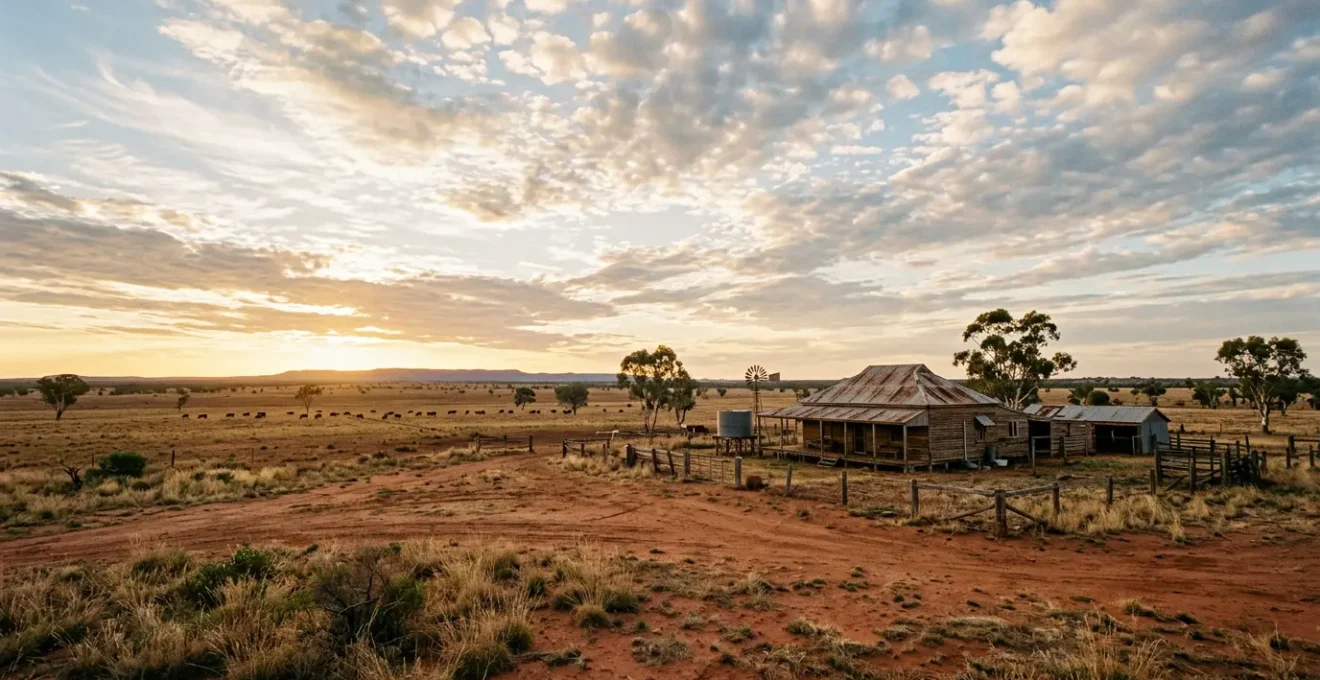
A station stay is not a work-for-accommodation deal; it’s an invitation into our home, and the « rules » are about your safety, not your labour.
- Water isn’t just scarce; it’s a fragile, costly resource we must all protect.
- Cattle are not gentle giants; they are powerful animals with strong maternal instincts.
- Access roads are a major risk; your rental car insurance is likely void without explicit permission.
Recommendation: Treat your stay as a paid holiday with unique responsibilities, not a working contract. Ask, listen, and respect the environment.
There’s a romantic idea about the Australian Outback, one filled with vast landscapes, rugged characters, and a true escape from city life. Many travellers, seeking that authentic experience, look into staying on a working cattle or sheep station. But this is where the confusion starts. You see terms like « WWOOFing, » « farm work, » and « station stay » used almost interchangeably, leaving you wondering: am I signing up for a job, or am I booking a holiday?
Let me be blunt, as someone who runs one of these properties. The biggest misunderstanding we see is the blurred line between being a ‘worker’ and being a ‘guest’. A traditional work-for-board arrangement is a specific contract. A station stay, on the other hand, is a paid tourism experience. It’s your holiday. But it’s a holiday in our home and our workplace—an environment that is often remote, resource-scarce, and potentially dangerous. The « rules » you hear about aren’t chores we’ve invented for you. They are the essential framework for keeping you, our livestock, and our livelihood safe.
This isn’t about getting free labour. It’s about you understanding the operational reality of the Outback. It’s a partnership where you get an unparalleled authentic experience, and in return, you act as a respectful, responsible visitor. This mindset shift is the single most important thing you can pack for your trip.
To help you prepare, this guide will walk you through the non-negotiable realities of station life, from the simple act of closing a gate to the reasons behind a timed shower. Think of this not as a list of demands, but as your handbook for a truly memorable and, most importantly, safe outback adventure.
Table of Contents: Station Stay Realities: What Every Guest Needs to Know
- Opening Gates: The One Rule You Must Never Break on a Station
- Water Scarcity: Why Are Showers Limited to 3 Minutes on Stations?
- Cattle Safety: Why You Should Never Walk Through a Herd of Cows?
- Communal Dinners: What Is the Etiquette for Eating with the Station Family?
- 2WD Access: Can You Reach the Station Homestead in a Rental Car?
- Public BBQs in Parks: How to Operate the Electric Hotplates Correctly?
- Bush Tucker Knowledge: How Do Custodians Identify Edible Plants?
- Driving the Outback: How Much Water Per Person Do You Really Need?
Opening Gates: The One Rule You Must Never Break on a Station
It seems so simple, but the single most important rule of the bush is this: leave gates as you find them. If a gate is open, leave it open. If it’s closed, you must close it immediately after passing through. This isn’t just a quaint country custom; it’s a critical part of our business and safety protocol. Those gates are the only thing separating different mobs of cattle, keeping valuable bulls from the wrong herd, or preventing hundreds of animals from wandering onto a public road or into a paddock with no water.
A single gate left open can cost us days of mustering work and thousands of dollars in lost time and fuel. More seriously, it creates a significant hazard. Livestock on roads can cause fatal accidents, and mixing herds can disrupt breeding programs. The danger isn’t just financial; around 17% of all farm injuries involve animals, and unpredictable situations caused by an open gate increase that risk for everyone. You are entering an operational workplace, and the position of every gate is deliberate.
To ensure you do it correctly and safely, always follow this simple protocol:
- Approach Calmly: Never rush or throw a gate open. Sudden movements can startle livestock nearby.
- Check Both Sides: Before opening, look for animals on either side and ensure you have a clear path to drive through and to exit.
- Open and Secure: Open the gate only as wide as necessary for your vehicle. Hold it firmly, as a gust of wind can slam it shut, causing injury or damage.
- Close and Latch Immediately: After passing through, close the gate right away. Don’t drive 100 metres and plan to walk back. Always double-check that the latch is securely fastened before you leave.
This simple act of respect and diligence shows us that you understand you’re not in a public park; you’re a guest in a carefully managed environment.
Water Scarcity: Why Are Showers Limited to 3 Minutes on Stations?
When you’re asked to take a three-minute shower, it’s not because we’re trying to spoil your fun. It’s a direct reflection of the fragility of our water supply. Out here, water doesn’t just come from a tap connected to a city-wide system. It’s pumped from deep underground using a bore, stored in tanks, and piped over long distances. This infrastructure is expensive to install, costly to maintain, and vulnerable to mechanical failure and drought. Every single litre is precious.

The water we use for drinking, cooking, and washing is the very same water our animals and crops depend on. A long, hot shower by one person can be the equivalent of a day’s drinking water for livestock. The reality for us, as highlighted by CSIRO research on remote water supply, is a constant battle with scarcity, variable water quality from groundwater, and high energy costs for pumping and treatment. We are living in a state of permanent water conservation.
So, when you see that timer in the shower, see it as an invitation to participate in the rhythm of Outback life. It’s a small act of resource stewardship that makes a huge difference. It shows you understand that on a station, luxury isn’t a long shower; it’s the fact that we have clean, running water at all. We appreciate every guest who helps us protect it.
Cattle Safety: Why You Should Never Walk Through a Herd of Cows?
There’s a pervasive image of cows as slow, docile, and gentle creatures. This is a dangerous misconception. A station is a livestock-centric environment, and for your own safety, you must treat all cattle as potentially dangerous. The number one rule is to never, under any circumstances, walk into or through a herd of cattle, especially with a dog, and most especially if there are calves present. A cow’s maternal instinct is incredibly powerful, and she will not hesitate to defend her calf if she perceives you as a threat.
These are not petting zoo animals; they are large, powerful, and can move with surprising speed. An adult cow can weigh over 500kg, and being charged, knocked over, or trampled can cause serious injury or death. In fact, contrary to popular belief about sharks and spiders, cows kill more than 20 people in the United States each year, typically from blunt force trauma. You must give them a wide berth, respect their space, and never get between a mother and her calf.
Case Study: The Underestimated Risk of Maternal Defensiveness
While bulls are famously dangerous, a formal analysis of livestock-handling incidents found a distinct and often overlooked danger category: protective mothers. Research found that several fatalities were directly caused by cows attacking people who were attempting to assist them during birthing. While bulls account for a large percentage of cattle-related deaths, these incidents highlight that maternal defensiveness is a serious risk. For a station visitor who is unfamiliar with cattle behaviour, unknowingly approaching a newborn calf could trigger the same protective aggression, with severe consequences.
Always ask us where it is safe to walk. We know the paddocks and the temperament of our animals. Your safety is our responsibility, but it requires your full cooperation and respect for the animals whose home you are visiting.
Communal Dinners: What Is the Etiquette for Eating with the Station Family?
One of the most rewarding parts of a station stay is often the communal dinner, where guests, family, and station hands all come together to share a meal. This is a chance to hear stories, ask questions, and get a real insight into our lives. However, it’s important to remember you are joining the family table, not dining at a restaurant. There’s an unspoken etiquette that helps everything run smoothly.
Firstly, be on time. The meal is usually served at a set time because people have had a long day and are hungry. Holding up dinner because you’re finishing a phone call is considered poor form. Secondly, come with an open mind and a good appetite. We pride ourselves on hearty, home-cooked meals, but we aren’t a restaurant with a menu. Complaining about the food is a major faux pas. If you have a genuine, severe dietary allergy, you must inform us well in advance of your arrival, not as you sit down to eat.
Participation is key. Don’t just sit there silently. Engage in conversation, show interest in the day’s work, and share a bit about your own travels. It’s a two-way street. After the meal, it’s a much-appreciated gesture to offer to help clear the table or do the dishes. You may be waved off, but the offer itself shows gratitude and a willingness to be part of the household, not just a consumer. This simple act of communal living is at the heart of station hospitality.
2WD Access: Can You Reach the Station Homestead in a Rental Car?
The journey to the station is part of the adventure, but it’s also where things can go seriously wrong. Many stations are accessible by a standard two-wheel-drive (2WD) car, but this is always conditional. An « accessible » dirt road can be transformed into an impassable bog by a single afternoon of heavy rain. The road surface can be heavily corrugated, full of sharp stones, and may involve crossing dry (or not-so-dry) creek beds. It is not the same as driving on a sealed highway.
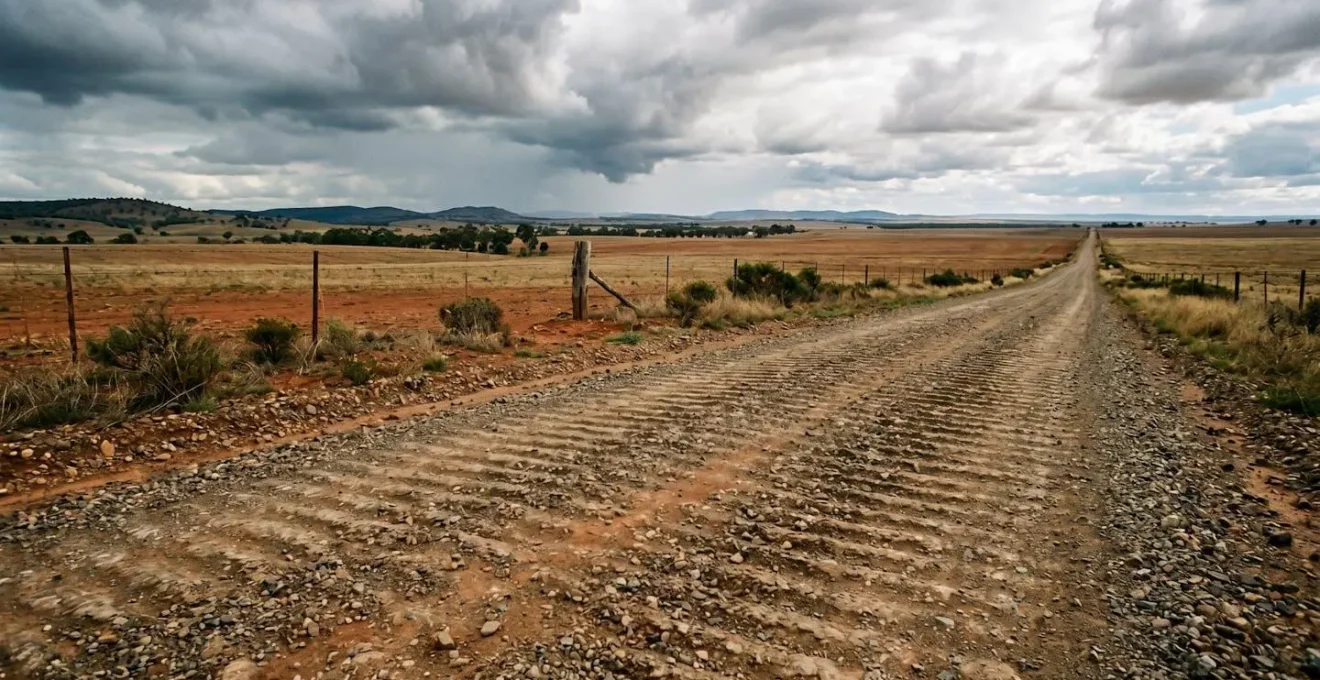
The biggest mistake guests make is assuming their rental car is cleared for the journey. It almost never is. You must read your rental agreement carefully. Standard insurance policies are often voided the moment you drive on an unsealed road. As many Australian rental car insurance policies state, even with full coverage, damage incurred on unsealed roads is typically excluded, and repair costs for suspension damage or retrieval costs if you get bogged can run into thousands of dollars. You are personally liable for that entire cost.
Before you even think about starting the drive, you must treat the access as a critical planning stage. Your holiday doesn’t start when you arrive; it starts with ensuring you can arrive safely and without a massive, unexpected bill.
Your Pre-Departure Checklist for Station Access Roads
- Call Ahead: Contact the station 24-48 hours before you plan to arrive. Ask for a direct confirmation of the current road conditions for a 2WD vehicle.
- Verify Rental Permission: Contact your rental car company and get explicit, written permission to drive on the specific unsealed roads to the station. Verbal confirmation is not enough to protect you.
- Document Everything: Take a photo of the relevant clause in your rental agreement and save the station’s email about road conditions. This documentation is vital if a dispute arises.
- Inspect Your Tyres: Before leaving the nearest town, check your tyres. Standard road tyres are highly susceptible to punctures on sharp gravel. A flat tyre 100km from help is a serious problem.
- Check the Weather History: Look at the weather forecast for the days leading up to your trip. Even if it’s sunny on your travel day, recent rain can leave the road soft and treacherous.
Public BBQs in Parks: How to Operate the Electric Hotplates Correctly?
As part of your trip, you’ll likely spend time off the station exploring local towns or national parks. One of the great features of public spaces in Australia is the free electric barbecue. But for many international visitors, they can be a bit of a mystery. They don’t have knobs or gas bottles. Using them is part of the Australian outdoor experience, and it’s incredibly simple once you know how.
These BBQs are designed for safety, simplicity, and public use. You’ll typically find a metal hotplate set into a brick or metal structure. Somewhere on the front or side, there will be a single push-button. That’s the entire control system. Press the button firmly, and a timer will activate the heating element. A small light will often turn on to show it’s working. The hotplate will heat up over a few minutes—it’s not instant.
The timer usually runs for about 15-20 minutes. If you need more time, you simply press the button again. The most important rule of public BBQ etiquette is to clean it after you’re done. While the hotplate is still warm, use the provided scraper (if there is one) or some paper towels to scrape off any food residue. Leave it clean for the next person. It’s a simple system built on shared respect, much like the rules back at the station.
Bush Tucker Knowledge: How Do Custodians Identify Edible Plants?
The Australian bush is full of life, and there’s a growing fascination with « bush tucker, » the traditional foods used by Aboriginal and Torres Strait Islander peoples for millennia. On the station, you’ll see a huge variety of native plants. However, my advice on this topic is simple and absolute: do not touch, and do not taste anything. The identification of edible and medicinal plants is a highly specialised, deep cultural knowledge passed down through generations. It is not something you can learn from a webpage or a quick guide.
Custodians identify plants through a lifetime of learning, considering factors like the season, the specific location, subtle variations in leaf shape or flower colour, and the correct preparation methods. Many edible plants have toxic look-alikes that can cause severe illness or death. Some plants are only edible at certain times of the year, or only after complex preparation like leaching or cooking to remove toxins. Misidentification is a life-threatening risk.
The knowledge of bush tucker is not just a survival skill; it’s a profound cultural heritage. The best way for a visitor to show respect for this knowledge is to admire the flora of the Outback without interfering with it. If you have the opportunity to go on a guided tour with a local Indigenous custodian, that is the only safe and appropriate way to learn about this fascinating subject. Otherwise, the rule is to look, appreciate, and leave it be.
Key takeaways
- Your visit is a guest holiday, not a work exchange; respect for rules is the price of admission.
- Safety is paramount: Livestock, water, and roads are the three biggest risks to underestimate.
- Preparation is everything: Your journey begins before you leave home, with the right vehicle, permissions, and supplies.
Driving the Outback: How Much Water Per Person Do You Really Need?
When you leave the station to explore or when you’re making the long drive between towns, water becomes your most critical asset. Running out of fuel is an inconvenience; running out of water is a life-threatening emergency. The question of « how much to carry » is not one to take lightly. The answer depends on your vehicle, the time of year, and the remoteness of your route, but a robust baseline is essential for survival.
You need to think about water in three distinct categories: water for drinking, water for auxiliary use, and water for your vehicle. Never mix them. The water for your radiator might not be safe to drink, and you don’t want to be forced to use your precious drinking supply to wash a windscreen. A structured approach ensures you have what you need for every contingency.
This table, based on emergency survival principles, outlines the absolute minimums you should consider. In the heat of summer, your drinking water needs will increase significantly.
| Water Tier | Purpose | Minimum Quantity per Person | Storage Notes |
|---|---|---|---|
| Tier 1: Drinking Water | Primary hydration in hot, dry conditions | 5-7 litres/day | Store in multiple smaller containers for redundancy |
| Tier 2: Washing/Cooking | Food preparation, basic hygiene, medical needs | 10 litres (emergency stash) | Can be rationed if primary water secure |
| Tier 3: Vehicle Water | Radiator emergency, windscreen cleaning | 20 litres minimum | Separate container, not for consumption |
| Based on WHO optimal access recommendations of 100+ litres per person per day for normal conditions, reduced for emergency outback travel survival baseline, as mentioned in studies like those from the CSIRO. | |||
Understanding these realities—from gates and water to cattle and cars—is the key to transforming a potentially stressful trip into the authentic Outback adventure you’re looking for. It’s about shifting your mindset from a passive tourist to a respectful and prepared visitor.
Now that you’re equipped with this knowledge, your next step is to communicate directly with your host station. Ask them about their specific road conditions and rules before you book, and arrive ready for the experience of a lifetime.