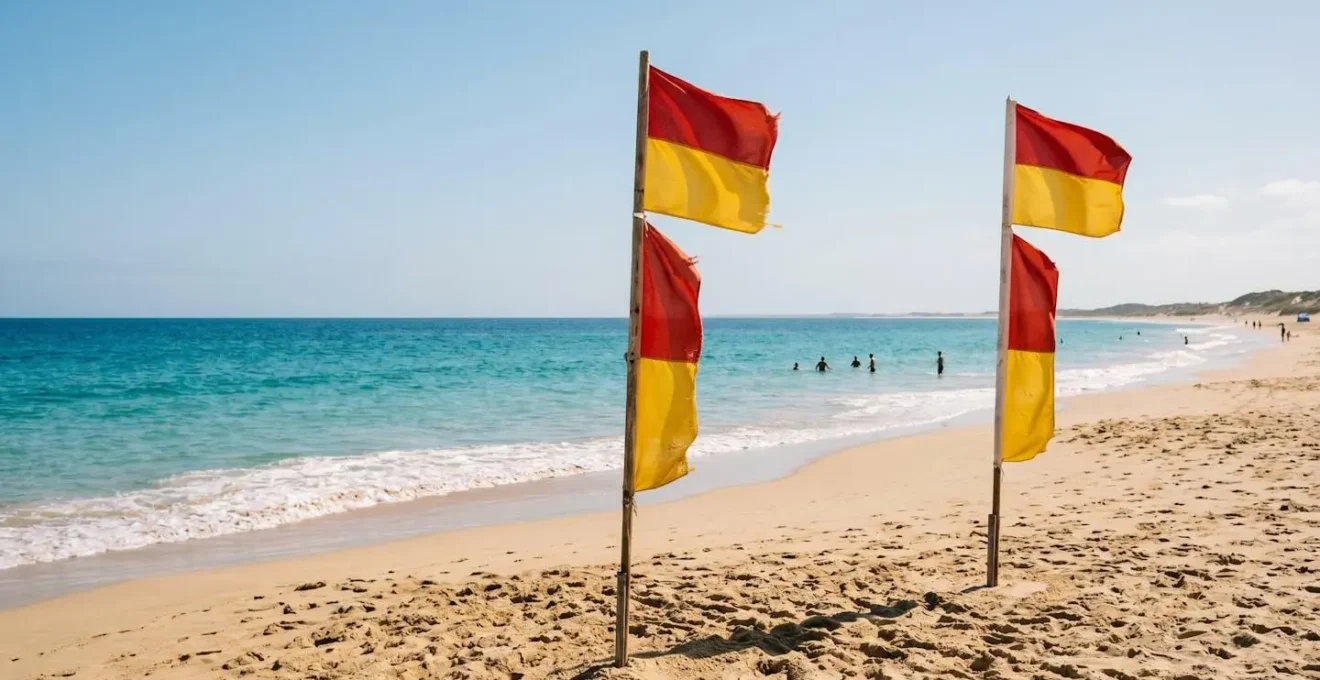
You might think an Australian beach is just a sunnier version of one in Cornwall or Brighton, but that assumption is dangerously wrong. The gentle « advice » you’re used to in the UK is a life-or-death command here. This guide explains the lethal, often invisible forces like rip currents and extreme UV that shape our non-negotiable rules. Understanding that our lifeguards aren’t making suggestions but issuing orders based on these threats is the key to your survival and enjoyment.
As a volunteer surf lifesaver, I see it every summer. A British family arrives, dazzled by the golden sand and turquoise water, and they head straight for a quiet, seemingly calm patch of water away from the crowds. To them, the red and yellow flags are just a suggestion, a marker for the busiest area. Within minutes, I’m on a rescue board, paddling furiously towards them as they’re dragged out to sea by a rip current they never saw coming. They heard the rule « swim between the flags, » but they didn’t understand the life-or-death reason behind it.
The Australian coastline is not the gentle seaside of Europe. It’s a dynamic, powerful, and often deceptive environment. The rules you see on our beaches—the flags, the sirens, the signs—are not arbitrary bits of bureaucracy. They are the direct language of the ocean, translated for you by people who spend their lives learning to read it. The biggest mistake a tourist can make is treating our safety protocols as polite advice. Here, they are commands.
This isn’t about scaring you away; it’s about welcoming you safely. We want you to have the time of your life, to feel the sand between your toes and the refreshing spray of the Pacific. To do that, you need to understand the unwritten cultural contract and the very real hazards that our beach culture is built to manage. This guide will decode those rules for you, from the sun’s invisible threat and the protocol for a shark alarm, to the costly mistake you can make with a simple sandwich at the airport. Think of me as your mate on the beach, giving you the local knowledge you need to stay safe.
In this guide, we will cover the essential codes of conduct that go far beyond just where to swim. From sun protection and alcohol rules to bushfire awareness and biosecurity, you’ll gain the insight needed to navigate your Australian holiday with the confidence of a local.
Summary: A Tourist’s Guide to Australian Beach Etiquette and Survival
- SPF 50+ Is Not Enough: Why You Need a Rash Vest for Midday Sun?
- Alcohol on Beaches: Can You Drink a Beer at Coogee Picnic Areas?
- Solo Travellers: How to Keep Valuables Safe While You Swim?
- Walking on Dunes: Why Is Restoration Vegetation So Sensitive?
- Shark Alarms: What Exactly Should You Do When the Siren Sounds?
- Bushfire Season: How to Read the « Fire Danger Rating » Signs?
- The « Sandwich Mistake » That Could Cost You $2,664 AUD at Customs
- Staying Fit on Holiday: Where to Find Free Outdoor Gyms in Sydney?
SPF 50+ Is Not Enough: Why You Need a Rash Vest for Midday Sun?
In the UK, a sunny day is a reason to celebrate. In Australia, it’s a hazard to be managed. The single biggest shock for many European visitors is the sheer intensity of our sun. It’s not just « a bit stronger »; it’s a completely different beast. Due to our proximity to the Antarctic ozone hole and clear skies, the ultraviolet (UV) radiation is extreme. You can burn in as little as 10-15 minutes, even on a cloudy day. Applying SPF 50+ once in the morning is simply not enough protection for a day at the beach.
The Cancer Council Australia confirms this with stark data. On a typical summer day, we can experience UV levels of 12-14+ with peaks reaching 16-17 in northern parts of the country—levels classified as « extreme. » At these levels, sunscreen alone, which sweats off and gets rubbed away by sand and towels, is a failing strategy. That’s why you’ll see so many locals, especially children, swimming in long-sleeved « rashies » or rash vests. It’s not a fashion statement; it’s a critical piece of safety equipment.
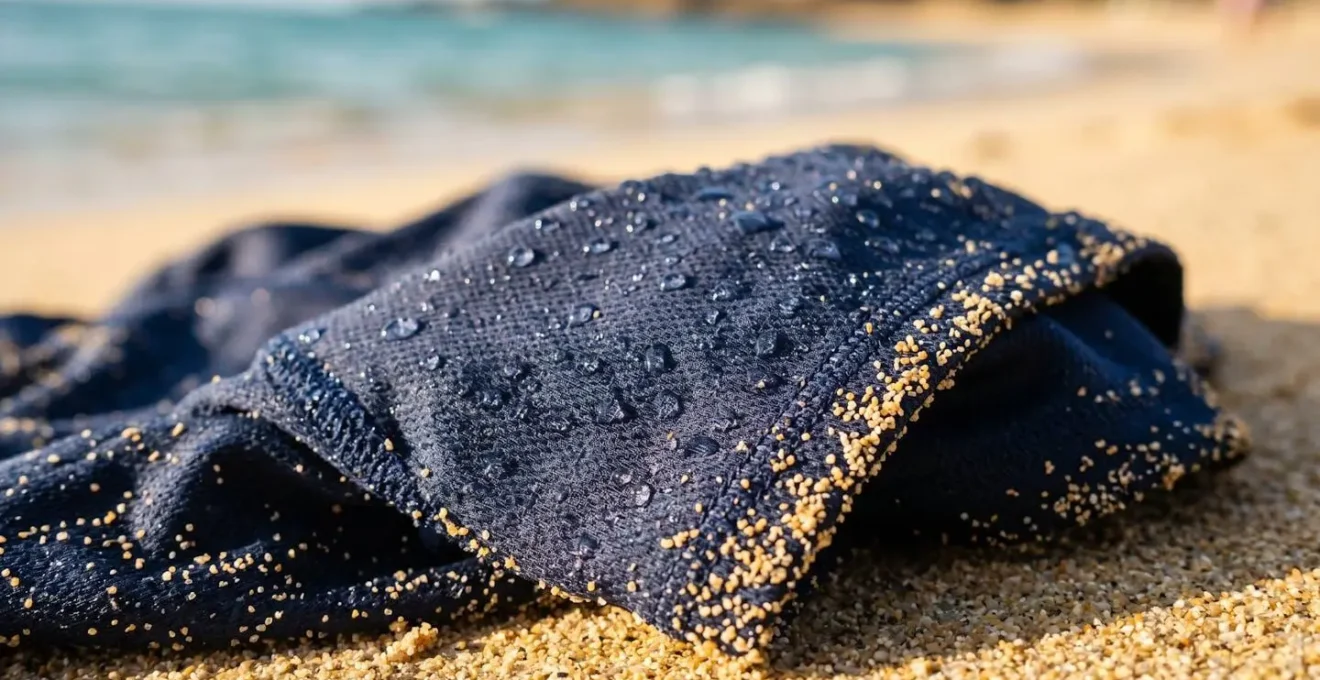
A UPF 50+ rash vest provides a constant, reliable physical barrier against the sun, especially during the peak UV hours of 10 am to 3 pm. It protects your back, shoulders, and torso—areas that are most exposed when swimming or building sandcastles. Following the Aussie mantra of « Slip, Slop, Slap, Seek, Slide » (Slip on a shirt, Slop on sunscreen, Slap on a hat, Seek shade, Slide on sunglasses) is the only way to properly prepare for a day under our sun. Think of a rash vest as your personal shade cloth you can wear into the water.
Alcohol on Beaches: Can You Drink a Beer at Coogee Picnic Areas?
A sunset beer on the beach sounds idyllic, but in many parts of Australia, it’s an activity that can land you with a hefty fine. While beach culture is relaxed, it’s also heavily regulated to ensure public safety and amenity. Most popular city beaches, especially in areas like Sydney, have designated Alcohol-Free Zones or Alcohol-Prohibited Areas. These are not suggestions. The rules for Coogee Beach in Sydney, for instance, are strict: there is a permanent, 24/7 alcohol ban on the sand, the promenade, and in all adjacent parks and reserves.
These rules weren’t put in place to spoil the fun. They are a direct response to serious public safety incidents. After a particularly chaotic Christmas Day in 2016, Randwick Council implemented the total ban at Coogee. The reasoning is solid: alcohol impairs judgement, and impaired judgement around powerful surf is a deadly combination. It also contributes to anti-social behaviour and litter. In fact, after similar restrictions were put in place across Sydney, some areas saw as much as a 40% reduction in alcohol-related incidents. The rules work, and they are enforced.
So how do you know where you can and can’t have a drink? It’s your responsibility to look for the signage. Councils make it very clear, but you need to know what you’re looking for. Ignorance of the law is no excuse, and rangers do patrol these areas.
Your Action Plan: Checking Alcohol Restrictions on Aussie Beaches
- Look for signs: Before you even step onto the sand, check for official council signs at beach entrances, pathways, and near amenities blocks.
- Identify the sign type: ‘Alcohol Prohibited Area’ signs are usually square with clear red-and-black prohibition symbols (a bottle with a red circle and slash).
- Check the times: Note if the ban is permanent (24/7) or timed (e.g., from 9 pm to 9 am). Coogee’s ban is permanent, which is becoming more common.
- Know the zones: Understand that ‘Alcohol-Free Zones’ often apply to public roads and footpaths, while ‘Alcohol-Prohibited Areas’ apply to parks and beaches. The rules can be specific to each space.
- When in doubt, ask: The lifeguards on patrol are the ultimate authority. A quick, polite question can save you a fine and a lot of hassle.
Solo Travellers: How to Keep Valuables Safe While You Swim?
You’re travelling alone, the ocean looks incredible, but the age-old problem arises: what do you do with your phone, wallet, and keys? Leaving a bag unattended on a busy beach feels like an invitation for disaster. While theft is not rampant on Australian beaches, it does happen. However, there are two uniquely Australian approaches to this problem: the clever decoy and the « cultural contract. »
First, the decoy. The key is to think like a thief: they are looking for a quick, easy score, like a wallet or phone left in a shoe or wrapped in a towel. They are not interested in rummaging through your beach junk. This is where you can get creative. The goal is to hide your valuables in something that has zero perceived value. Here are a few tried-and-tested methods from locals:
- The Sunscreen Bottle: Clean out an empty, wide-mouthed sunscreen bottle. It’s the perfect size for a key, a card, and some cash. No one steals used sunscreen.
- The Nappy/Diaper Trick: This is the gold standard of deterrents. Wrap your valuables in a clean, disposable nappy. It looks so unappealing that no one will ever touch it.
- The Snack Packet: An empty Pringles can or a large chip packet can also work well for hiding small items among your other snacks.
The second, and perhaps more telling, method is tapping into the informal beach community. This is a brilliant example of our unspoken cultural contract, a system built on mutual, short-term trust.
The Community Guardian System
It is incredibly common and culturally accepted for a solo beachgoer to approach a nearby family or couple and say, « Excuse me, would you mind just keeping an eye on my stuff while I go for a quick swim? » As Fodor’s Travel highlights, this is a widely trusted practice. The key is to choose your guardian wisely—a family with kids already set up for the day or an older couple are perfect candidates. It’s a low-risk, high-reward social interaction. It reinforces a sense of community and is far safer than leaving your bag completely alone. Offering to return the favour is always appreciated and strengthens that beach community spirit.
Walking on Dunes: Why Is Restoration Vegetation So Sensitive?
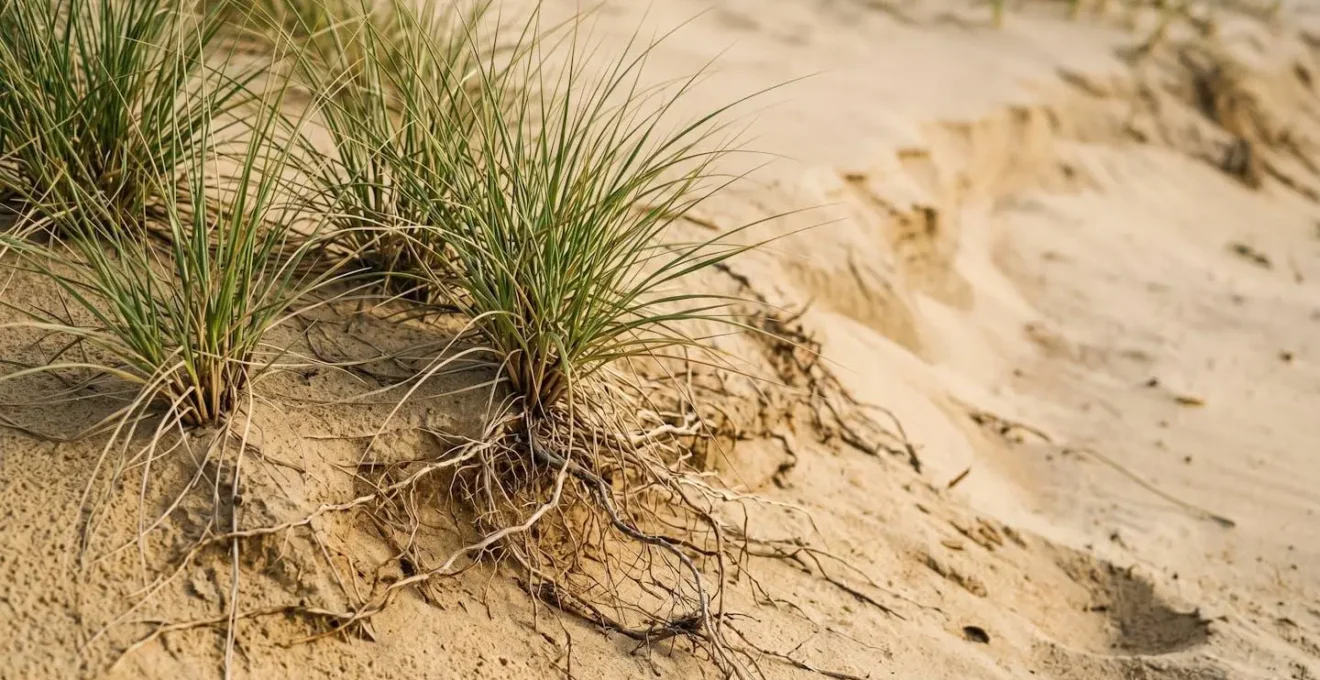
At the back of many Australian beaches, you’ll see sand dunes covered in wispy grasses, often with signs asking you to keep off. To an unfamiliar eye, it might just look like a patch of hardy coastal scrub. The temptation to take a shortcut over the dune to the car park is strong. Please, I’m begging you, don’t do it. Those dunes are the beach’s first and last line of defence, and the vegetation is the only thing holding them together.
The native grasses you see, like Spinifex, have incredibly deep and complex root systems that act like a net, binding the sand together and preventing it from blowing away. This is what stops coastal erosion and protects the properties and infrastructure behind the beach. When you walk on these plants, you break the fragile stems and compact the sand around their roots, killing them. A single track can create a « blowout, » a channel for the wind to funnel through, which can unravel an entire dune system in a matter of months. What seems like a harmless shortcut is actually an act of ecological vandalism.
What many visitors don’t see is the immense human effort that goes into keeping these dunes alive. All along the coast, we have dedicated volunteer groups like Bushcare and Dune Care who work tirelessly to protect our coastline.
The Unseen Labour of Dune Restoration
Projects like the West Beach Dune Restoration in South Australia showcase this community investment. Local volunteers spend thousands of hours—their free weekends and evenings—growing native plants in special nurseries, preparing the dunes, and then painstakingly planting each seedling by hand. They work through hot summers and cold winters to give these plants the best chance of survival. A single person trampling through a restoration site can destroy hundreds of hours of back-breaking volunteer labour in just a few seconds. When you see a « Keep Off Dunes » sign, you’re not just being told to follow a rule; you’re being asked to respect the hard work and passion of the local community.
Shark Alarms: What Exactly Should You Do When the Siren Sounds?
Let’s talk about the topic on every tourist’s mind: sharks. Yes, there are sharks in Australian waters. However, an encounter is incredibly rare, and our beaches have world-class surveillance and response systems. The most important thing for you to know is not how to fight a shark, but how to respond to a shark alarm. When that siren wails, there is a strict, non-negotiable protocol. This is the ultimate example of « command, not suggestion. »
The siren or alarm signifies that a potentially dangerous shark has been sighted nearby, either by a lifeguard, a drone, or a helicopter patrol. Your one and only job is to get out of the water. There is no time for debate, hesitation, or trying to spot it for yourself. Panic is your enemy; a calm but swift exit is your goal. Drowning is a far greater risk at our beaches than sharks, and panicking in the water is a primary cause of drowning.
Once you hear the alarm, follow this chain of command precisely. This procedure is designed by Royal Life Saving Australia to ensure everyone gets to safety quickly and allows lifeguards to manage the situation effectively.
- Exit Immediately: The moment you hear the siren, turn and head directly to shore. Do not wait for others, do not try to see the shark. Just move.
- Move Calmly and Quickly: Swim or wade purposefully to the beach. Thrashing or panicking wastes energy and can put you in danger.
- Clear the Water’s Edge: Once on the sand, move well up the beach, away from the water. This gives lifeguards a clear line of sight and space to work.
- Give Lifeguards Space: Do not crowd the lifeguard tower or their vehicles. They need to coordinate, potentially launch jet skis or drones, and communicate without distraction.
- Await the All-Clear: Stay out of the water until lifeguards give the official « all-clear. » This may be a different siren pattern, a public announcement, or the re-raising of the red and yellow flags. Do not re-enter the water just because some time has passed.
Bushfire Season: How to Read the « Fire Danger Rating » Signs?
Australia’s natural beauty comes with powerful, and sometimes dangerous, forces of nature. During the warmer months (which can stretch from October to March), the threat of bushfires is a serious reality, especially if you plan to travel outside the main cities. On your drives, you will see large, colour-coded signs on the roadside: the Fire Danger Rating signs. These are not just for locals; they are a critical piece of travel information for you.
This sign tells you the predicted fire danger for that day. Ignoring it can have catastrophic consequences. A rating of ‘Extreme’ or ‘Catastrophic’ means that if a fire starts, it will be fast-moving, unpredictable, and likely uncontrollable. On these days, your travel plans must change. National parks will close, and entering any bushland area is extremely dangerous. You should not be on the road in these areas unless absolutely necessary. Many tourist tragedies have occurred because visitors underestimated what these ratings mean.
The system is designed to be simple and clear. Learning to read it is a non-negotiable skill for any summer road trip in Australia. As this table from the NSW Rural Fire Service (RFS) shows, each level requires a different response from you as a traveler.
| Fire Danger Rating | Color Code | What It Means for Travelers | Recommended Action |
|---|---|---|---|
| Low-Moderate | Green | Normal conditions, low fire risk | Plan your day as normal, stay informed |
| High | Yellow | Increased fire risk, be vigilant | Reconsider remote bushwalks, have evacuation plan |
| Extreme | Orange | Dangerous fire conditions | National Parks may close – do not travel into bushland areas |
| Catastrophic/Code Red | Red | Unsurvivable fire conditions | Your plans MUST change – stay in populated coastal areas |
The « Sandwich Mistake » That Could Cost You $2,664 AUD at Customs
Your first test of Australian rules happens before you even see a beach. After a long flight, you’ll be handed an Incoming Passenger Card. This is a legally binding document, and a simple mistake—like forgetting to declare a piece of fruit or a ham sandwich from the plane—can result in massive fines. This is not about revenue-raising; it’s about protecting our unique and fragile environment from foreign pests and diseases. We call it biosecurity, and we take it extremely seriously.
Australia is an island, and our isolation has kept us free from many of the world’s most damaging agricultural diseases. A single piece of fruit could carry fruit fly larvae that could devastate our horticultural industry. A meat product could introduce something like foot-and-mouth disease. The consequences are so severe that the penalties are designed to be a powerful deterrent. Failing to declare risk items can result in fines up to $2,664 AUD on the spot, or even prosecution and visa cancellation for severe breaches.
The golden rule is simple: When in doubt, declare it. The worst that can happen if you declare a prohibited item is that a friendly officer will confiscate and dispose of it. If you don’t declare it and get caught, you face a huge fine. Before you get to the customs checkpoint, you’ll see large « Amnesty Bins. » This is your last chance to dispose of any food or organic items you’re unsure about, with no penalty and no questions asked. Here is a basic guide to what’s high-risk (Red List) and what’s generally okay (Green List).
- RED LIST (Always declare): Fresh fruit and vegetables, all meat and dairy products (including sealed items like jerky), honey, seeds, nuts, and any wooden or plant-based souvenirs.
- GREEN LIST (Usually okay, but declare if unsure): Commercially packaged biscuits, chocolates, and coffee.
Key Takeaways
- Australian beach rules are non-negotiable commands based on real, often invisible dangers like rip currents and extreme UV.
- Safety protocols extend beyond the water, covering sun protection, alcohol bans, dune preservation, and bushfire awareness.
- Respecting biosecurity at the airport by declaring all food is a critical first step to a trouble-free holiday.
Staying Fit on Holiday: Where to Find Free Outdoor Gyms in Sydney?
Part of the Australian beach lifestyle is a deep connection to health and fitness. You’ll see people out walking, running, surfing, and swimming at all hours of the day. For us, staying active isn’t a chore; it’s a way of life deeply integrated with our love for the outdoors. The great news for visitors is that you don’t need an expensive gym membership to join in. Our coastline and parks are our gym, and they’re almost always free.
Sydney, in particular, is dotted with fantastic free outdoor gyms. These aren’t just a few rusty bars; many are state-of-the-art calisthenics parks with equipment for pull-ups, dips, leg raises, and more. One of the most famous is the iconic outdoor gym at North Bondi Beach. Working out with a world-class view of one of the planet’s most famous beaches is an experience in itself. You’ll find a mix of locals, backpackers, and fitness fanatics all sharing the space and the positive energy.
But it’s not just about dedicated gyms. The entire coastline is a fitness playground. The Bondi to Coogee coastal walk is a 6km trail of breathtaking views, staircases, and hills that provides a brilliant workout. You can also join a local « Parkrun, » a free, timed 5km run held in parks all across Australia every Saturday morning. It’s a fantastic way to meet people and feel part of the community. Ultimately, staying fit here is as simple as putting on your trainers and stepping outside. It’s about embracing the environment, not being confined by four walls.
Embrace these codes not as restrictions, but as your entry ticket to experiencing Australia’s magnificent coastline the way we do: safely and with respect. Heed the signs, listen to the lifesavers, and you’ll have the holiday of a lifetime.