In summary:
- Bluebottle stings are not random; they are primarily driven by summer north-easterly winds pushing them onshore.
- Wave danger is predictable. Check the swell direction and period—if it aligns with the pool’s opening, expect waves.
- Not all pools are equal. Sheltered pools like Wylie’s Baths offer more protection from stingers and swell than exposed ones like Bronte.
- Apply the « swim between the flags » mentality: identify safe zones in the pool away from seaward walls and overflow channels.
That perfect Instagram shot from the edge of Bondi Icebergs, with turquoise water and crashing waves, is an iconic Sydney moment. But for many swimmers, the dream is tinged with anxiety: the paralyzing fear of a bluebottle’s sting or being caught off-guard by a rogue wave smashing into the pool. The common advice is often vague— »check the weather » or « be careful in summer. » While well-intentioned, this advice treats ocean hazards as a matter of luck.
The truth is, swimming safely in Sydney’s ocean pools has little to do with luck and everything to do with knowledge. It’s about learning to read the ocean’s subtle cues—the wind direction, the swell’s rhythm, the very architecture of the pool itself—with the intuition of a local who swims there every day. It’s about understanding the predictable patterns that govern these beautiful but wild environments. Forget just hoping for the best; the real secret is knowing *what* to look for before you even dip a toe in.
This guide will equip you with that local’s intuition. We’ll move beyond generic warnings to give you the practical skills to predict hazards. We’ll explore which pools offer the best protection, how to handle the surprisingly chilly water, and the unwritten rules of safety that keep the community of swimmers secure, so you can finally get that perfect photo without the painful souvenir.
To help you navigate these iconic swimming spots like a seasoned local, this article breaks down the essential knowledge into clear, actionable sections. Below is a summary of what you’ll discover.
Summary: A Local’s Guide to Sydney’s Ocean Pools
- High Tide Hazards: When Do Waves Crash into the Pool?
- Bronte vs Wylie’s Baths: Which Pool Is Better for Lap Swimming?
- The « Cold Water Shock »: Why Is the Ocean Chilly Even in December?
- The History of Segregated Baths: Why Are McIver’s Ladies Baths Still Women-Only?
- Cleaning Schedules: How to Avoid Arriving When the Pool Is Empty?
- Solo Travellers: How to Keep Valuables Safe While You Swim?
- Kings Cross or Newtown: Which Sydney Precinct Is Safer for Solo Travellers?
- Australian Beach Safety: Why Swimming Between Flags Is Non-Negotiable?
High Tide Hazards: When Do Waves Crash into the Pool?
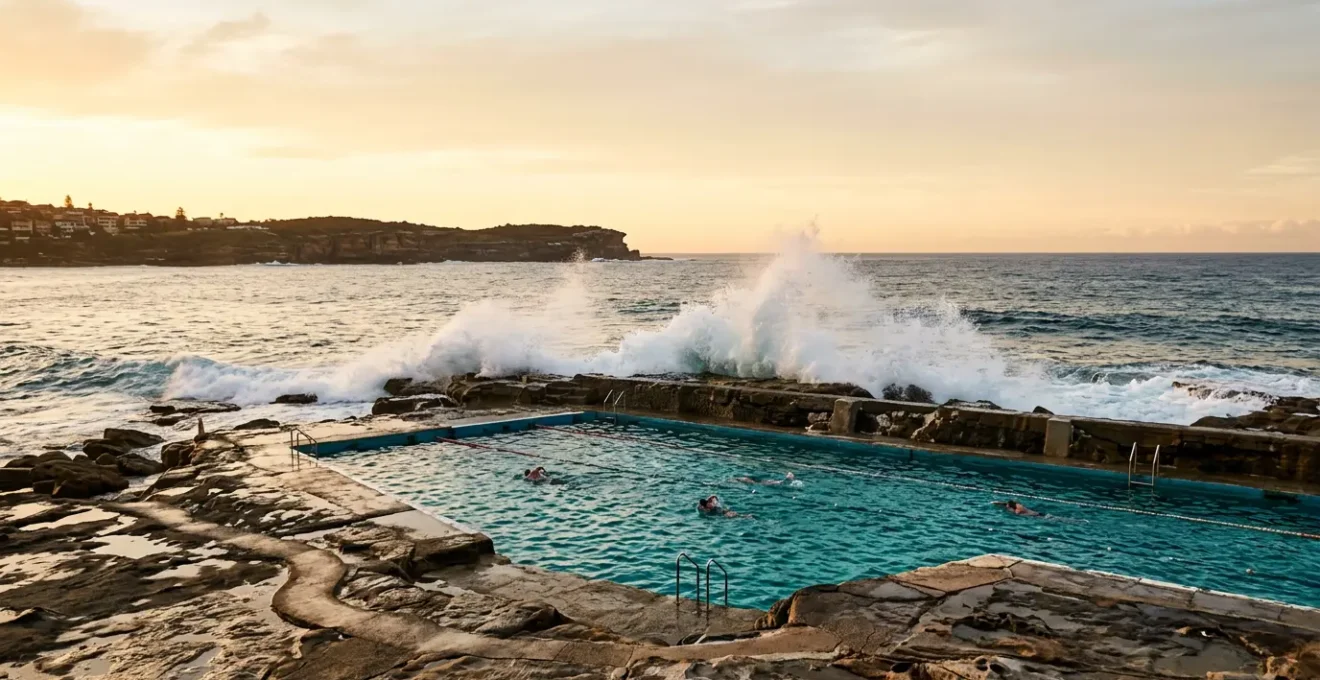
The dramatic spectacle of a wave crashing over the wall of an ocean pool is both thrilling and dangerous. This isn’t a random event; it’s a predictable outcome of specific ocean conditions. The two key factors are swell and tide. A high tide brings the water level closer to the top of the pool wall, reducing its effectiveness as a barrier. When this coincides with a large ocean swell, particularly a long-period swell (with more than 12 seconds between wave crests), the energy is sufficient to cause significant « overtopping. »
The direction of the swell is just as crucial. A pool that faces directly into the incoming swell (e.g., an east-facing pool during an easterly swell) will be hit head-on. This is also connected to bluebottle presence. North-easterly winds are the primary driver for pushing swarms of bluebottles onto Sydney’s beaches. In fact, after a summer north-easterly, research from UNSW Sydney found a 24% chance of bluebottle presence at Maroubra. These same winds can create a « funnel effect, » pushing stingers directly into exposed pools.
Your Action Plan: How to Predict Wave Overtopping
- Check the NSW Nearshore Wave Forecast for swell height, period, and direction. Pay attention to depths along the coast.
- Cross-reference swell direction with your pool’s orientation. Pools facing directly into the swell are most vulnerable.
- Monitor swell period data on apps like Windy or Surfline. A period over 12 seconds indicates powerful waves capable of breaching walls.
- Assess tide timing. The combination of high tide and large swell creates the maximum risk for overtopping.
- Look for visual cues at the pool: foaming water near the seaward wall, unusual turbulence, or debris signals an imminent breach.
By learning to read these three factors, you can anticipate hazardous conditions and choose a calmer time or a more sheltered pool for your swim.
Bronte vs Wylie’s Baths: Which Pool Is Better for Lap Swimming?
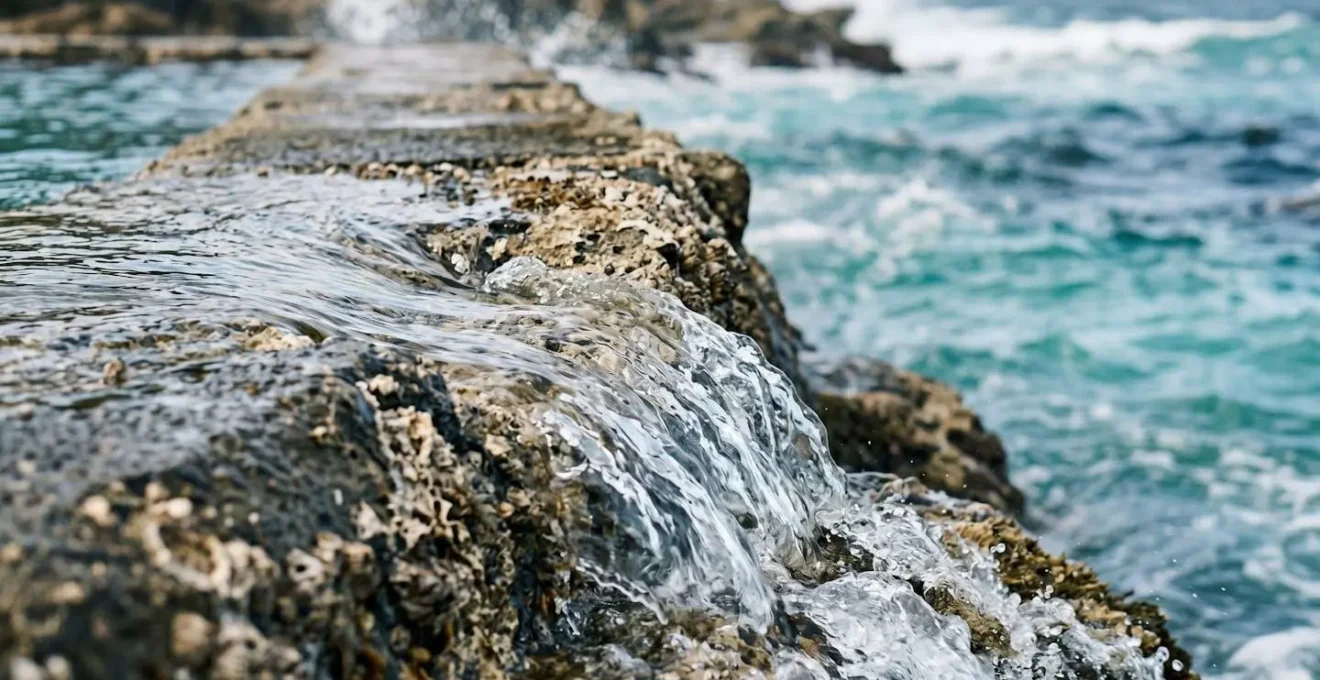
For those looking to swim laps, the choice of pool matters immensely. Two of the Eastern Suburbs’ most famous pools, Bronte and Wylie’s, offer vastly different experiences. Bronte Baths, a 30-metre pool built into the cliff face, is iconic and free. However, its major drawback for serious swimmers is its high exposure to ocean swell. During rough conditions, waves crash over the wall, filling the lanes with foam, seaweed, and turbulence, making consistent lap swimming difficult.
This exposure also affects the pool’s « tidal flushing »—the natural process of the ocean washing in and out, which can either clean the pool or fill it with debris and stingers. A high flushing rate is not always a good thing if the incoming water is full of bluebottles.
Conversely, Wylie’s Baths, a 50-metre heritage-listed pool just south of Coogee, is far more sheltered. Its position protects it from the direct impact of most swells, resulting in calmer water more conducive to uninterrupted laps. The trade-off is a modest entry fee, but this also brings benefits like on-site staff and a more controlled environment. The natural rock base at Wylie’s is teeming with marine life, making a swim feel like you’re in a natural aquarium rather than a concrete box.
The following comparison breaks down the key differences for lap swimmers.
| Feature | Bronte Baths | Wylie’s Baths |
|---|---|---|
| Pool Length | 30 meters | 50 meters (approx) |
| Entry Fee | Free | $5.50 adult |
| Exposure Level | More exposed to ocean swell, waves crash over dramatically when swell is up | More sheltered position south of Coogee, protected from direct swell |
| Water Clarity | Can become choppy with foam and seaweed during rough conditions | Natural rock base with lichen, seaweed, and marine life – like swimming in an aquarium |
| Lane Structure | Marked lanes on concrete bottom, formal lap swimming area separated from shallow end | Open-plan layout, cross currents at high tide challenge swimmers |
| Best For | Genuine local community feel, exciting adventure swims when rough, free 24/7 access | Heritage atmosphere with art deco changing sheds, calmer lap swimming, yoga and wellness sessions |
| Bluebottle Ingress Risk | Higher due to exposed seaward wall – funneling effect in lanes may increase encounters | Lower due to sheltered position – better natural flushing but cross currents during high tide |
Ultimately, for pure, uninterrupted lap swimming, the sheltered and structured environment of Wylie’s is superior, while Bronte offers a more raw and adventurous ocean experience.
The « Cold Water Shock »: Why Is the Ocean Chilly Even in December?
Jumping into a Sydney ocean pool, even on a scorching summer day, can be a breathtaking experience—literally. The phenomenon of oceanic upwelling can bring deep, cold water to the surface, meaning water temperatures can hover in the high teens even in December. This isn’t just uncomfortable; it can be dangerous due to cold water shock. This involuntary response to sudden immersion in cold water causes an uncontrollable gasp for air, followed by hyperventilation.
If your head is underwater during that initial gasp, you can inhale water and drown in seconds. According to cold water safety research, water temperatures between 10-15.5°C can trigger this response, potentially leading to drowning in less than a minute. While Sydney’s waters rarely drop that low, even temperatures of 17-19°C can induce a significant shock response in those who are unacclimatized. The key to safety is not to avoid the cold, but to respect it and enter the water correctly.
The first step is to never jump or dive in. Wade in slowly, starting with your feet and legs, then splashing water on your chest and face. This gives your nervous system time to adjust. If you do fall in unexpectedly, the most critical advice is « Float to Live. » Resist the powerful urge to swim or thrash. Instead, lie on your back, control your breathing, and wait for the initial shock (around 60-90 seconds) to pass before taking action. Wearing a neoprene vest or thermal rash guard can also significantly mitigate the shock and provides a thin layer of protection against bluebottle tentacles.
By treating the cold with respect and following a gradual acclimatization process, you can safely enjoy the invigorating benefits of a cool ocean swim, year-round.
The History of Segregated Baths: Why Are McIver’s Ladies Baths Still Women-Only?
The existence of McIver’s Ladies Baths in Coogee—a pool exclusively for women and children—often raises questions from visitors. To understand its modern-day policy, you have to look back at the social norms of early 20th-century Australia. At that time, gender segregation in public spaces, especially for swimming, was the strict norm, driven by Victorian-era ideas of modesty. Most of Sydney’s earliest ocean pools were designated as either for men or for women.
The evolution away from this standard is perfectly illustrated by a nearby pool, Wylie’s Baths, which became a pioneer in mixed-gender swimming and offers a fascinating contrast.
Case Study: Wylie’s Baths and the Dawn of Mixed-Gender Swimming
Established in 1907, Wylie’s Baths was revolutionary when, in 1910, it began offering ‘family bathing’ sessions. As detailed in publications like Australian Traveller, this decision to allow men and women to swim together broke with the rigid segregation of the era and helped usher in a more inclusive, community-focused swimming culture. While Wylie’s evolved into a co-ed facility, the legacy of that women-only tradition was preserved just around the headland at McIver’s. Today, McIver’s maintains its unique policy, fostering what many regulars describe as a uniquely supportive ‘sisterhood watch’ where experienced swimmers mentor newcomers and a culture of mutual safety thrives.
McIver’s Ladies Baths is therefore not an anomaly but a living piece of history. It continues a century-old tradition that, for many women, creates a uniquely safe and supportive space. This environment is particularly valued by women from diverse cultural backgrounds, older swimmers, and mothers with young children. The ‘sisterhood watch’ culture is a powerful, informal safety network where regulars look out for each other and offer advice on dealing with ocean hazards like bluebottles and rips.
So, while most pools in Sydney are now open to all, McIver’s remains a protected space, treasured for the unique sense of community and security it provides.
Cleaning Schedules: How to Avoid Arriving When the Pool Is Empty?
There’s nothing more disappointing than trekking to an ocean pool, ready for a swim, only to find it completely empty and undergoing cleaning. Unlike chlorinated pools with 24/7 filtration, Sydney’s ocean pools are flushed by the tides and require periodic manual cleaning to remove sand, seaweed, and marine growth. This cleaning is a crucial process that ensures water quality and safety, but the timing can seem unpredictable to visitors.
The key thing to understand is that cleaning schedules are almost always dictated by the low tide cycle. It is only when the tide is out that council workers can drain the pool and operate machinery like high-pressure hoses and small excavators to clear out debris. Because the tides change daily, the cleaning schedule is not a fixed time like « every Monday at 9 am. » Instead, it follows a lunar-based roster that can fall on any day of the week, at any time of day.
So, how do you avoid an empty pool? The most reliable method is to check the relevant local council’s website. Sydney’s ocean pools are managed by several different councils, and they are the definitive source for cleaning schedules. The main ones to know are:
- Waverley Council: For Bondi Icebergs and Bronte Baths.
- Randwick City Council: For Coogee’s Wylie’s Baths and McIver’s Ladies Baths, as well as Maroubra’s Mahon Pool.
- Northern Beaches Council: For the numerous pools north of the Harbour Bridge, including those at Manly, Dee Why, and Palm Beach.
These council websites typically post their cleaning schedules weekly or monthly, listing the specific dates and times when pools will be closed.
Some pools, like the popular Icebergs, also post updates on their social media channels, which can be another quick way to verify if they’re open before you head out.
Solo Travellers: How to Keep Valuables Safe While You Swim?
For a solo traveller, the biggest logistical challenge at an ocean pool is simple: what do you do with your keys, phone, and wallet while you swim? Leaving a bag unattended on the side of the pool feels risky, but swimming with your car keys in your pocket is not an option. Fortunately, locals have developed a few trusted strategies to manage this.
The first strategy is to minimize what you bring. Take only what is essential: a towel, a key, and maybe a transport card. For this small set of items, a small, reliable waterproof pouch worn on your body is the most secure solution. The second strategy involves choosing your pool wisely. Some pools, like Wylie’s Baths or Bondi Icebergs, offer paid lockers, providing a foolproof security option for a small fee. The entry fee itself at these pools also acts as a deterrent to opportunistic thieves.
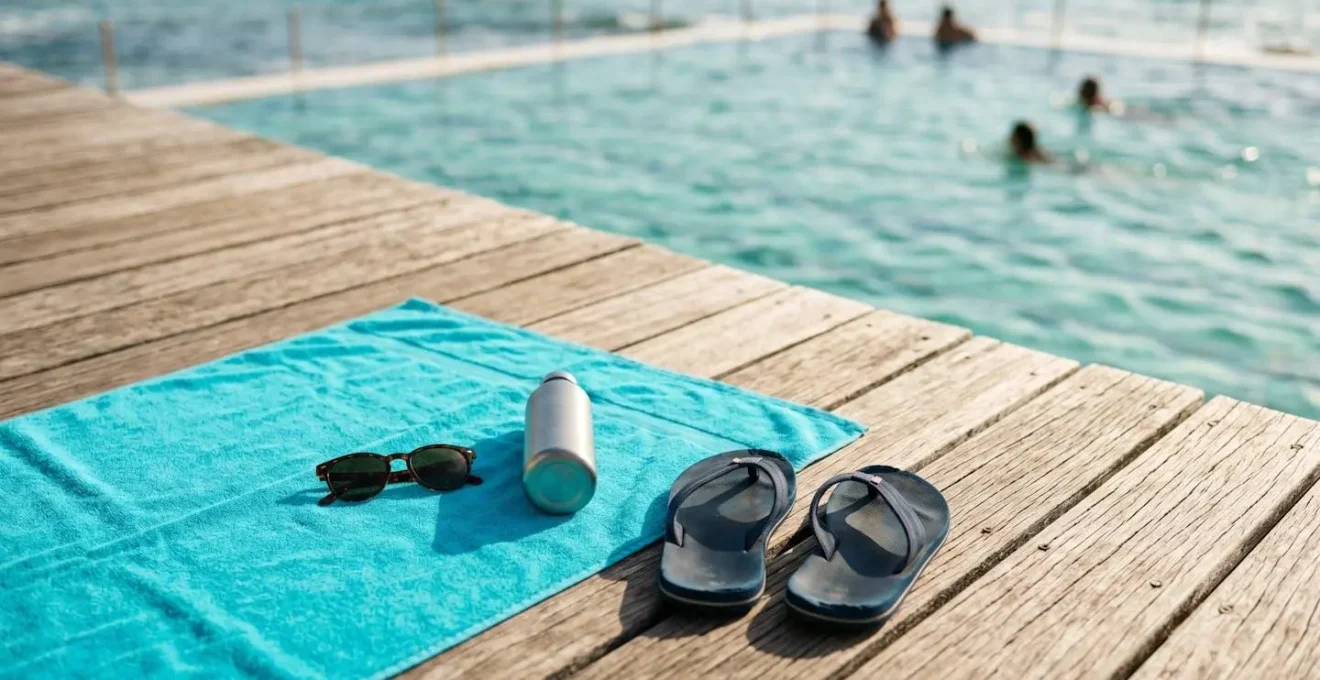
If you’re at a free, unstaffed pool, visibility is your best defense. Choose a spot for your belongings that has a clear line of sight from where you plan to swim. Pools like Bronte and Dee Why are designed in a way that allows you to keep an eye on your things from the water. Another subtle but effective technique is the « Local’s Nod. » Before you get in the water, make brief, friendly eye contact with a nearby regular—a lap swimmer, or a family with kids. This non-verbal acknowledgment creates a sense of mutual awareness; you’ve registered their presence, and they’ve registered yours, subtly increasing passive security.
By being strategic about what you bring, where you swim, and how you engage with your surroundings, you can enjoy a worry-free swim, even when you’re on your own.
Kings Cross or Newtown: Which Sydney Precinct Is Safer for Solo Travellers?
When choosing a home base in Sydney, solo travellers often weigh the vibe and safety of different neighbourhoods. Between Kings Cross and Newtown, the choice is clear for most. While Kings Cross has shed much of its notorious past, it remains a nightlife-heavy district. Newtown, with its bohemian atmosphere, vibrant student population, and thriving strip of independent shops and eateries, is generally considered a safer and more welcoming precinct for solo travellers. Its alternative culture also aligns more closely with the laid-back, outdoor lifestyle that draws people to Sydney’s beaches and pools.
However, when it comes to a swimmer’s safety, the more critical question isn’t which inner-city precinct you stay in, but which *type* of ocean pool you choose to visit. The safety profile of an easily accessible urban pool like Bondi is vastly different from that of a secluded gem on the Northern Beaches. Your experience will be shaped more by the pool’s location, crowd levels, and amenities than by your postcode.
This table compares the safety and experience profiles of different types of pools, providing a better framework for a solo traveller’s decision-making.
| Pool Type | Examples | Crowd Level | Bluebottle Risk | Access & Amenities | Security Feel | Best For Solo Traveller |
|---|---|---|---|---|---|---|
| Easily Accessible Urban Hub Pools | Bondi Icebergs, Bronte Baths, Coogee Baths | High traffic, tourist-heavy, especially weekends | East-facing pools: High risk when NE winds blow. Bondi, Bronte, Coogee ‘cop it first’ according to local reports | Excellent public transport, cafés, lifeguards nearby, change rooms, often free entry | Safety in numbers but crowded waters don’t prevent stingers. Belongings more vulnerable with tourist crowds | Good for first-time visitors who want amenities and visible activity, but beware peak bluebottle season (Nov-March) |
| Remote/Secluded Northern Beaches Pools | North Curl Curl, Mona Vale, Fairy Bower | Lower traffic, local-dominated, family-friendly vibe | Varies by orientation – North Curl Curl more sheltered, Mona Vale exposed to ocean swell | Requires car or longer bus journey, fewer facilities, more natural environment | Quieter means fewer witnesses but also fewer opportunistic thieves. Tight-knit local community watches out | Better for confident solo swimmers seeking authentic local experience. Higher ocean hazard exposure requires more skill |
| Paid-Entry Heritage Pools | Wylie’s Baths ($5.50), Bondi Icebergs (membership) | Moderate, entry fee filters casual crowds | Wylie’s sheltered position = lower bluebottle ingress. Icebergs exposed = higher risk | On-site staff, lockers, café, controlled entry/exit, yoga/wellness programs | Entry fee creates natural security barrier, staff presence, controlled single-point access | Best overall for solo travellers: affordable security, managed environment, community atmosphere |
For the solo traveller seeking maximum peace of mind, the controlled environment of a paid-entry heritage pool like Wylie’s often provides the best balance of authentic experience and built-in security.
Key takeaways
- Predict hazards: Use wind, swell, and tide data to forecast bluebottles and waves before you go.
- Choose wisely: Sheltered, paid-entry pools offer the best protection for lap swimmers and solo travellers.
- Respect the environment: Acclimatize to cold water slowly and understand that pool cleaning follows the low tide cycle.
Australian Beach Safety: Why Swimming Between Flags Is Non-Negotiable?
The mantra « swim between the red and yellow flags » is drilled into every Australian from a young age. It’s the golden rule of beach safety, signifying the safest, lifeguard-patrolled area to swim. But what do you do at an ocean pool, where there are no flags? The mistake is to assume the concrete walls offer total protection. The ocean is powerful, and its hazards—rips, waves, and stingers—can still find their way in. The data from the Australian Museum shows that about 10,000-30,000 bluebottle stings are reported annually on Australia’s east coast, and many of these occur in or near ocean pools.
The local’s secret is to apply the « swim between the flags » mentality *within* the pool itself by creating your own mental safe zones. This means actively identifying and avoiding high-risk areas. The most dangerous spot is typically along the seaward wall, where waves dump their energy and deposit bluebottles. Another area to avoid is directly in front of drain outlets or overflow channels, especially during high swell, as exiting water can create powerful, localized rip currents that can pull a swimmer out of the pool.
Your « safe zone » is therefore usually in the middle of the pool or on the landward side, away from these hazards. You can also leverage the safety infrastructure of the adjacent beach. If the pool is next to a patrolled beach like Bronte or Coogee, the lifeguards’ flags provide crucial information. A blue flag on the beach means marine stingers are present, and you should be on high alert even in the pool. Before you go, checking the Beachsafe app from Surf Life Saving Australia provides real-time hazard warnings, including bluebottle sightings, for specific locations.
By learning to identify these invisible boundaries, you are no longer just swimming in a pool; you are swimming with the ocean, respecting its power and enjoying its beauty safely. To put these skills into practice, your next step is to start observing these conditions on your next visit, turning theory into life-saving intuition.