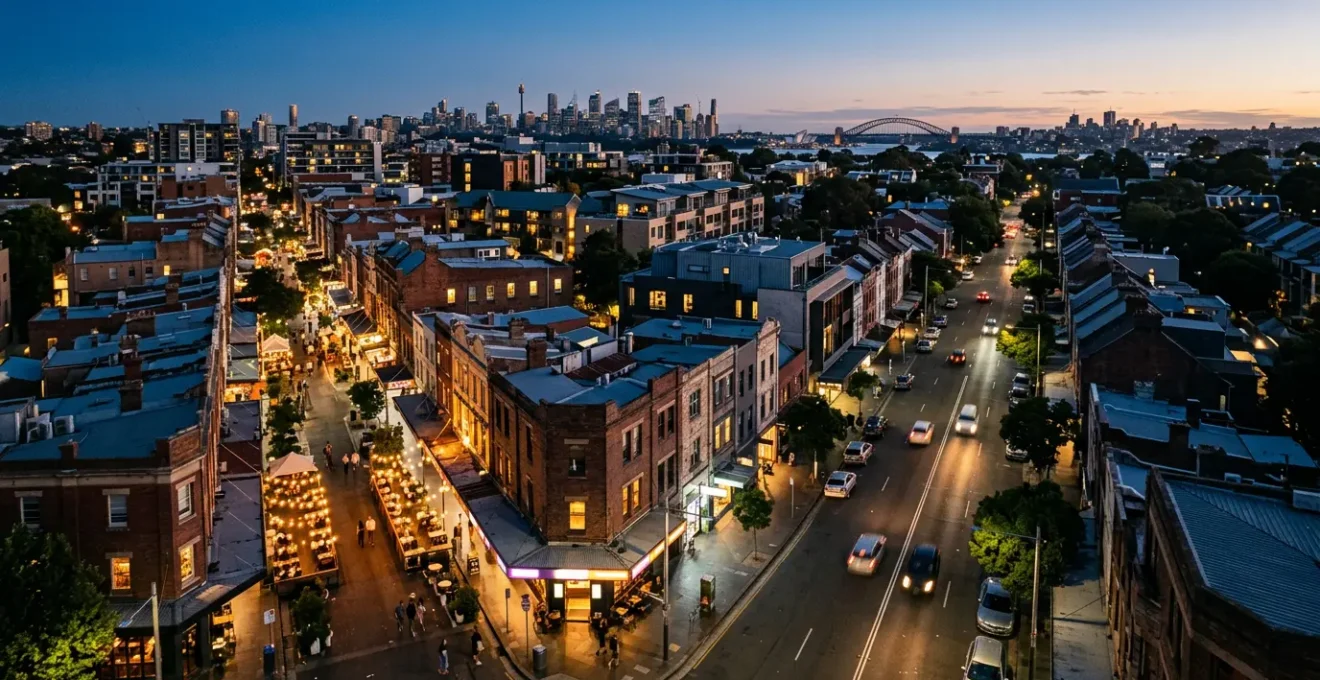
Forget everything you think you know about Sydney’s nightlife. The old debate of ‘dangerous’ Kings Cross versus ‘safe’ Newtown is outdated. The key for a solo female traveller isn’t about avoiding areas, but about understanding the new social ecosystem and logistical DNA of each precinct post-lockout laws. This guide gives you the insider knowledge to navigate with confidence, turning safety from a checklist into an instinct.
So, you’re a solo female traveller from the UK, and you’ve heard tales about Sydney’s nightlife. You’re likely picturing two places: Kings Cross, with its once-infamous, gritty reputation, and Newtown, the bohemian, supposedly safer alternative. For years, the advice was simple: avoid the Cross. But as a local who lives and breathes this city’s nightlife, let me tell you—that advice is a fossil from a bygone era.
The infamous « lockout laws » of 2014 completely rewrote the DNA of Sydney after dark. They weren’t just a minor tweak; they were a seismic event that forced a city-wide evolution. Kings Cross was sanitised, its pulse slowing to a faint murmur, while precincts like Newtown and Surry Hills absorbed the energy, creating entirely new social ecosystems. Now, the question isn’t « which area is bad? » but rather « which area’s vibe is right for me tonight, and how do I navigate it smartly? »
This isn’t another guide telling you to « watch your drink. » This is about giving you informed confidence. We’re going to move beyond the clichés and talk about the real logistics of a great, safe night out. We’ll dive into the nuances of Responsible Service of Alcohol (RSA) laws that can get you turned away from a bar, the smartest ways to get home after 2 AM, and how to spot authentic local gems versus tourist traps. By the end, you won’t just know where to go; you’ll understand *how* Sydney’s nightlife truly works.
This article breaks down the essential local knowledge you need to master Sydney’s nightlife. From understanding hyper-local laws to choosing the best late-night transport, the following sections provide a complete roadmap for a safe and unforgettable experience.
Summary: Your Guide to Sydney’s Nightlife DNA
- RSA Laws Explained: Why Was I Refused Entry for Being « Intoxicated » After Two Drinks?
- Uber vs NightRide Bus: How to Get Home Safely After 2 AM?
- Darling Harbour Dining: How to Spot Overpriced « Tourist Menu » Traps?
- Live Music Venues: Where to Find Local Bands Before They Get Famous?
- Noise Complaints: Why Do Pubs Close Their Beer Gardens at 10 PM?
- Solo Travellers: How to Keep Valuables Safe While You Swim?
- Degraves Street vs Centre Place: Which Is the Real « Diagon Alley »?
- Great Ocean Road Day Trip: Can You Really See It All in 12 Hours from Melbourne?
RSA Laws Explained: Why Was I Refused Entry for Being « Intoxicated » After Two Drinks?
Let’s start with one of the most confusing experiences for any visitor to Australia: being refused service when you feel perfectly fine. This isn’t a personal judgment; it’s the law of Responsible Service of Alcohol (RSA). Every single person serving you alcohol, from the bartender in a Newtown dive bar to the bouncer at a CBD club, is legally obligated to refuse service to anyone they deem « intoxicated. » The key word here is *deem*. Intoxication isn’t measured by a breathalyser; it’s a subjective judgment based on your speech, balance, coordination, and even how you’re interacting with others.
For a solo traveller, this is crucial. You might be a little jet-lagged, tired from a day of exploring, or simply naturally animated. A security guard might misinterpret this as intoxication. The best way to handle this is with polite compliance. Arguing will only confirm their assessment. It’s a core piece of the logistical safety puzzle: understanding that the rules here are strict and enforced. This isn’t about punishing fun; it’s a remnant of a broader strategy to manage public safety, and knowing this rule exists prevents a frustrating and confusing end to your night.
So, the local’s tip? Pace yourself, drink plenty of water, and be aware of how you’re presenting. If you’re refused entry, don’t take it personally. Simply move on to the next venue. This is part of the post-lockout DNA of Sydney—a system designed for control, which you can easily navigate with a little bit of insider knowledge. It’s not a barrier, just a rule of the game.
Uber vs NightRide Bus: How to Get Home Safely After 2 AM?
The night has been a success, but now comes the most critical part of solo travel safety: the journey home. In Sydney, your main late-night options are rideshares like Uber and the city’s network of NightRide buses. Let’s break down the social ecosystem of each. An Uber offers door-to-door service, which feels like the ultimate safety feature. You can share your ride details with a friend, and you avoid waiting on the street. However, late-night surge pricing can be brutal, and ensuring your driver is legitimate is a mental check you must always perform. Never get in a car if the license plate or driver doesn’t match the app.
Then there’s the NightRide bus. For many travellers, public transport at night feels daunting, but Sydney’s system is more robust than you might think. Recent Australian transport safety data shows there are only 4.8 incidents per 100,000 late night journeys, a statistically low number. The key is using the system smartly. The atmosphere on a NightRide bus is a mix of hospitality workers heading home and fellow revellers—a shared, communal experience that has its own form of passive security.
To maximize your logistical safety on public transport, always wait in a well-lit area near other people. When you board, sit near the driver. This simple act makes you more visible and places you near an authority figure. In the Kings Cross vs. Newtown debate, Newtown often wins on transport, as King Street is a major, well-lit artery with constant bus flow and a train station, making the transition from venue to transport seamless. Kings Cross, while improved, can feel more deserted between its main hubs late at night, making the wait for transport a little more unnerving.
Darling Harbour Dining: How to Spot Overpriced « Tourist Menu » Traps?
Before your night even begins, you’ll need to eat. And no place in Sydney screams « tourist » louder than Darling Harbour. But here’s an insider secret: it’s not the trap it used to be. As the editors of a major Sydney food guide noted, the area has evolved. They state:
Once a grand-scale tourist trap, Darling Harbour is now a genuine dining destination.
– Broadsheet Editors, Broadsheet Sydney Restaurant Guide
The trick is knowing how to navigate it. The prime waterfront spots often come with a « view tax »—inflated prices for mediocre food. A true vibe check involves looking past the dazzling lights and assessing the menu and the crowd. If the menu has glossy photos of every dish and is translated into five languages, you’re likely in a tourist trap. If the crowd is entirely tourists, that’s another red flag. The goal is to find where the locals are hiding, which is usually just a block or two away from the main promenade.
For a budget-friendly and more authentic experience, you need a clear strategy. Here are some actionable tips from local experts on how to eat well without getting ripped off:
- Stick to the peripheries: Focus on Darling Square and Steam Mill Lane to eat well without paying the « waterfront tax. »
- Walk one block: Simply walking one street back from the main tourist-facing waterfront will reveal restaurants where locals eat, with better quality and fairer prices.
- Target Darling Quarter for budget eats: For meals under $20, Darling Quarter is your best bet.
- Explore nearby Chinatown: For authentic and reasonably priced meals, head to nearby Chinatown and choose the restaurants with the most locals inside.
Live Music Venues: Where to Find Local Bands Before They Get Famous?
A truly great night out as a solo traveller isn’t just about safety; it’s about connection and authentic experiences. And nothing connects you to a city’s soul faster than its live music scene. Forgetting the big stadiums, the real magic happens in the small, sticky-floored pubs of Newtown and the intimate bars of Surry Hills. This is where you feel the city’s creative pulse. Instead of paying a premium for a well-known act, the ultimate local experience is discovering a band on the brink of greatness.
Australia has a legendary platform for this kind of discovery. It’s not a secret club, but an institution that has shaped the country’s music scene for decades. It’s a perfect example of how to tap into the local social ecosystem.
Case Study: The Triple J Unearthed Phenomenon
Since 1995, the national radio station Triple J has run Triple J Unearthed, a platform for unsigned Australian artists. It’s a democratic system where musicians upload their tracks to be heard by station staff and the public. This platform is directly responsible for discovering some of the country’s biggest musical exports, including Flume, Missy Higgins, Gang of Youths, and The Kid Laroi. Winners of the Unearthed competition often get to perform at major festivals like Splendour in the Grass. Following their weekly picks or checking out their curated playlists is a direct line to the next big thing, often playing for a handful of people in a pub in Newtown or Marrickville.
So, where does this leave you? Check the gig guides in local street press like « The Music » or websites like « FBi Radio. » Look for the small venues: The Lansdowne, The Vanguard, Waywards at The Bank Hotel in Newtown. This is where the Unearthed artists hone their craft. A night spent here is not only safe—these venues foster a respectful, music-loving community—but it’s also a genuinely memorable and authentic Sydney experience that most tourists miss completely.
Noise Complaints: Why Do Pubs Close Their Beer Gardens at 10 PM?
You’ve found the perfect pub beer garden. The vibe is immaculate, the fairy lights are twinkling, and then, at 10 PM on the dot, a staff member announces, « Alright everyone, inside please! » The beer garden is officially closed. This can feel abrupt and anti-fun, but like the RSA laws, it’s a crucial piece of Sydney’s post-lockout DNA you need to understand. It’s not the pub being difficult; it’s their survival strategy. Many of Sydney’s best venues are nestled in densely populated residential areas. The proximity of nightlife to homes creates an inherent tension.
This is especially true in precincts like Newtown and Surry Hills, where Victorian terraces stand shoulder-to-shoulder with bustling pubs. Noise complaints from residents are a constant threat to a venue’s liquor license. To mitigate this, many pubs have a self-imposed (or council-imposed) 10 PM curfew on all outdoor spaces. It’s a compromise that allows them to operate while keeping the peace with their neighbours. For a solo traveller, this is just another piece of logistical information that helps you plan your night. Don’t settle into a beer garden at 9:45 PM expecting a long, leisurely evening outdoors. Use the early evening to enjoy the open air, then be prepared to move inside.
The NSW Liquor & Gaming authority makes it clear that these complaints are taken seriously, often because they are linked to bigger issues. As they state, this isn’t just about a bit of loud music:
Many noise disturbance complaints stem from serious problems relating to the management and operation of the venue, or violent, anti-social or criminal activity involving patrons in the vicinity of the venue.
– NSW Liquor & Gaming Authority, NSW RSA Legislation Handbook
Understanding this « why » transforms your experience from frustration to informed acceptance. It’s a small adjustment that shows you’re in sync with the city’s rhythm.
Solo Travellers: How to Keep Valuables Safe While You Swim?
Sydney isn’t just about the nightlife; its world-famous beaches are a mandatory part of any visit. But for a solo traveller, the simple act of going for a swim can trigger a wave of anxiety. « What do I do with my phone, wallet, and keys? » Leaving a bag unattended on the sand feels like an open invitation. This is where practical, on-the-ground strategies are far more valuable than generic advice. You need a system that gives you peace of mind.
First, the minimalist approach: only bring the essentials. A single bank card, a bit of cash, your room key, and your phone. Second, leverage local infrastructure. Major beaches like Bondi, Coogee, and Manly have coin-operated lockers available. They are the most secure option and well worth the small fee for the freedom they provide. Remember to bring your own padlock, as some lockers may require it, and it’s always handy for hostels too. But what if there are no lockers, or you want a quicker solution?
This is where social engineering comes in. A widely-shared local tip is to place your towel and belongings near a family with young children. The logic is sound: they are likely to be there for a while, are relatively stationary, and are more socially invested in their immediate surroundings. A quick, friendly « Would you mind just keeping an eye on my stuff while I go for a quick dip? » is rarely refused. It’s a small, human interaction that builds a temporary, low-stakes community of trust. To truly secure your beach day, a quick audit of your valuables is essential.
Your 5-Step Beach Valuables Audit
- Points of Contact: List every valuable you plan to bring (phone, wallet, keys, headphones). Are they all essential?
- Collect & Inventory: Before you leave, physically gather the items. Do you really need three credit cards, or will one suffice?
- Check for Coherence: Confront your inventory with your plan. If your goal is just a 20-minute swim, your passport should probably stay in the hotel safe.
- Assess Mémorability & Emotion: Is your bag flashy and expensive-looking? A simple tote bag attracts far less attention than a designer handbag.
- Create an Integration Plan: Decide your strategy *before* you hit the sand. « I will use the lockers at Bondi, » or « I will bring a waterproof pouch for my key and card. »
Degraves Street vs Centre Place: Which Is the Real « Diagon Alley »?
Now, let’s take a slight detour. If you’ve talked to anyone who has travelled Australia’s east coast, you’ve likely heard of the fierce rivalry in Melbourne over which of its graffiti-clad, coffee-scented laneways—Degraves Street or Centre Place—is the « real » Diagon Alley. It’s a classic Melbourne debate, born from a city renowned for its labyrinthine and enchanting city grid. It speaks to a universal traveller’s desire: to find those magical, hidden corners that feel like a world of their own.
But this is an article about Sydney. So why bring up a Melbourne obsession? Because it highlights what you should be looking for in Sydney, too. While Sydney’s CBD is more sprawling and less defined by a laneway grid, it absolutely has its own « Diagon Alleys, » you just need to know where to look. The temptation is to think Sydney lacks these hidden charms, but that’s a surface-level reading of the city. Your mission is to look beyond the grand harbour views and find the nooks with real character.
Forget a direct comparison. Instead, hunt for Sydney’s unique version of this magic. Explore the cobbled, historic streets of The Rocks, where hidden pubs are tucked away in buildings that pre-date modern Australia. Wander through the backstreets of Surry Hills, where tiny galleries, bespoke tailors, and hole-in-the-wall cafes create a similar sense of discovery. Newtown’s own King Street, while a major road, is flanked by dozens of small arcades and side streets brimming with vintage stores and niche eateries. The principle is the same: the best places are rarely the most obvious. Sydney doesn’t offer a carbon copy of Melbourne’s laneways; it offers its own, distinct pockets of wonder.
Key Takeaways
- The ‘dangerous Kings Cross’ vs ‘safe Newtown’ narrative is obsolete; safety now depends on understanding the unique ‘social ecosystem’ of each precinct.
- Mastering local rules like Responsible Service of Alcohol (RSA) laws and pub curfews is key to a smooth, frustration-free night out.
- Logistical safety, such as choosing between a rideshare and a well-lit NightRide bus route, is more critical than generic safety tips.
Great Ocean Road Day Trip: Can You Really See It All in 12 Hours from Melbourne?
There’s another classic Australian travel question that echoes the dilemma of our Sydney night out, this time from Melbourne’s doorstep: « Can you really see all of the Great Ocean Road in a 12-hour day trip? » The answer, as any seasoned traveller will tell you, is no. You can drive it, you can stop for photos at the Twelve Apostles, but you can’t *experience* it. You can’t feel the stillness of the rainforest at Maits Rest, watch the surfers at Bells Beach for an hour, or enjoy a slow pub lunch in Lorne. You tick the boxes, but you miss the soul.
This is the perfect metaphor for navigating Sydney’s nightlife. Can you ‘do’ Kings Cross and Newtown in one night? Sure. You can have a drink in each, rush between them in an Uber, and leave feeling like you’ve seen nothing at all. You’ll have ticked the boxes but missed the point entirely. The real question isn’t « which is safer? » but « what experience do I want tonight, and how can I immerse myself in it safely and completely? »
Trying to ‘see it all’ is the fastest way to ruin a night and compromise your safety. Rushing creates stress, forces bad decisions, and keeps you on a surface level. Instead, embrace the ‘one precinct per night’ philosophy. Choose Newtown for its vibrant, creative, and dense social fabric, where everything is a short walk away. Or choose the new, more subdued Kings Cross/Potts Point area for its excellent small bars and world-class restaurants, perfect for a more sophisticated, slower-paced evening. Dedicate your night to one social ecosystem. Learn its rhythm, enjoy its offerings, and master its logistics. That is how you have a truly memorable—and safe—solo night out in Sydney.
Ultimately, the choice between Kings Cross and Newtown is a false one. The real choice is your approach. Armed with this local knowledge, you’re no longer just a tourist; you’re an informed navigator, ready to confidently choose and create your own perfect Sydney night.