
The secret to learning to surf isn’t athletic talent; it’s mastering your environment by understanding the water, the gear, and the unspoken rules *before* you even paddle out.
- Your first board must be a foam « softboard » for safety, stability, and faster progression.
- Identifying a rip current—the calm-looking water that’s actually a trap—is the most crucial safety skill you can learn.
- Respecting the « lineup » and its etiquette is key to staying safe and avoiding conflict with local surfers.
Recommendation: To build confidence, start with a professional group lesson at a sheltered beach known for gentle waves, like Currumbin Alley or Greenmount Beach.
The thought of learning to surf often conjures two conflicting images. First, the idyllic dream: gliding effortlessly across a crystal-clear wave under a warm sun. Then, the nightmare: terrifyingly large waves, a crowded lineup of territorial locals, and the humbling experience of getting tossed around like a sock in a washing machine. If you’re a beginner from the UK, the latter fear can easily overshadow the dream, leaving you wondering if it’s even worth trying.
Many guides will give you a simple list of beaches and tell you to « just have fun. » But they often ignore the real anxieties that hold beginners back: Am I good enough? Will I get in the way? Is it safe? This guide is different. As a surf instructor, my job isn’t just to teach you to stand up; it’s to give you the mental toolkit to feel confident and safe in the water. It’s about understanding the environment—the equipment, the ocean’s behaviour, and the surfers’ code—so you can have permission to learn and actually enjoy the process.
Forget trying to be a pro overnight. Instead, we’ll focus on building a solid foundation of situational awareness and respect. We’ll demystify the unspoken rules that can get you in trouble, explain why the right gear is a non-negotiable safety measure, and teach you how to read the water for hidden dangers. This is your path to not just surfing, but surfing with confidence.
Contents: Learning to Surf on the Gold Coast Safely
- Dropping In: The Unspoken Rule That Gets Tourists Yelled At
- Softboard vs Hardboard: Why Foam Is Your Best Friend as a Learner?
- Rip Currents 101: How to Spot the Calm Water That Is Actually a Trap?
- Do You Need a Wetsuit in Sydney During Summer Mornings?
- Group Lesson vs Private: Which Is Faster for Standing Up?
- Shark Alarms: What Exactly Should You Do When the Siren Sounds?
- Beachwatch App: How to Check Water Quality Before You Leave the Hotel?
- Swimming in Sydney’s Ocean Pools: How to Avoid Bluebottle Stings?
Dropping In: The Unspoken Rule That Gets Tourists Yelled At
Of all the mistakes a beginner can make, « dropping in » is the cardinal sin of surfing. It’s the quickest way to anger local surfers and put everyone in danger. In simple terms, dropping in means taking off on a wave that another surfer is already riding or is in a better position to catch. It’s essentially stealing their wave. The core of surf etiquette is about safety and a fair sharing of waves, and this rule is its foundation. Understanding it is the first step in earning respect in the water.
The system is simple: the surfer closest to the peak (the part of the wave that breaks first) has priority. This means if someone is on your inside, closer to the breaking section, that wave is theirs. You must paddle back over the wave or pull off to the side. It’s your responsibility to look both ways before committing to a wave, just like crossing a street. Getting this wrong can lead to serious collisions and injuries.
But what if you do it by accident? Panic is your enemy. The key is to react quickly and show respect. Recognize your mistake, get out of their way as safely and swiftly as possible, and make a clear, sincere apology. A simple hand-up and a mouthed « Sorry! » goes a long way. This shows you understand the rules and weren’t acting out of malice. Most experienced surfers were beginners once and will forgive a genuine mistake that’s acknowledged with humility.
Action Plan: 3-Step Recovery When You Drop In
- Recognize the situation immediately and get out of their way and out of the wave as quickly as possible.
- Follow by apologizing for the incident and acknowledging that it was a mistake.
- Offer the surfer the next set wave as a sign of respect and understanding that you were in the wrong.
Softboard vs Hardboard: Why Foam Is Your Best Friend as a Learner?
When you’re starting out, your choice of surfboard is not about looking cool; it’s about safety, stability, and speed of progression. Let me be clear: as a beginner, you should be on a foam board, also known as a « softboard » or « foamie. » These boards are designed specifically for learning. They are wider, thicker, and more buoyant than traditional fibreglass (hard) boards, which makes them incredibly stable. This stability is your best friend when you’re trying to find your balance and paddle effectively.
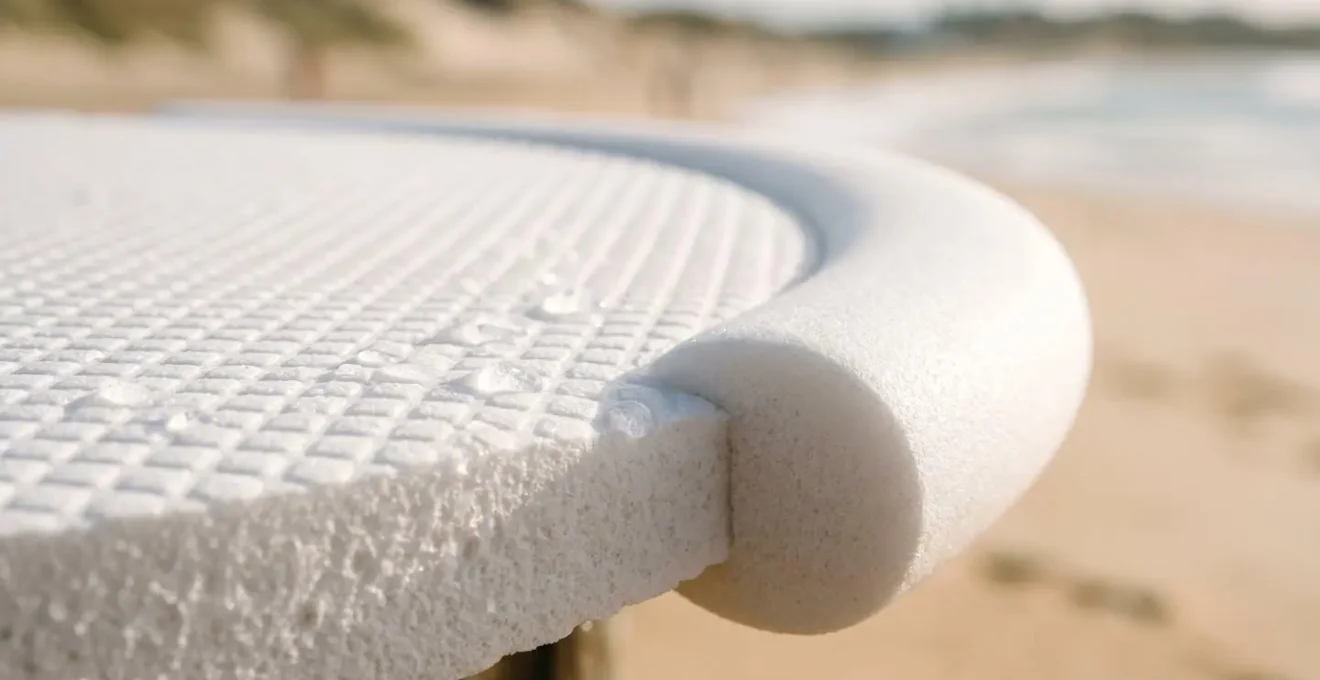
The most important feature, however, is safety—for you and for everyone around you. As Mundo Surf explains, « Softboards are larger and more stable, which makes the learning process easier. They have a foam layer that makes them safer, reducing the risk of injury when the surfer falls. » Trust me, you will fall. A lot. And when your board hits you (which it will), you’ll be thankful it’s a cushioned foam surface and soft fins, not a hard, sharp fibreglass object. This forgiving nature gives you the confidence to try and fail without the fear of serious injury, which is essential for learning.
Don’t be tempted by the sleek, high-performance shortboards you see the pros riding. They are difficult to paddle, extremely unstable, and frankly dangerous in the hands of a novice. Starting on a softboard isn’t a compromise; it’s the smartest and fastest way to build the fundamental skills and confidence you need to eventually progress to a hardboard. Every surf school on the Gold Coast will start you on one, and for very good reason.
Rip Currents 101: How to Spot the Calm Water That Is Actually a Trap?
Before you worry about sharks or locals, you need to understand the number one hazard on Australian beaches: rip currents. These powerful, narrow channels of water pull away from the shore and can drag even strong swimmers out to sea. In fact, rip currents are responsible for at least 21 drowning deaths annually in Australia, making them a far more present danger than any marine life. The most deceptive thing about a rip is that it often looks like the safest place to be.
A rip current is a river of water flowing out to sea, and because the water is moving, it can’t build up into waves. This creates a patch of water that looks deceptively calm and flat, often with a rippled or darker appearance, sometimes with sand or debris moving on the surface. Nervous swimmers and surfers see this calm patch between the breaking waves and think it’s a safe haven. It is a trap. Always choose to swim or surf where the waves are breaking gently, and always swim between the red and yellow flags on a patrolled beach.
As a surfer, you have a huge advantage: a flotation device. If you do get caught in a rip, the most important thing is to stay on your board and don’t panic. Trying to paddle directly against the current is a fatal mistake; you will exhaust yourself and go nowhere. Instead, you must paddle parallel to the beach (sideways) until you feel the pull of the rip lessen. Once you’re out of the main channel, you can then start paddling back towards the shore, aiming for the area where waves are breaking to help push you in.
Your Checklist: How to Escape a Rip Current on a Surfboard
- Stay on your board – unlike a swimmer, you have a large flotation device.
- Don’t panic and conserve your energy; let the board support you.
- Raise your arm and call out to signal for help if you are struggling.
- Paddle parallel to the shore (sideways), out of the main current channel.
- Once free of the rip, paddle back towards the shore at an angle, using the waves to assist you.
Do You Need a Wetsuit in Sydney During Summer Mornings?
While the title mentions Sydney, we’re focused on the Gold Coast, and the answer is refreshingly simple: probably not! One of the great joys of surfing on the Gold Coast during the summer months (December to February) is the incredibly warm water. You can leave the thick, constricting neoprene at home. According to extensive oceanographic data, water temperatures peak in the range 26 to 28°C during this time. That’s warmer than most public swimming pools in the UK.
For most people, a standard swimsuit or board shorts will be perfectly comfortable for a summer surf session, even in the early morning. However, there is one piece of gear I always recommend: a rash vest (or « rashie »). A rash vest is a thin, stretchy top made of lycra or a similar synthetic material. Its primary purpose isn’t warmth, but protection. Firstly, it protects you from the harsh Australian sun, which can burn you in minutes. Secondly, and just as importantly for a beginner, it prevents chafing and wax rash on your chest and stomach from lying on the surfboard for hours.
If you’re particularly sensitive to the cold, or if there’s a strong southerly wind blowing, you might consider a « wetsuit top » or a thin « spring suit » (a short-sleeved, short-legged wetsuit). But for the vast majority of summer days on the Gold Coast, you’ll be more than comfortable without a full wetsuit. It’s one less thing to worry about, allowing you to focus on the waves and enjoy the freedom of surfing in warm, tropical water.
Group Lesson vs Private: Which Is Faster for Standing Up?
This is a question I get all the time. If the only goal is to stand up as fast as humanly possible, a private lesson will almost always get you there quicker. With one-on-one instruction, every piece of advice is tailored to you, the feedback is instant, and the instructor can physically help position you on the board and push you into the perfect waves. There’s no waiting for your turn. It’s an intensive, focused experience designed for rapid progression.
However, for a nervous beginner, « fastest » isn’t always « best. » A group lesson offers a completely different, and often more beneficial, dynamic. There’s an incredible energy that comes from learning with other people who are at the same level as you. You see their struggles, you celebrate their successes, and you realize you’re all in the same boat. This shared experience can be a massive confidence booster and takes away the pressure of feeling like you’re the only one finding it difficult. It makes the whole process feel more like play and less like a performance.
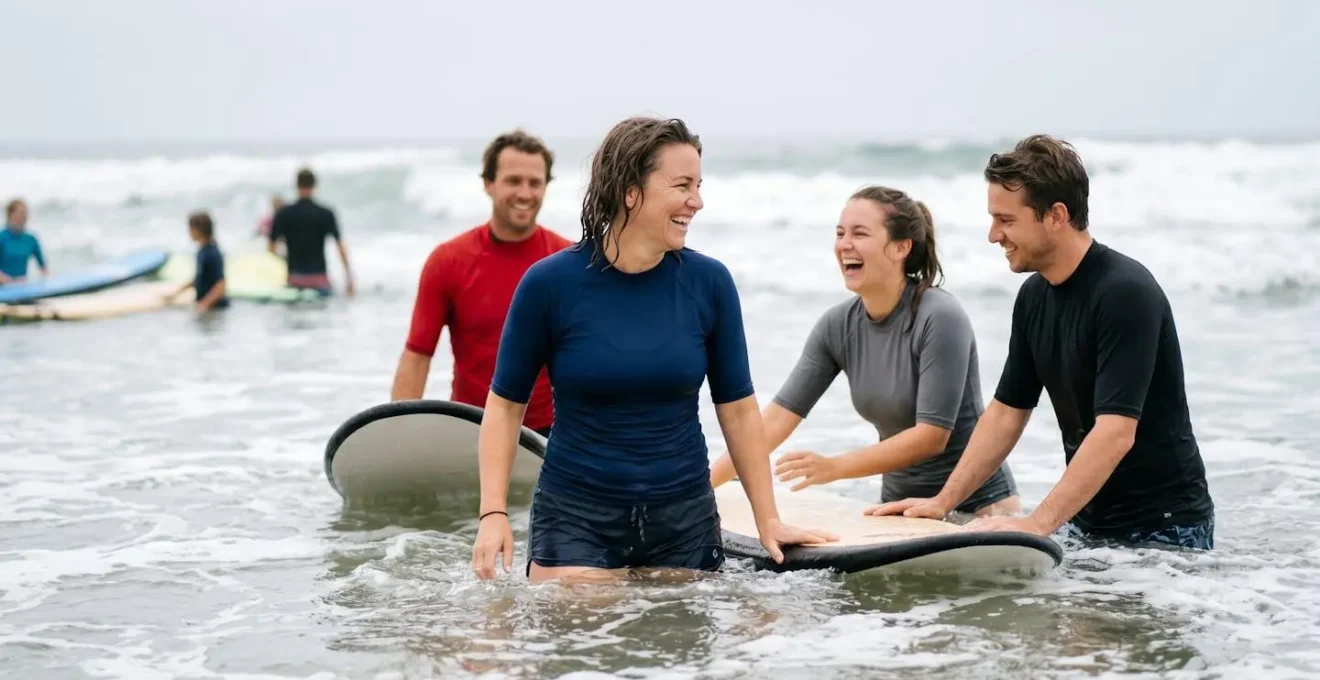
Furthermore, reputable Gold Coast surf schools maintain excellent student-to-coach ratios. For example, some schools guarantee a maximum of 5 students per instructor for group lessons. This ensures you still get plenty of personal attention and feedback while benefiting from the camaraderie and lower cost of a group setting. For most beginners, especially those who are a bit intimidated, the supportive and fun atmosphere of a group lesson is the ideal environment to fall in love with surfing, even if it takes you a few extra tries to stand up.
Shark Alarms: What Exactly Should You Do When the Siren Sounds?
Let’s address the elephant—or rather, the shark—in the room. The fear of sharks is real, but statistically, it’s an incredibly low-risk event. That said, Gold Coast beaches are well-equipped with safety measures, and you absolutely need to know the procedure. The most common alert system is a loud, continuous siren paired with announcements from the lifeguard towers. If you hear this, there is only one thing to do: calmly but immediately exit the water.
Panic is your worst enemy in any water situation. Do not start screaming or splashing frantically. If you are on your board, lie on it and start paddling steadily towards the shore. Follow the direction of everyone else. The lifeguards are professionals; they will be on jetskis and in IRBs (inflatable rescue boats) helping to clear the water in an orderly fashion. Listen to their instructions without question. They will guide you to the safest exit point.
Once on the beach, stay away from the shoreline and wait for the « all clear » from the lifeguards. This may take some time as they need to confirm the sighting and ensure the animal has moved on. Use this time to speak with the lifeguards if you are feeling shaken. They can provide reassurance and information. Hearing a shark alarm can be a jarring experience, but it’s a sign that the safety systems are working. By knowing the procedure and reacting calmly, you are playing your part in keeping yourself and everyone else safe.
Beachwatch App: How to Check Water Quality Before You Leave the Hotel?
While the « Beachwatch » app is an excellent tool specifically for New South Wales beaches like those in Sydney, it won’t help you on the Gold Coast. However, the principle of checking water quality before you surf is a crucial piece of environmental literacy that smart surfers practice. Poor water quality, usually after heavy rainfall, can contain bacteria from stormwater runoff that can make you sick. Surfing in polluted water is no fun at all.
So, how do you check the conditions on the Gold Coast? Your best resources are local authorities and the lifeguards themselves. Here’s a simple checklist:
- Check the Gold Coast City Council Website: Before you leave the hotel, do a quick search for « Gold Coast water quality » or « Safe Waterways. » The council often posts updates, especially after significant weather events.
- Look at the Water: When you get to the beach, use your eyes and nose. If the water looks unusually brown, murky, or has a lot of debris floating in it (especially near river mouths or stormwater drains), it’s a red flag. If it smells unpleasant, stay out.
- Ask a Lifeguard: This is the easiest and most reliable method. Lifeguards are on the beach every day. They have the most up-to-date, real-time information. Simply walk up to the tower and ask, « How’s the water quality today? Is it safe to surf? » They will give you an honest answer.
A good rule of thumb is to be extra cautious for 24-48 hours after heavy rain, particularly near estuaries like Currumbin Creek or the Gold Coast Seaway. Taking thirty seconds to check conditions is a habit that separates a knowledgeable surfer from a reckless one.
Key takeaways
- Surf etiquette is not optional; it is a code for safety and mutual respect in the water.
- A foam softboard is the single most important piece of equipment for a beginner’s safety, confidence, and progression.
- Your ability to identify a rip current from the shore is a more critical life-saving skill than your swimming strength.
Swimming in Sydney’s Ocean Pools: How to Avoid Bluebottle Stings?
Again, this is a topic that needs adapting from the Sydney context to our Gold Coast focus. While Sydney is famous for its ocean pools, the Gold Coast is all about open beaches. The threat, however, is the same: the dreaded Bluebottle. A Bluebottle (or Portuguese man o’ war) is not a jellyfish but a colony of organisms with a painful sting. They are blown onto the beaches by strong onshore winds, and encountering a swarm of them can ruin a perfect beach day.
Avoiding them is a matter of situational awareness. Strong north-easterly winds, which are common in summer, are the biggest culprit for pushing Bluebottles onto Gold Coast beaches. Before you even get in the water, take a walk along the high-tide line on the sand. If you see little blue or purple « balloons » washed up, you can be sure there are more in the water. Lifeguards will also put up warning signs, so always check the signboards at the beach entrance.
If you do get stung, don’t panic. The pain is sharp but usually subsides within an hour. Here’s the correct first aid:
- Get out of the water to avoid being stung again.
- Do not rub the area or rinse with fresh water, as this can make it worse.
- Carefully pick off any visible tentacles with your fingers (it won’t sting your fingers).
- Rinse the area with seawater, not fresh water.
- Immerse the stung area in hot water (as hot as you can tolerate without burning yourself) for at least 20 minutes. This is the most effective way to neutralize the venom and relieve the pain. Most lifeguard towers have hot water for this exact purpose. Do not use vinegar.
Encountering Bluebottles is just a part of surfing in Australia. Knowing how to spot the warning signs and what to do if you’re stung removes the fear and allows you to handle it like a local.
To truly fast-track your learning and ensure your first experience is a safe and positive one, the next logical step is to put this knowledge into practice under the guidance of a professional. Book a beginner’s group lesson at a reputable Gold Coast surf school.