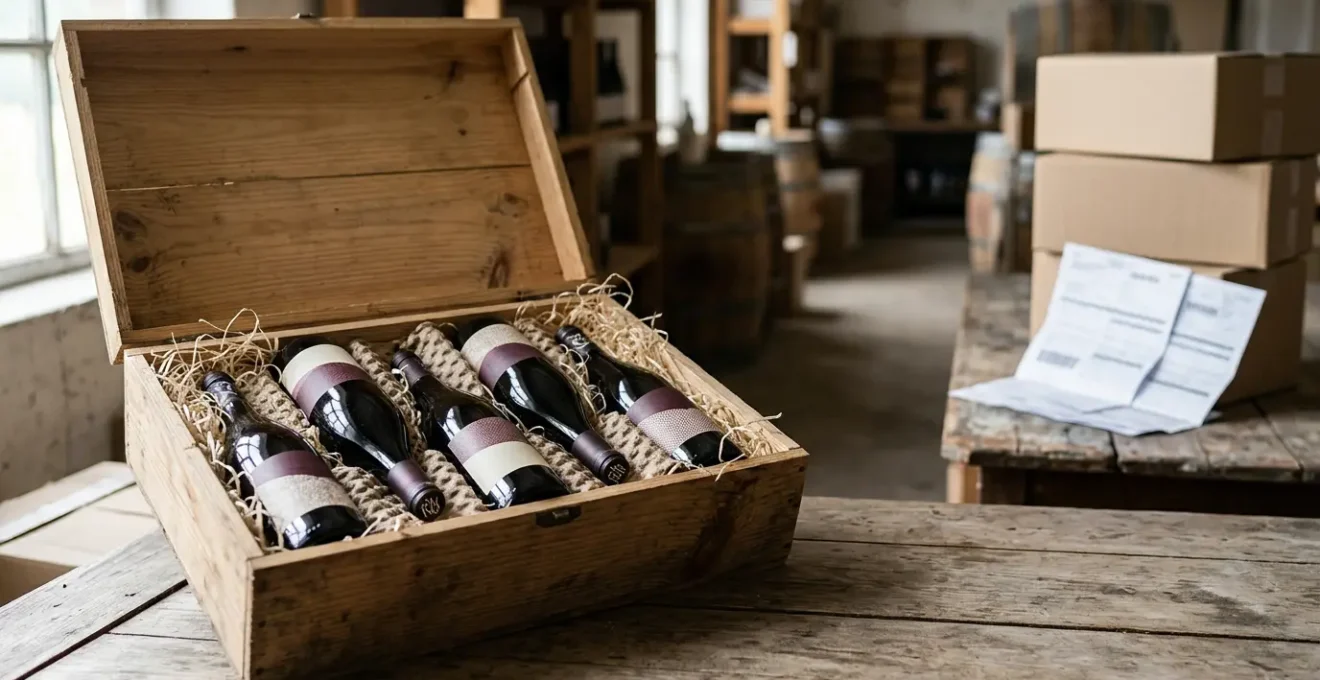
Shipping wine from an Australian cellar door isn’t a souvenir; it’s a logistics puzzle where the sticker price is just the beginning.
- Independent shipping often uses « Delivered at Place » (DAP) terms, leaving you with surprise UK duty, VAT, and admin fees upon arrival.
- Professional cellar door services and UK online retailers use « Delivered Duty Paid » (DDP), offering a predictable, all-inclusive « landed cost. »
Recommendation: Compare the final landed cost, not the bottle price. For small quantities, buying from a UK importer online is often cheaper and safer.
You’re standing in a sun-drenched Australian vineyard, having just tasted a magnificent Barossa Shiraz that you can’t get back home. The cellar door offers to ship a case to the UK, but the £150 quote gives you pause. It seems steep, almost double the price of the wine itself. The common advice is to either pack it in your luggage and hope for the best, or to just pay the fee. Many guides talk about declaration and packing, but they miss the fundamental point that trips up nearly every tourist.
The real issue isn’t the shipping fee itself; it’s the hidden logistics trap of duties and taxes that comes after. The key to making a smart decision isn’t comparing the bottle price to the shipping quote. It’s about understanding the total landed cost—the final price you pay to get that bottle onto your wine rack in the UK. This often involves navigating a complex web of customs declarations, excise duties, and VAT that can turn a bargain into a major expense.
But what if the entire framework of « shipping it yourself » is flawed? This guide, from the perspective of a logistics insider, moves beyond generic packing tips. We will dissect the true costs hidden in every shipment, expose the common customs mistakes that lead to hefty fines, and analyse the physical risks your wine faces on its long journey. By the end, you’ll have a clear framework for deciding whether to ship from the cellar door, pack it in your bag, or simply find a UK-based importer online.
This article breaks down every critical factor you need to consider. The following sections will guide you through the maze of customs, packing, and shipping risks to help you make the most cost-effective and safest choice for your precious bottles.
Summary: Shipping Wine to the UK: A Broker’s Guide
- Customs Duty and VAT: How Much Will You Pay When the Wine Arrives in the UK?
- Wine Skins vs Styrofoam: How to Pack 2 Bottles in Your Checked Luggage?
- Wine Tours vs Designated Driver: Is the £100 Tour Worth It?
- Cool Climate Wines: Why Is Tasmanian Pinot Noir Different to Barossa Shiraz?
- Cellaring Potential: Which Australian Wines Will Actually Improve in 10 Years?
- The « Sandwich Mistake » That Could Cost You $2,664 AUD at Customs
- Valve Bags vs Sealed Tins: Which Keeps Beans Fresh in Cargo Hold?
- Visiting Barossa in Summer: How to Taste Big Reds When It Is 40°C Outside?
Customs Duty and VAT: How Much Will You Pay When the Wine Arrives in the UK?
This is the single most misunderstood part of personal wine importation and the heart of the « logistics trap. » When you ship wine to the UK, the price on the bottle is only the start. The UK government levies two significant taxes on alcohol: Excise Duty and Value Added Tax (VAT). For context, the government forecasts that alcohol duties will raise around £12.5 billion in 2024/25, so these charges are non-negotiable.
The critical difference lies in who pays these fees. If you ship independently, you’re likely using a « Delivered at Place » (DAP) service. This means the courier delivers the wine to the UK border, and you, the recipient, are responsible for paying all import taxes and a customs handling fee before it’s released. This is where the surprise bill comes from. In contrast, professional shippers and online retailers use a « Delivered Duty Paid » (DDP) service, where all these costs are calculated and included in your initial price. The wine arrives at your door with nothing more to pay.
To complicate matters further, UK wine duty is calculated based on Alcohol By Volume (ABV). As the Wine and Spirit Trade Association (WSTA) pointed out in a parliamentary response, the exact ABV isn’t always stable. They state, « the abv of a wine cannot be pre-determined… the same wine from the same vineyard can vary by c.2% each year. » This variation can change the duty owed, adding another layer of unpredictability to DAP shipments.
The table below breaks down the potential difference in total landed cost for a single AU$50 bottle of wine. It clearly shows how a DAP shipment can quickly become far more expensive than a predictable DDP shipment once the hidden UK charges are applied.
| Cost Component | DDP (Delivered Duty Paid) | DAP (Delivered at Place) |
|---|---|---|
| Wine Value (AU$50) | £25.00 | £25.00 |
| Shipping Cost (estimated) | Included in price | £15.00 surprise charge |
| UK Excise Duty (13.5% ABV wine) | Included in price | £2.42 per bottle |
| VAT (20% on duty-inclusive) | Included in price | £8.48 |
| Customs Admin Fee | Included in price | £12-15 handling |
| Total Landed Cost | £45-50 (predictable) | £62.90+ (unexpected) |
Ultimately, the predictability of a DDP shipment, whether from a cellar door’s professional service or a UK online store, almost always provides better value and peace of mind than navigating the variable costs of a DAP shipment on your own.
Wine Skins vs Styrofoam: How to Pack 2 Bottles in Your Checked Luggage?
If the complexities of shipping seem daunting, packing a couple of special bottles in your checked luggage is a popular alternative. The UK allows travellers to bring in up to 18 litres of still wine duty-free in their personal luggage. However, success hinges entirely on one factor: protection. A broken bottle of Barossa Shiraz doesn’t just mean lost wine; it means a suitcase full of ruined clothes. The two most common solutions are inflatable « WineSkins » and traditional styrofoam shippers.
WineSkins (or similar vinyl, bubble-lined bags) are lightweight, reusable, and pack flat. They are designed to absorb impact and contain leaks with a dual-seal system. Their main advantage is flexibility; you can slip them into any available space in your suitcase. Styrofoam shippers, on the other hand, offer superior thermal insulation and structural rigidity, making them virtually crush-proof. Their downside is bulk. A two-bottle shipper takes up significant space and can’t be compressed.
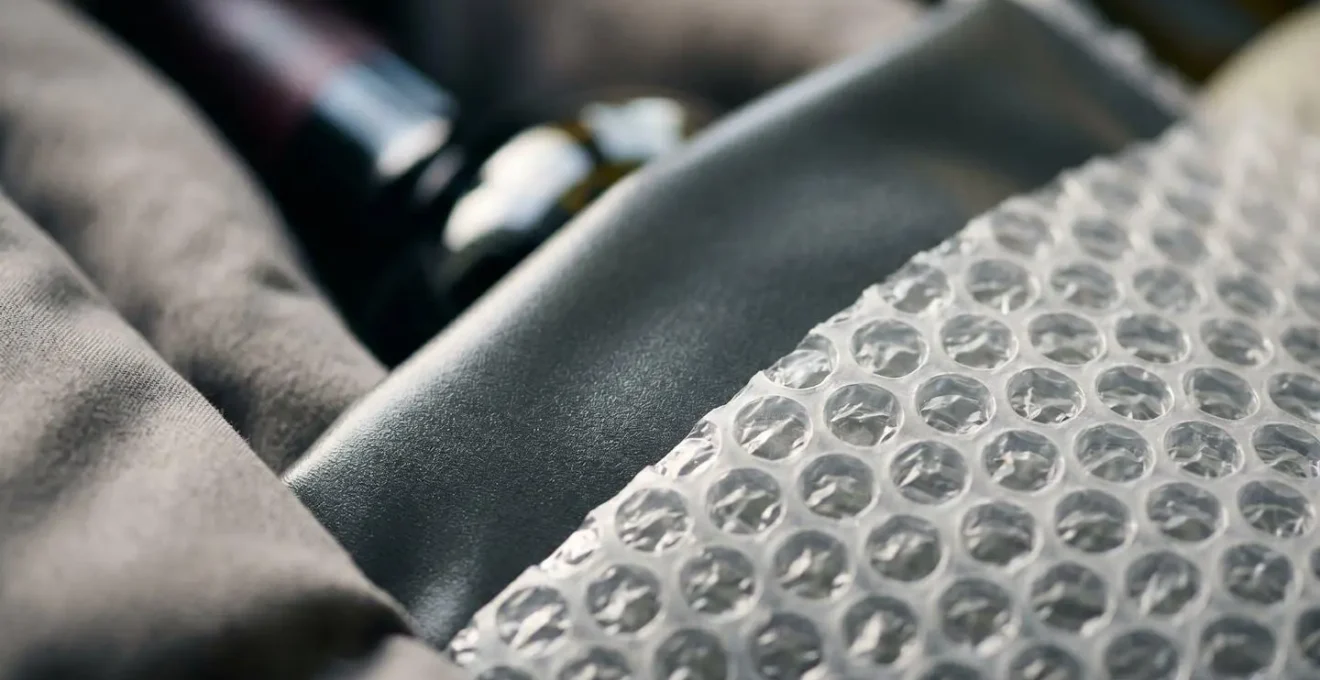
The choice depends on your priorities. For maximum protection against both breakage and temperature swings during tarmac transfers, styrofoam is unbeatable. For convenience and space-saving, a high-quality WineSkin is an excellent choice. Beyond physical damage, there’s the risk of « bottle shock. » As wine expert Jennifer Hugé notes, « Fine wines, champagnes in particular, often go into shock after a bumpy journey, » which can temporarily flatten the wine’s aromatics. While unavoidable in luggage, letting the wine rest for a few weeks upon arrival can help it recover.
Your 5-Step Wine Luggage Packing Plan
- Protective Wrap: Wrap each bottle in bubble wrap sleeves or WineSkin protective bags to prevent leaks and breakage.
- Central Cushioning: Place wrapped bottles in the center of your suitcase, surrounded by soft clothing (t-shirts, sweaters) as additional cushioning.
- Movement Prevention: Position shoes or other hard items on either side of the bottles to prevent them from shifting horizontally during transit.
- Leak Containment: For extra security with red wine, seal each bottle inside a large plastic bag to contain any potential leaks and prevent stains.
- Minimize Shifting: Pack the suitcase tightly to eliminate empty space, but keep the total weight under your airline’s limit (often 23 kg) to avoid excess baggage fees.
Regardless of your choice, never pack wine in a carry-on, as it will be confiscated at security. The goal is to create a cushioned, immobile core within your suitcase to give your bottles the best chance of arriving intact.
Wine Tours vs Designated Driver: Is the £100 Tour Worth It?
Visiting wine regions like the Barossa or Margaret River often involves a key decision: book a guided tour or self-drive with a designated driver? A typical wine tour can cost upwards of £100 per person, which may seem expensive. However, this fee buys you more than just transportation. It includes expert curation of wineries, pre-booked tastings (which can cost $20-50 AUD each), and, most importantly, freedom. Everyone in your group can fully participate in the tastings without worrying about drink-driving laws.
When you frame the tour as an all-inclusive experience, the cost becomes more reasonable. However, the real financial consideration comes after the tasting: getting your purchased wine home. This is where the value of different services becomes apparent. While a tour guide might drop you back at your hotel with your bottles, they don’t solve the international shipping problem. This is where the cellar doors’ own shipping services, which leverage economies of scale, come into play.
Case Study: Australian Wine Centre’s 40-Year Shipping Expertise
Since 1987, the Australian Wine Centre has shipped over 14,000 orders globally. Their long-standing partnerships with freight carriers allow them to offer seamless and cost-effective delivery through consolidated shipments. This model provides economies of scale that individual tourists, attempting to ship small quantities on their own, simply cannot access. Their expertise demonstrates how established cellar door shipping services can manage the entire process, providing a predictable DDP service.
This professional approach contrasts sharply with the high costs and risks of one-off shipments. In fact, for those considering packing wine, using specialist wine luggage as checked baggage saves approximately 70% compared to using a courier like FedEx or DHL for a full case. The £100 tour is an investment in the *experience* of acquiring the wine; the subsequent shipping decision is an investment in its *safe and economical arrival*.
Therefore, the tour’s worth isn’t just in the convenience on the day, but in how it sets you up to make a smarter decision about your wine purchases. It allows you to focus on finding wines you love, which you can then entrust to a professional, consolidated shipping service for a predictable landed cost.
Cool Climate Wines: Why Is Tasmanian Pinot Noir Different to Barossa Shiraz?
Not all wines are created equal, especially when it comes to travel-readiness. The difference between a delicate, cool-climate Tasmanian Pinot Noir and a robust, warm-climate Barossa Shiraz is vast, and it has significant implications for shipping. A Barossa Shiraz is born of intense sun and heat; its high alcohol and powerful tannins make it naturally resilient. A Tasmanian Pinot Noir, grown in a marginal, cooler climate, is defined by its subtlety, ethereal aromatics, and nuanced acidity. These delicate characteristics are its strength, but also its vulnerability.
These fragile compounds are precisely what can be destroyed by poor shipping conditions. The single greatest threat is temperature fluctuation. As logistics experts at Hillebrand Gori warn, « During transportation, temperature extremes are the single biggest danger to your wine – so it needs to be stored at a range between +10°C and 20°C (+50-68°F). » A standard shipping container crossing the equator from Australia to the UK can experience internal temperatures well over 40°C, effectively ‘cooking’ the wine and stripping it of all its delicate grace.

This is why professional wine shippers use temperature-controlled « reefer » containers. These insulated, refrigerated environments act like a mobile cellar, protecting the wine from the extreme heat of the tropics and the cold of a European winter. For a hardy Barossa Shiraz, standard shipping might be a calculated risk. For a prized Tasmanian Pinot Noir, it’s almost a guarantee of destruction. The extra cost of professional, climate-controlled shipping isn’t a luxury; it’s insurance for the wine’s very character.
When deciding whether to ship a delicate, high-value wine, the question shouldn’t be « how much does it cost? » but rather « does the service guarantee temperature control? » If the answer is no, you’re better off finding a specialist importer in the UK who has already managed that risk for you.
Cellaring Potential: Which Australian Wines Will Actually Improve in 10 Years?
One of the great joys of wine is cellaring: buying a young wine and watching it evolve over 5, 10, or even 20 years. Australia produces many wines with outstanding ageing potential, such as Hunter Valley Semillon, Clare Valley Riesling, and Coonawarra Cabernet Sauvignon. When you buy one of these at a cellar door, you’re not just buying a drink; you’re investing in a future experience. However, that potential is only realised if the wine completes its journey to your cellar unharmed.
This journey is longer and more perilous than most people imagine. Hillebrand Gori logistics experts provide a stark example: « A wine imported from Australia to the UK, for example, could spend 48 days in transit, leaving Adelaide during the Southern Hemisphere’s winter, crossing the equator, and arriving in London in the Northern Hemisphere’s summer. » During this time, it faces vibration, humidity, and, as we’ve seen, extreme temperature swings. A wine destined for a decade of quiet evolution can have its life cut short before it even reaches your door.
This risk highlights the importance of the UK’s mature import market. With the UK wine import market valued at US$5.27 billion, there are established, professional supply chains dedicated to preserving wine quality. Specialist importers ship wine in temperature-controlled bulk containers and bottle it in the UK, or use dedicated reefer containers for pre-bottled wine. They absorb the risk of transit. When you buy from them, you are buying a wine with its cellaring potential intact.
If you’re buying a young, age-worthy wine, paying for a professional, temperature-controlled DDP shipping service isn’t just about convenience—it’s about ensuring the 10-year investment you just made actually has a chance to mature.
The « Sandwich Mistake » That Could Cost You $2,664 AUD at Customs
The infamous « sandwich mistake »—where a tourist was fined thousands for not declaring a sandwich upon arrival in Australia—is a powerful lesson in customs compliance. While the UK’s rules are different, the principle is the same: what you don’t declare can cost you dearly. For wine shipments, the most common « mistakes » revolve around misunderstanding allowances and paperwork requirements, turning a simple import into a costly headache.
A primary point of confusion is the personal allowance. Many tourists know that travellers can bring into Great Britain as their personal duty-free allowance up to 18 litres of still wine (24 bottles). However, a critical error is assuming this applies to shipped goods. This allowance is exclusively for wine you physically carry with you in your luggage. Any wine sent via courier or freight, regardless of quantity, is considered a commercial import and is subject to full Excise Duty and VAT from the very first bottle.
Another frequent error is providing inadequate documentation. A simple credit card receipt is not enough for UK customs (HMRC). They require a detailed, itemised invoice from the seller that clearly lists the wine’s name, vintage, value, and, most importantly, its precise ABV. Without this, customs cannot calculate the correct duty, leading to delays, inspections, and potential penalties. Attempting to declare the wine as a « gift » to avoid tax is another common but futile tactic that will be rejected immediately.
This is where professional shipping services and UK-based retailers add immense value. They handle all the complex paperwork and ensure every declaration is accurate, guaranteeing a smooth passage through customs and eliminating the risk of you making your own version of the « sandwich mistake. »
Valve Bags vs Sealed Tins: Which Keeps Beans Fresh in Cargo Hold?
While the title might bring coffee to mind, the underlying principle—protecting a sensitive product from the rigours of air freight—is directly applicable to wine. A common concern for travellers packing wine is whether the bottle or cork can withstand the pressure changes in a plane’s cargo hold. Many fear the bottle might explode or the cork might be pushed out. However, this is largely a myth.
As confirmed by frequent flyers and airline personnel, the cargo hold of a commercial aircraft is pressurised just like the passenger cabin. As one contributor in an air travel forum noted, « The cargo compartment has the same pressure as the seating area, the only real difference is temperature, since most of the cargo area is not heated. » The real enemy, once again, is not pressure, but temperature. The cargo hold is not temperature-controlled and can get very cold at altitude, though the risk of freezing a 13% alcohol wine is low. The greater danger is the rapid temperature swings on the tarmac in a hot Australian summer or cold UK winter.
This reinforces the value of professional shipping solutions that are designed to mitigate these environmental hazards, moving beyond the simple question of whether a cork will pop.
Case Study: The « Sealed Environment » of Temperature-Controlled Shipping
Hillebrand Gori’s analysis of wine logistics reveals that insulated and refrigerated containers offer vastly superior protection compared to standard dry shipping. For premium Australian wines, specialist shippers use these consolidated containers to create a ‘sealed environment’ that replicates cellar conditions: dark, with a stable temperature between 10-20°C and minimal vibration. This approach dramatically reduces the risk of temperature damage and bottle shock, preserving wine quality over the 48-day transit, a feat impossible to achieve in an airplane’s cargo hold or a standard sea container.
Whether the wine is sealed with a cork or a screwcap, its quality upon arrival depends less on the closure and more on whether it was protected from the extreme temperatures inherent in global logistics.
Key Takeaways
- The difference between DAP (buyer pays import fees) and DDP (seller pays) is the single biggest variable determining your final cost.
- Temperature fluctuation during the 48-day sea transit is the greatest risk to wine quality, far more than pressure changes in a plane.
- The UK’s 18-litre personal allowance applies *only* to wine in your accompanied luggage, not to any couriered shipments.
Visiting Barossa in Summer: How to Taste Big Reds When It Is 40°C Outside?
Tasting a big, bold Barossa Shiraz is a quintessential Australian experience. But doing so during a summer heatwave, when temperatures can soar to 40°C (104°F), presents a unique challenge—not just for you, but for the wine you purchase. Wine is a perishable product, and heat is its mortal enemy. A bottle of wine left in a car boot on a 40°C day can be permanently ‘cooked’ in under an hour, destroying its delicate aromatics and flavours before you’ve even decided how to ship it.
This immediate risk means that protecting your wine starts the moment you buy it. Wineries are well aware of this and will often provide insulated bags or styrofoam boxes upon request. It is crucial to get your purchases out of the heat and into an air-conditioned environment as quickly as possible. This immediate, proactive protection is far more important than worrying about the shipping method you’ll choose later.
- Never leave wine in a hot car. Car interiors can reach over 60°C, irreversibly damaging wine in minutes.
- Request insulated packaging from the winery at the point of purchase.
- Store wine in your air-conditioned accommodation or a hotel fridge until it can be handed over to a professional shipper.
- Schedule winery visits for the morning to minimize the time your purchases are exposed to the day’s peak heat.
This issue also brings the final piece of the cost puzzle into focus: tariffs vs. taxes. Thanks to the Australia-UK Free Trade Agreement (A-UKFTA), there have been zero tariffs on Australian wine exports to the UK since May 2023. Many people mistakenly believe this means it’s « tax-free. » It is not. The agreement eliminated customs *tariffs*, but it has no effect on the UK’s internal taxes: Excise Duty and 20% VAT, which must still be paid on all imports.
Ultimately, getting your wine home safely from a hot climate requires a two-step process: immediate temperature control on the ground, followed by choosing a shipping method that correctly handles all UK duties and taxes for a predictable final cost.
Frequently Asked Questions on Shipping Wine to the UK
Can I declare wine as a ‘gift’ to avoid UK duty and VAT?
No. Declaring wine as a gift does not exempt it from UK duty and VAT. All wine imports are subject to excise duty and 20% VAT regardless of whether they are gifts or personal purchases. This is one of the most common and costly misconceptions for personal wine imports post-Brexit.
What happens if I mix wine, spirits, and beer in one shipment?
Mixing different types of alcohol creates complex duty calculations and potential customs delays. Each alcohol category has different duty rates based on ABV (alcohol by volume). Wine and spirits require separate calculations, and mixing them increases the risk of incorrect declarations. It’s recommended to declare wine-only shipments for simplicity.
Is a credit card receipt sufficient for UK customs clearance?
No. A simple credit card slip is insufficient. UK customs requires a detailed, itemized invoice from the cellar door showing: wine names, vintages, ABV percentages, individual bottle values, and total purchase price. This information is essential for HMRC to correctly calculate excise duties based on alcohol strength.
How much wine can I bring into the UK without paying duty?
The UK personal allowance is 18 litres of still wine (approximately 24 bottles) when travelling into Great Britain. However, this only applies to wine physically carried in your luggage. Commercially shipped wine, even for personal use, must pay full duty and VAT with no duty-free allowance.