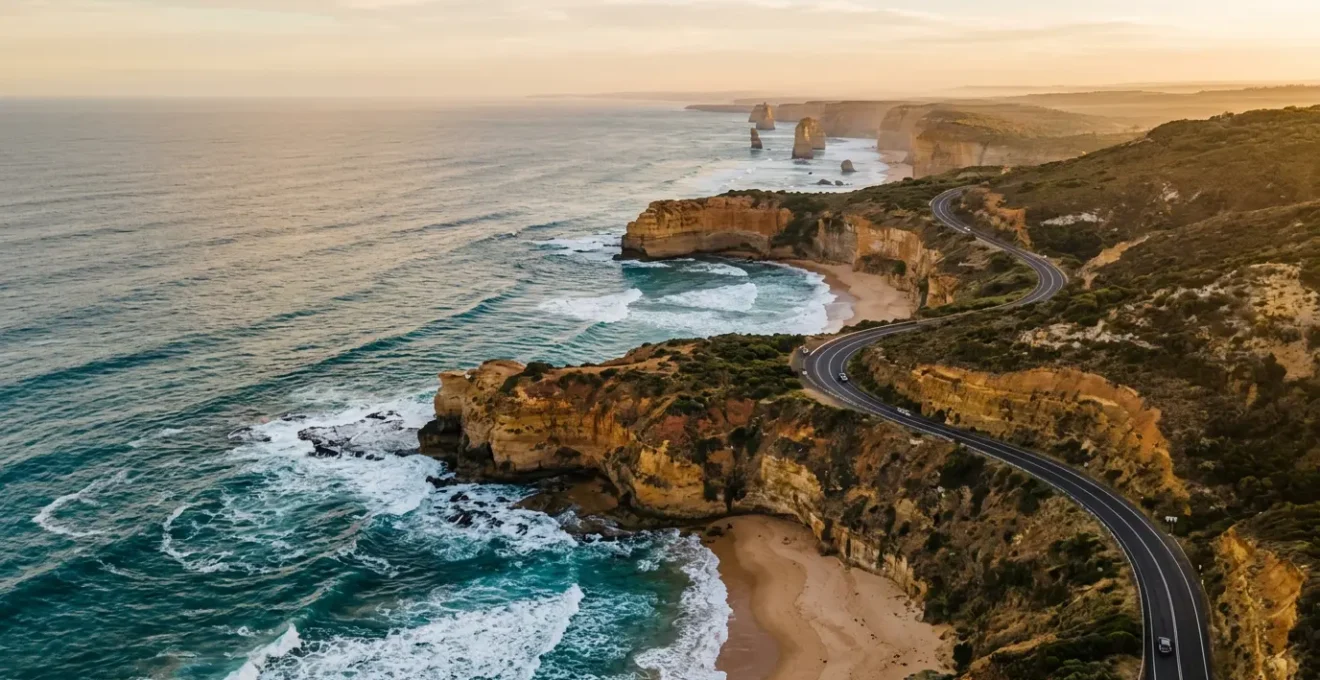
While guidebooks suggest a Great Ocean Road day trip is an achievable adventure, they often dangerously understate the primary risk: driver fatigue. The popular goal of « seeing it all » transforms a scenic drive into a 12-hour endurance test that compromises safety and enjoyment. This guide reframes the journey, focusing not on a packed itinerary but on managing cognitive load, making strategic compromises, and understanding the real dangers, especially on the drive home.
The allure of the Great Ocean Road is undeniable. A ribbon of asphalt clinging to the rugged Victorian coastline, it promises dramatic cliffs, iconic surf breaks, and the world-famous Twelve Apostles. Many time-poor tourists attempt to condense this multi-day experience into a single, marathon 12-hour trip from Melbourne. The standard advice is simple: leave early, drive fast, and tick off the sights. This approach, however, ignores the most significant hazard of the journey, one that has nothing to do with the winding roads or ocean spray.
The real enemy on a Great Ocean Road day trip is driver fatigue. This isn’t just about feeling tired; it’s a state of cognitive impairment that drastically slows reaction times, impairs judgment, and increases risk-taking. From a road safety perspective, attempting this 500+ kilometre round trip in one day is a high-stakes gamble. The constant focus required, combined with the pressure of a tight schedule and unfamiliar conditions, creates a perfect storm for exhaustion.
But what if the goal wasn’t to « see it all, » but to experience the best of it safely? The key isn’t a more aggressive schedule, but a smarter, more defensive strategy. It involves understanding the day’s pressure points—from navigating foreign traffic systems to finding parking—and making deliberate, informed compromises that prioritize your well-being over a checklist. This guide provides a realistic framework for tackling the drive, shifting the focus from a frantic sightseeing tour to a safe and genuinely memorable road trip.
This article breaks down the day’s real challenges, providing expert advice on how to mitigate the risks at each stage of your journey. By understanding the demands on your attention and energy, you can make smarter decisions that ensure you return to Melbourne safely, not just with photos, but with your health intact.
Summary: A Safety-First Guide to the Great Ocean Road Day Trip
- Roundabouts on the GOR: How to Navigate Them If You Are Not Used to Left-Hand Traffic?
- Torquay to Apollo Bay: Which Stops Are Worth the Parking Hassle?
- Leaving Melbourne at 6 AM: Is It Early Enough to Beat the Tour Buses?
- Cliff Edge Driving: How to Handle the Winding Roads If You Get Car Sick?
- Public Amenities: Where Are the Cleanest Stops Between Lorne and Apollo Bay?
- Driver Reviver Stations: Free Coffee Spots You Should Actually Use
- Qantas vs Emirates: Which Airline Offers the Best Stopover for Families?
- Sunset at the Twelve Apostles: How to Get the Shot Without 50 Tour Buses Ruining It?
Roundabouts on the GOR: How to Navigate Them If You Are Not Used to Left-Hand Traffic?
For international visitors, the first major source of cognitive load begins before you even smell the sea air: navigating Australian roundabouts. Driving on the left requires constant mental effort, and roundabouts amplify this pressure. The instinct to look left and enter to the right is a hard-wired habit that becomes a significant liability. Every roundabout, from the multi-lane versions in Geelong to the smaller ones in Torquay, demands your full concentration, chipping away at your mental energy reserves for the long day ahead.
The core rules are simple but counter-intuitive for many: you must give way to all traffic already on the roundabout (coming from your right) and always stay in the left-hand lane unless overtaking or turning right. Under pressure, with a line of impatient local drivers behind you, it’s easy to make a mistake. The key is preparation and reducing the mental strain before you even start the engine. Rehearsing the process mentally can build the new muscle memory required to navigate these safely and confidently, conserving your focus for the more scenic, but equally demanding, parts of the road.
To assist with this, here are five essential steps to practice:
- Step 1: Before departing Melbourne, rehearse the ‘Look Right, Stay Left’ mantra repeatedly until it becomes automatic. This mental rule applies both when entering and exiting every roundabout.
- Step 2: Use Google Street View the night before your trip to virtually ‘drive’ the first major roundabouts in Geelong and Torquay, building confidence without real-world pressure.
- Step 3: Create a co-pilot cheat sheet showing traffic flow direction and the critical ‘Give Way to traffic on your right’ rule for quick reference during moments of confusion.
- Step 4: Book a smaller rental car (compact or sedan) rather than a large SUV or campervan, as navigating roundabouts is significantly less stressful in a smaller vehicle.
- Step 5: During your first few roundabouts, slow down well in advance, use your indicator early, and don’t rush—other drivers expect tourists and will be patient.
By treating each roundabout as a planned manoeuvre rather than a surprise obstacle, you reduce stress and prevent the early onset of decision fatigue.
Torquay to Apollo Bay: Which Stops Are Worth the Parking Hassle?
The stretch from Torquay to Apollo Bay is where the scenic drama begins, but it also introduces another significant drain on your energy: the hunt for parking. At popular spots like Split Point Lighthouse or Erskine Falls, finding a parking space during peak hours can become a stressful, time-consuming exercise. This isn’t just an inconvenience; it’s a contributor to decision fatigue. Circling a full car park for 20 minutes adds frustration and eats into your already limited schedule, forcing you to make rushed decisions about which stops to skip later.
A successful day trip requires strategic compromise. You simply cannot stop everywhere. Instead of impulsively pulling over at every scenic lookout, a smarter approach is to assess the « reward vs. hassle » ratio. Is the view from Teddy’s Lookout worth the high-stress parking situation, or would a quieter, less-known stop provide a more relaxing experience? Understanding the parking dynamics beforehand allows you to build a realistic itinerary that minimizes frustration and conserves your mental energy.

As the complex and often confusing parking signage suggests, even a simple stop can add to your cognitive burden. The table below provides a data-driven guide to help you make informed decisions, balancing the scenic reward of each location against its typical parking difficulty. This allows you to plan your stops strategically, avoiding the most congested areas or timing your arrival to beat the crowds.
| Stop Location | Parking Difficulty (1-5) | Scenic Reward (1-5) | Best Time to Visit | Insider Tip |
|---|---|---|---|---|
| Bells Beach | 2 | 4 | Before 10 AM or after 4 PM | Large designated lot, rarely full except during surf competitions |
| Split Point Lighthouse | 3 | 5 | Early morning (8-9 AM) | Small lot fills quickly; arrive early or use roadside spots 200m before entrance |
| Lorne Main Beach | 4 | 4 | Before 10 AM | After 10 AM, use side streets off Mountjoy Parade (5-min walk) |
| Kennett River | 3 | 5 | Anytime | Koala spotting location; parking can be tight but turnover is quick (20-min visits) |
| Erskine Falls | 5 | 5 | Weekdays only | Skip if lot looks full—circling wastes 20+ precious minutes |
| Teddy’s Lookout | 4 | 5 | Early morning or late afternoon | Small hilltop lot; consider walking up from Lorne if full |
| Apollo Bay Waterfront | 2 | 4 | Anytime | Large foreshore parking area; rarely an issue |
Ultimately, a few truly enjoyed stops are far better than a dozen rushed and stressful ones. Planning your parking strategy is planning your peace of mind.
Leaving Melbourne at 6 AM: Is It Early Enough to Beat the Tour Buses?
The most common piece of advice for a Great Ocean Road day trip is to « leave early. » Many travelers set their alarms for 6 AM, believing this will give them a head start on the fleet of tour buses that depart from Melbourne. While well-intentioned, this strategy often fails. Tour buses typically depart around 8 AM and follow a predictable westward route, meaning that by the time you reach the most popular morning coffee spots like Lorne or Anglesea, you’re often caught in the same wave of tourists.
This traditional approach means you’re competing for road space, parking, and photo opportunities all day long. A more effective, albeit counter-intuitive, strategy exists that not only avoids the crowds but also better manages your driving time and energy. It requires flipping the entire itinerary on its head. Instead of fighting the current, you can bypass it completely, ensuring your experience at the main attractions is far more serene.
The Reverse Great Ocean Road Strategy
Experienced travelers and road-trip planners have found that the « reverse itinerary » is the single most effective crowd-avoidance technique. This involves driving directly to the Twelve Apostles via the faster, inland M1/A1 Princes Highway first (a 3-hour drive), and then returning to Melbourne along the scenic coastal route. By doing this, an early start means you can arrive at the Twelve Apostles before 10:00 AM, well before the main tour bus convoys. As one reviewer noted, « The reverse route was a brilliant idea—we beat the crowds and could really enjoy each stop without feeling rushed. » This strategy also positions you to enjoy the most scenic cliff-side sections between Apollo Bay and Lorne in the afternoon, when the tour buses are heading in the opposite direction, leading to a less congested and safer drive.
By adopting the reverse strategy, you transform the day from a race against thousands of others into a more personal and manageable journey.
Cliff Edge Driving: How to Handle the Winding Roads If You Get Car Sick?
The iconic winding sections of the Great Ocean Road, particularly the 45-minute stretch between Lorne and Apollo Bay, are a major draw. However, for many passengers—and even some drivers—these constant curves can trigger motion sickness. This is more than just a discomfort; it’s a safety issue. A nauseous passenger can be a major distraction for the driver, while a driver trying to fight off their own sickness will have reduced concentration and slower reaction times. This adds another layer of stress and fatigue to an already demanding day.
Managing motion sickness is therefore a critical part of your overall safety plan. Simple preventative measures can make a significant difference. For drivers, the key is to be smooth and look far ahead, anticipating the curves rather than reacting to them abruptly. For passengers, keeping your eyes on the fixed horizon where the sea meets the sky can help your brain reconcile the motion. It’s also vital to know when to expect the most intense sections, or « pucker factor » zones, as this mental preparation can reduce the anxiety that often exacerbates nausea.
Here are some practical strategies for both drivers and passengers:
- For Drivers: Focus your eyes far down the road (not on the cliff edge) to anticipate curves early and maintain smooth steering inputs, which reduces the jarring lateral movements that trigger nausea.
- For Passengers: Sit in the front seat whenever possible, keep your eyes on the horizon line where ocean meets sky, and avoid looking at phones or maps during the windiest sections between Lorne and Apollo Bay.
- Identify the ‘Pucker Factor’ Zones: The most intense winding sections occur between Lorne and Apollo Bay. Knowing when to expect the worst significantly reduces anxiety.
- Plan Strategic ‘Green-Out’ Recovery Stops: Mark quieter pull-offs like Wye River beach access for 10-minute recovery breaks away from crowded tourist spots.
- Consider the Directional Advantage: Driving from Melbourne towards the Apostles places the passenger on the cliff side. For those with a fear of heights or severe motion sickness, the reverse itinerary positions the passenger on the safer-feeling inside lane.
A comfortable passenger and an undistracted driver are essential components of a safe trip, ensuring that focus remains on the road, not on fighting nausea.
Public Amenities: Where Are the Cleanest Stops Between Lorne and Apollo Bay?
While it may seem like a minor detail, the availability and quality of public restrooms can have a surprising impact on the stress levels of a long road trip. On a tight 12-hour schedule, a desperate search for a clean, usable facility can cause delays, anxiety, and frustration. This seemingly small stressor contributes to your overall cognitive load, draining energy that should be reserved for driving. Knowing where to find reliable amenities is not a luxury; it’s a practical part of managing your day effectively.
Between the major towns of Lorne and Apollo Bay, the quality of public facilities can vary significantly. While most major foreshore areas have restrooms, their cleanliness often depends on the time of day and the volume of tourists. A « functional » but dirty restroom at a high-traffic spot like Kennett River can add to your stress, whereas a well-maintained facility provides a genuine moment of relief and recovery. Planning your comfort stops is as important as planning your sightseeing stops.
To help you plan, here is a breakdown of the most reliable options:
- Tier 1 ‘Gold Standard’: The Apollo Bay Visitor Centre offers professionally maintained, regularly cleaned restrooms, including family and accessible facilities. This is your most reliable option.
- Tier 2 ‘Reliable’: The Lorne Foreshore public amenities near the main playground are generally clean and well-maintained but can be very busy during peak hours.
- Tier 3 ‘Functional’: Public facilities at Kennett River are basic but adequate. Due to high traffic for koala spotting, cleanliness can be inconsistent.
- The ‘Cafe Coffee Restroom Pass’ Strategy: A savvy move is to purchase a coffee or snack at a cafe in Lorne or Apollo Bay. This small expense grants you access to their privately-maintained restrooms, which are almost always cleaner and better-stocked.
- Water Refill Stations: Reduce waste and save money by using public water fountains at the Apollo Bay Visitor Centre and outdoor taps along the Lorne foreshore. Always bring a reusable bottle.
- Local’s Secret: For cleaner, less crowded options, consider stopping at the public amenities at smaller, off-the-beaten-path beaches like Wye River.
A well-timed, stress-free break is a crucial tool in the fight against driver fatigue.
Driver Reviver Stations: Free Coffee Spots You Should Actually Use
On a long-haul drive, it’s easy to dismiss feelings of tiredness as something that can be pushed through. This is a fatal miscalculation. As a road safety expert, I must be clear: driver fatigue is a killer. It’s not just about falling asleep at the wheel; it’s about micro-sleeps, delayed reactions, and poor judgment. In fact, official data confirms that up to 25% of all fatal road crashes in Victoria involve driver fatigue. A day trip on the Great Ocean Road, with its combination of long distances and intense concentration, creates the exact conditions where fatigue-related incidents occur.
This is why Driver Reviver stations and designated rest areas are not just convenient stopping points; they are essential safety infrastructure. Often operated by volunteers during peak holiday periods, these sites offer a free coffee and a place to stop, but their real purpose is to force you to take a break. The only real cure for fatigue is sleep, but a short 15-20 minute break can temporarily reset your concentration. Ignoring the warning signs of fatigue—heavy eyelids, frequent yawning, wandering concentration—is negligent.
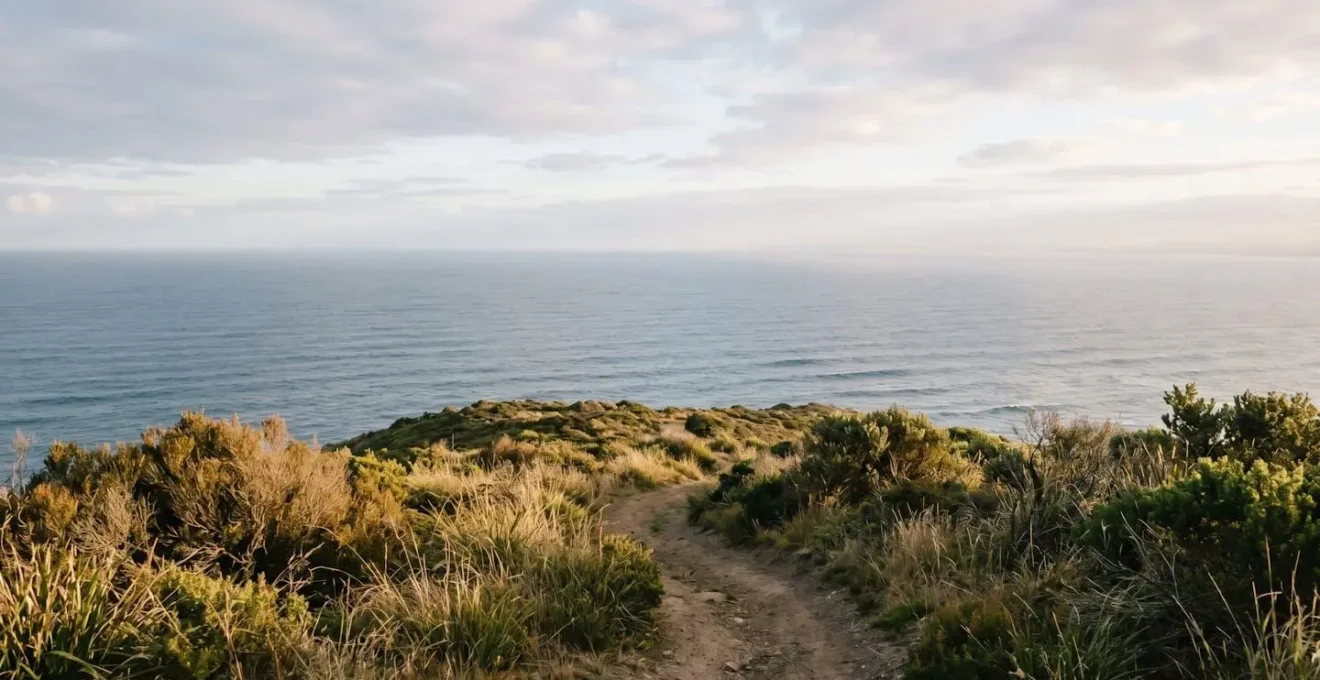
Even when official Driver Reviver sites aren’t operating, the principle remains the same. You must schedule proactive breaks into your itinerary. Don’t wait until you feel exhausted. Plan to stop every two hours for at least 15 minutes. Get out of the car, stretch your legs, and change your scenery. These breaks are non-negotiable. Viewing them as « wasted time » is a dangerous mindset; they are an investment in your survival.
A free coffee is a small incentive, but the life you save—very likely your own—is the real reward.
Qantas vs Emirates: Which Airline Offers the Best Stopover for Families?
While an analysis of airline stopover policies for carriers like Qantas or Emirates falls outside the scope of Victorian road safety, the question itself highlights a critical, often overlooked aspect of trip planning: your condition upon arrival. The battle against driver fatigue doesn’t begin when you pick up your rental car in Melbourne; it begins the moment you board your long-haul flight.
Arriving in Australia after 24 hours of travel, suffering from jet lag and sleep deprivation, puts you at an immediate and severe disadvantage. Attempting a demanding drive like the Great Ocean Road without adequate rest is exceptionally dangerous. No amount of caffeine or willpower can override the profound effects of sleep debt on your cognitive function and reaction time. Your ability to safely navigate unfamiliar roads, traffic rules, and a packed itinerary is already compromised before you even start.
Therefore, the best « stopover » is one that allows you to acclimatise and recover. From a safety perspective, we strongly advise against undertaking a long road trip on your first or second day in the country. The most important decision you can make for your family’s safety is to schedule at least one full day of rest in Melbourne after your flight lands. This allows your body clock to adjust and ensures the person behind the wheel is alert, focused, and truly fit to drive.
Ultimately, a safe road trip starts with a well-rested driver, a factor far more critical than any in-flight amenity.
Key Takeaways
- The primary danger of a Great Ocean Road day trip is not the road itself, but the extreme risk of driver fatigue from the 12-hour, 500km+ journey.
- A safe trip requires strategic compromises. You cannot see everything; prioritize key stops and plan for rest to avoid decision fatigue and stress.
- The return leg to Melbourne after sunset is the most dangerous part of the day, involving up to 3 hours of driving in darkness on unlit roads with a high risk of wildlife encounters.
Sunset at the Twelve Apostles: How to Get the Shot Without 50 Tour Buses Ruining It?
Capturing the iconic sunset shot at the Twelve Apostles is the grand finale for most day-trippers. It’s a breathtaking moment, but it also marks the beginning of the most dangerous phase of your journey: the long drive back to Melbourne in the dark. As a safety expert, I must stress that the glamour of the photo opportunity often overshadows the critical reality of what comes next. Once the sun dips below the horizon, you are faced with a 3-hour drive on largely unlit country roads, a time when both driver fatigue is peaking and nocturnal wildlife, like kangaroos, are most active.
While getting the perfect shot is a valid goal, your planning must extend beyond the camera settings. Strategies like moving to less crowded secondary viewing platforms or waiting for the « blue hour » after the main tour buses depart can enhance your experience. However, these tactics do not change the fundamental risk of the return journey. The driver for this leg must be the most alert person in your group, and this needs to be decided in advance. Pushing on when you are already exhausted from a full day of driving is a recipe for disaster.
Your post-sunset plan is the most important part of your entire itinerary. It must prioritize safety above all else. This checklist is not a suggestion; it is a critical safety procedure for anyone attempting this drive.
Your Non-Negotiable Post-Sunset Safety Plan
- Face the Critical Reality: Acknowledge that after sunset, you face a 3-hour drive back to Melbourne in complete darkness on unlit roads with active wildlife. This is the highest-risk portion of your day.
- Implement a Designated Driver Strategy: The driver for the return leg must rest during the day. Do not allow the person who has done most of the driving to handle the night-time return.
- Embrace the ‘Blue Hour’ and Let Crowds Thin: Stay 30 minutes AFTER sunset. The light is still beautiful, the tour buses will have departed, and you’ll begin your journey home in a calmer state of mind.
- Use Photography to Your Advantage: If you’re a photographer, use a tripod and long exposure techniques (e.g., with an ND filter) to ‘erase’ moving people from your shots, reducing the pressure to fight for a spot during the peak moment.
- Take the Safest Return Route: Do NOT drive the winding Great Ocean Road back in the dark. The safest and faster route is the inland A1 Princes Highway, which is better lit in sections and has a lower wildlife risk.
Considering these significant risks, the most responsible advice is to reconsider the day trip entirely. Plan for an overnight stay in a town like Port Campbell or Apollo Bay. This transforms a dangerous endurance test into the relaxed, scenic, and safe experience the Great Ocean Road is meant to be.