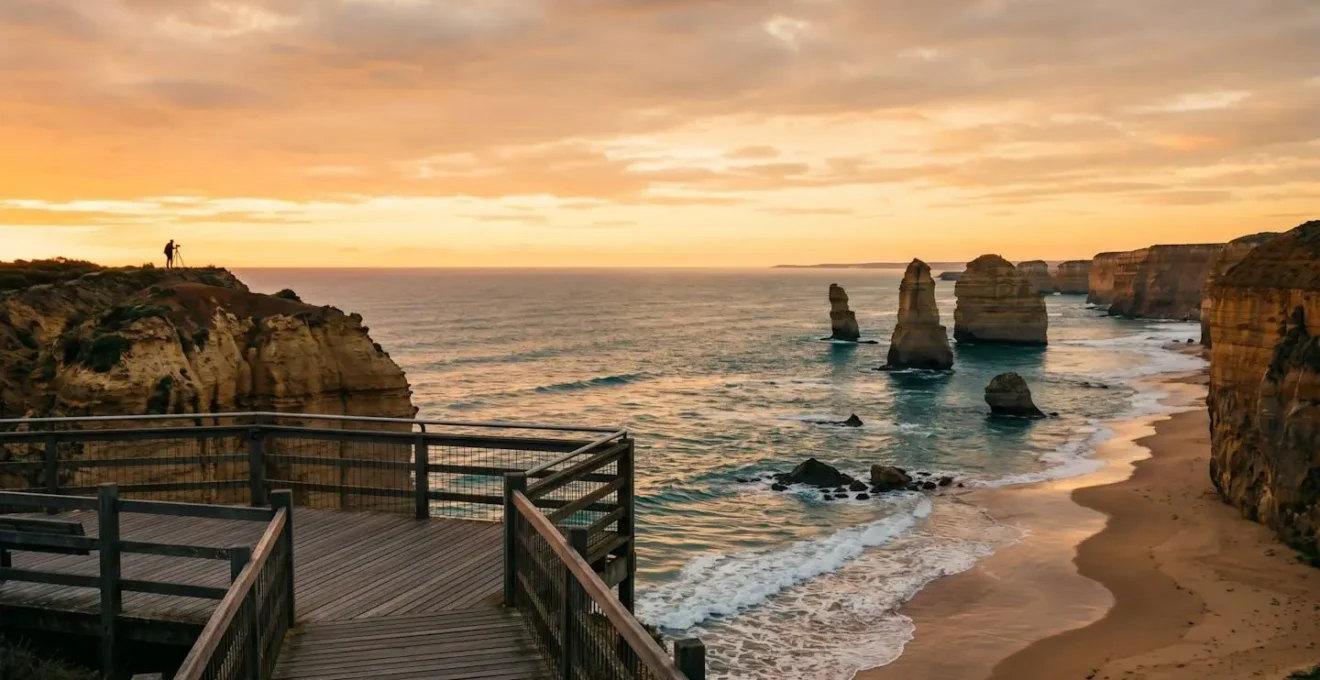
Getting a clean, professional shot of the Twelve Apostles isn’t about having the best camera; it’s about escaping the tourist mindset. The classic sunset photo is ruined by crowds because everyone stands in the same spot. This guide reveals the professional’s approach: using geological knowledge, timing, and environmental awareness to find unique compositions and protect your gear, ensuring you walk away with a portfolio-worthy image, not just a snapshot.
You’ve seen the photograph a thousand times: majestic limestone stacks bathed in the golden glow of a setting sun. You arrive, tripod in hand, only to find the reality: a wall of selfie sticks, a chorus of shutter clicks from a hundred smartphones, and the constant rumble of tour buses. The perfect shot seems impossible. Most advice will tell you to use a wide-angle lens or wait for the « golden hour, » but this is basic knowledge that every other person on the viewing platform already has. What if the secret wasn’t in your camera bag, but in your strategy?
As a landscape photography tutor, I’m here to tell you that the key to capturing the Twelve Apostles without the crowds is to stop thinking like a tourist and start thinking like a strategist. It’s about understanding the land’s rhythm—its erosion, its tides, its volatile weather—and using that knowledge to your advantage. This isn’t just about avoiding people; it’s about capturing the raw, powerful character of the Southern Ocean coastline. This guide will walk you through the professional’s checklist, from the science of the crumbling coast to the secrets of surviving salt spray, so you can finally get that pristine shot.
This article provides a complete strategic breakdown. We’ll explore the landscape’s secrets, weigh the costs of different viewpoints, and prepare you for the unique environmental challenges of this iconic location. Here is what we will cover.
Summary: A Strategic Guide to Photographing the Twelve Apostles
- Why Are There Only 8 Apostles Left: The Science of Coastal Erosion?
- Gibson Steps: Is the Walk Down Safe for Seniors with Knee Issues?
- Helicopter Ride vs Boardwalk: Is the £150 Flight Worth the 15 Minutes?
- Southern Ocean Winds: What Clothing Do You Need Even in Summer?
- Loch Ard Gorge: Why Is It Often Less Crowded Than the Apostles?
- How to Protect Camera Gear from Red Dust and Tropical Humidity?
- Sunrise or Sunset: Which Offers the Best Colour Change on the Rock?
- The Mereenie Loop Permit: How to Cross Indigenous Land Legally?
Why Are There Only 8 Apostles Left: The Science of Coastal Erosion?
The name « Twelve Apostles » is a powerful piece of marketing, but it’s a geological lie. There were never twelve, and today, only eight stacks remain. Understanding why is the first step to photographing them with intent. The entire coastline is a battlefield between soft limestone and the relentless power of the Southern Ocean. The cliffs are eroding at a surprisingly rapid pace; geological surveys indicate the erosion rate is about 2 cm per year. This process is what creates the Apostles, carving caves into headlands, which then become arches, and finally collapse to leave isolated stacks.
This isn’t ancient history; it’s happening right now. The dynamic nature of this coastline offers a unique narrative for your photography. You aren’t just capturing a static landmark, but a moment in a long, violent, and beautiful geological story. This constant change means the view is never the same twice, and your photo will be a unique record of the coast as it is today.
Case Study: The 2005 Apostle Stack Collapse
In July 2005, a 50-metre-tall stack collapsed dramatically, reducing the visible formations from nine to eight. According to geological reports, this event was a stark reminder of the active erosion process. Wave action continues to undermine the cliff faces, while simultaneously creating the conditions for new stacks to form from existing headlands over thousands of years. This event underscores the fleeting beauty you are there to capture.
As a photographer, this knowledge should shift your focus. Instead of just a wide shot of the « Apostles, » look for the details: the under-cut bases, the cracks in the cliff face, the spray of a wave hitting a vulnerable point. These elements tell the real story of this place. Your job is to document its magnificent, slow-motion demise.
Gibson Steps: Is the Walk Down Safe for Seniors with Knee Issues?
While the main viewing platform offers the classic, crowded postcard view, a true photographer seeks a different angle. Gibson Steps provides that, taking you down to beach level where the scale of the cliffs and the first two stacks (often nicknamed Gog and Magog) becomes truly awe-inspiring. But is it safe? For anyone with mobility concerns, particularly knee issues, it’s a valid question. The descent involves 86 steep, carved steps, which feels like descending five flights of stairs.
The primary concern isn’t just the steps themselves, but the variable conditions. The beach is exposed to the full force of the Southern Ocean. Access can be closed without warning due to high tides or geological instability. Before you even consider the descent, checking the local tide charts and Parks Victoria updates is non-negotiable. For those with knee problems, the ascent is far more challenging than the descent. If you’re unsure, the clifftop viewing platform at the top of the steps offers a less strenuous, wheelchair-accessible alternative with excellent views.
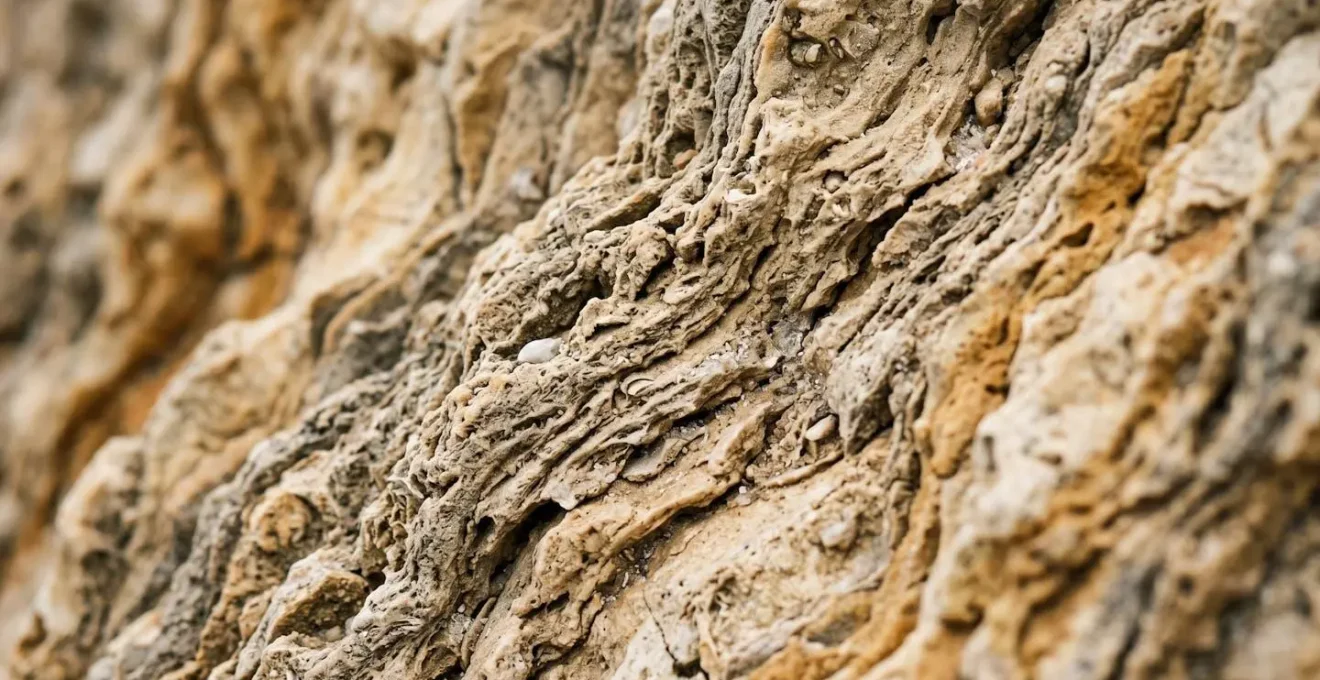
From a photographic standpoint, the reward is immense. Low tide reveals a rocky shoreline full of leading lines and reflective pools, perfect for creating a powerful foreground. You can use a slow shutter speed to capture the water’s movement around the base of the stacks. The challenge, therefore, is a calculated risk. If your knees can handle the climb and the conditions are right, the photographic opportunities at the bottom are far superior to those at the top.
Helicopter Ride vs Boardwalk: Is the £150 Flight Worth the 15 Minutes?
The proposition is tempting: for roughly £150, you can escape the crowds entirely and get a literal bird’s-eye view of the Apostles. A 15-minute helicopter flight promises a perspective that 99% of visitors will never see. But for a serious photographer, is it worth the investment? The answer is a qualified « maybe. »
Let’s be clear about what you’re buying. You’re buying a unique vantage point, not necessarily a portfolio-quality shot. The pros are obvious: you see the entire coastline in context, from the Apostles to Loch Ard Gorge, and you get angles that are impossible from the ground. It’s an incredible way to scout compositions and understand the geography of the area in a short amount of time.
However, the cons for a photographer are significant.
- Lack of Control: You are a passenger. You can’t ask the pilot to hold a position for the perfect light.
- Reflections: You will be shooting through a curved, often-tinted plexiglass window, which means battling reflections and glare.
- Vibrations: Forget long exposures. Even with a high shutter speed, helicopter vibrations can soften your images.
- No Filters: You won’t have time or space to attach a polarizing or ND filter, which are crucial for managing coastal light and water.
So, is it worth it? As a photographic tool, the helicopter is a high-cost, high-risk gamble. It’s fantastic for the experience and for getting scouting shots, but don’t expect it to be the source of your hero image. The money might be better spent on an extra night’s accommodation to shoot both a sunrise and a sunset from the ground, where you have full creative control.
Southern Ocean Winds: What Clothing Do You Need Even in Summer?
The biggest mistake a photographer can make at the Twelve Apostles has nothing to do with camera settings. It’s underestimating the weather. The term « summer » is a dangerously misleading concept here. The coastline is at the mercy of the Southern Ocean, which generates a relentless, bone-chilling wind year-round. This « environmental warfare » requires a strategic approach to clothing, not just for comfort, but for your ability to operate your equipment and wait patiently for the light.
Thinking in layers is not just a suggestion; it’s a rule. Even on a sunny 25°C day in Melbourne, the wind chill on the coast can make it feel closer to 10°C. A sudden misty downpour is common, even when the sky was clear minutes before. Your clothing is your first line of defense, allowing you to stay out longer and be ready when that fleeting moment of perfect light appears. Forget fashion; think function.
The right gear also extends to protecting your equipment. The wind can be strong enough to knock over a flimsy tripod, and blowing sand can wreak havoc on lenses and camera sensors. A sturdy tripod is essential, and knowing how to anchor it is a pro-level move.
- Layer 1 (Base): A merino wool moisture-wicking base layer is essential, even in summer. The Southern Ocean winds create a significant wind chill factor year-round.
- Layer 2 (Insulation): A lightweight fleece mid-layer provides thermal insulation while remaining breathable, crucial for the walk from the car park to the viewing platforms.
- Layer 3 (Shell): A windproof and waterproof shell jacket is non-negotiable. It protects against the sudden misty downpours and strong gusts characteristic of the region’s low-pressure systems.
- Accessories: High-quality lip balm and sunglasses are vital to protect against windburn and blowing sand. For your gear, use the ‘stone bag’ trick: fill a small bag with beach rocks to anchor your tripod against the powerful coastal gusts.
Without this preparation, you’ll be cold, miserable, and likely to pack up and leave just before the sunset puts on its best show. The photographers who get the best shots are the ones who are still standing comfortably when everyone else has retreated to their cars.
Loch Ard Gorge: Why Is It Often Less Crowded Than the Apostles?
The ultimate secret to beating the crowds at the Twelve Apostles is to go somewhere else. Just a three-minute drive down the road lies Loch Ard Gorge, a location that many seasoned photographers argue is even more spectacular and photographically versatile. As the team at 2 Cups of Travel notes in their guide:
Only a stone’s throw further down the Great Ocean Road is a natural attraction that I think is even more magnificent and worthy of a visit… Loch Ard Gorge!
– 2 Cups of Travel photography team, Don’t Miss Loch Ard Gorge travel guide
So why is it less crowded? The reason is simple psychology. The Twelve Apostles is the famous name, the main attraction advertised on every tour. Loch Ard Gorge requires a conscious decision to stop and a short walk to explore its various viewpoints. This small barrier is enough to filter out a significant portion of the tour bus traffic, which operates on a tight schedule. Their loss is your gain.
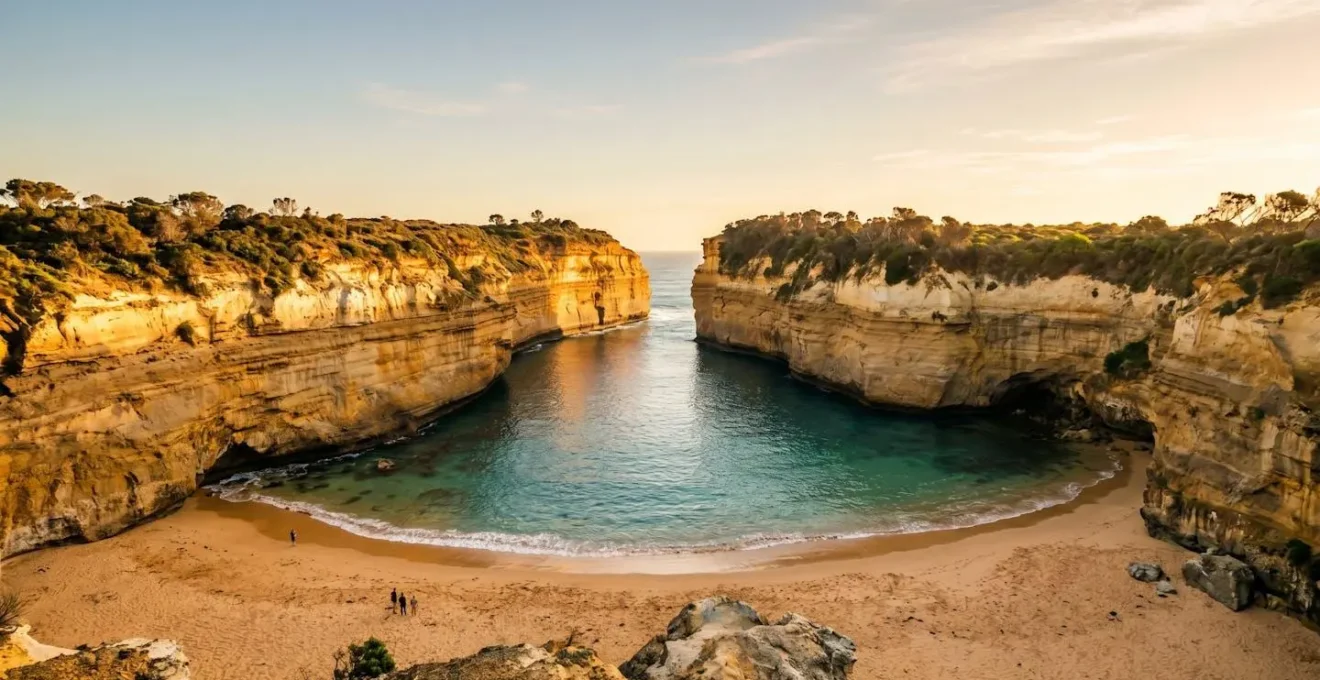
For a photographer, the gorge is a gift. The towering cliffs create a natural amphitheater that shelters you from the wind and, more importantly, shapes the light. In the late afternoon, the sun illuminates the western cliff face, which then acts as a gigantic natural reflector, bouncing warm, soft light back into the gorge and onto the turquoise water below. This creates a quality of light that is often more beautiful and manageable than the direct, harsh sunset at the main Apostles lookout. It offers multiple compositions, from the famous beach level view to the dramatic perspectives from the surrounding walking trails.
How to Protect Camera Gear from Red Dust and Tropical Humidity?
While the title mentions red dust and humidity—concerns more for the Outback—the principle of gear protection on the Great Ocean Road is acutely focused on a more corrosive enemy: salt spray. The same wind that chills you to the bone is carrying a fine, invisible mist of saltwater that will coat you, your clothes, and, most importantly, your expensive camera gear. Ignoring it is a recipe for disaster. Salt is incredibly corrosive to the delicate electronics, metal mounts, and lens coatings that make up your camera.
The « Environmental Warfare » doesn’t end when you put the lens cap back on. In fact, the most critical battle is fought after the shoot. Simply packing your camera away with a layer of salt on it allows the corrosion to begin immediately. A strict decontamination protocol is not optional; it’s a fundamental part of shooting in a coastal environment. This process should become as automatic as charging your batteries.
The goal is to remove the salt and sand before they can do any damage. This requires a methodical, multi-step process back at your accommodation, long after the photographic adrenaline has worn off. Rushing this or skipping steps will lead to stiff tripod legs, gritty focus rings, and even permanent damage to your lens optics over time. Treat your gear like a surgical instrument, and clean it with the same level of care.
Your Gear Decontamination Checklist
- Immediate Wipe-Down: Immediately after shooting, use a microfiber cloth to wipe visible salt spray and moisture from the camera body and lens barrel. Do not touch the glass elements yet.
- Air Blast Sand: Back at your accommodation, use a rocket blower to remove fine sand particles from camera crevices, the lens mount, and tripod joints before any wet cleaning.
- Remove Salt Residue: Dampen (do not soak) a clean microfiber cloth with distilled water to gently wipe the salt residue from the camera body, being careful around buttons and dials.
- Clean Optics Last: Clean lens elements using a lens-specific cleaning solution and a fresh lens tissue, working in circular motions from the center outward. Salt corrosion on coatings is cumulative and permanent.
- Tripod Maintenance: Wipe down tripod legs and quick-release plates with a damp cloth, then dry them thoroughly. Both aluminum and carbon fiber suffer from long-term salt exposure.
Sunrise or Sunset: Which Offers the Best Colour Change on the Rock?
This is the classic debate for any landscape photographer: sunrise or sunset? At the Twelve Apostles, the answer isn’t simple, as each offers a profoundly different experience and outcome. As the As Her World Turns travel blog beautifully puts it, the light quality is distinct: « sunset featured sharp, dramatic lighting, while today’s sunrise brings warm light that showcases pastel colors in the rocks. » The choice depends entirely on your photographic priorities: are you seeking drama or serenity?
Sunset is, without a doubt, the more popular and crowded option. The sun sets over the ocean to the west, backlighting the stacks and often creating fiery red and orange skies. This is due to an effect called Rayleigh scattering, where atmospheric particles from the day’s heat and dust scatter blue light, allowing more red light to pass through. The result is intense, dramatic colour. This is the « hero » shot that most people are after.
Sunrise, on the other hand, is a completely different animal. The sun rises from behind the viewing platforms, casting a soft, frontal light onto the faces of the Apostles. The colours are often more subtle—soft pinks, gentle oranges, and cool blues. The air is typically crisper, and there’s a higher chance of morning mist, which can add an ethereal, moody quality to your images. The biggest advantage, however, is solitude. You might be sharing the platform with a handful of other serious photographers instead of hundreds of tourists.
The following table, based on an analysis of atmospheric light conditions, breaks down the decision-making process for photographers.
| Factor | Sunrise | Sunset |
|---|---|---|
| Light Quality | Crisper, cooler tones with pastel pinks and soft oranges | Warmer, more dramatic reds and deep oranges (Rayleigh scattering effect) |
| Crowd Levels | Minimal – quiet, serene experience with fewer people | Heavily crowded – popular with tour buses and day visitors |
| Atmospheric Conditions | Higher chance of morning mist adding ethereal quality | More atmospheric particles = enhanced color intensity |
| Optimal Time Window | 30 minutes before sunrise (blue hour) for unique shots | 30 minutes after sunset (blue hour) for uncrowded alternatives |
| Temperature | Coldest with strongest wind chill factor | Slightly warmer but still requires full wind protection |
| Photographer Priority | Best for: Solitude & Serenity seekers | Best for: Maximum Colour & Drama pursuers |
Key takeaways
- Think beyond the main platform: The best shots are often from less obvious locations like Gibson Steps or Loch Ard Gorge.
- Master time as a strategic tool: Use sunrise, blue hour, and tide schedules to avoid crowds and find unique light.
- Prepare for environmental warfare: Proper clothing and a strict gear decontamination routine are non-negotiable for success and equipment longevity.
Beyond the Scenery: Understanding the Land’s Indigenous Heritage
To photograph a place with true depth and respect, you must understand that you are not just capturing a geological wonder, but a cultural landscape steeped in history. The area known to us as the Twelve Apostles holds profound cultural significance for the Eastern Maar people, particularly the Kirrae Whurrong clan. To see it only as a collection of rocks is to miss its most important story.
The very features that draw tourists and photographers have been part of a living culture for tens of thousands of years. This connection transforms the site from a passive backdrop into an active participant in an ancient narrative. It’s a place of stories, ancestral connection, and ongoing cultural practice that predates tourism by millennia. This is not a relic of the past; the Eastern Maar community continues to hold this land as a sacred part of their identity.
The True Story of Gibson Steps
The steps you walk down at Gibson Beach are a powerful example of this layered history. According to the Eastern Maar Aboriginal Corporation, the original access to the beach was carved into the cliff by the traditional owners over countless generations. The European settler Hugh Gibson, for whom the steps are now named, simply worked on this pre-existing traditional access route in the 1860s. Knowing this re-frames the experience entirely: you are not using a colonial-era path, but treading in the footsteps of a culture that has been connected to this specific place for an immense period of time.
As a photographer, this knowledge should influence your approach. It encourages a quieter, more respectful presence on the land. It invites you to create images that convey not just the physical beauty, but a sense of the timelessness and deep history embedded in the landscape. Your work can become a tribute to this heritage, rather than just another tourist snapshot. This shift in perspective is the final step in moving from a tourist to a thoughtful observer.