Avoiding crowds on the Great Barrier Reef isn’t about picking a smaller boat; it’s a strategic game of logistics, timing, and understanding the economics of tourism.
- Cairns is the logistical hub for liveaboards, the ultimate strategy for accessing pristine, empty reefs.
- Port Douglas offers higher-quality, boutique day trips to exclusive outer reef sites like Agincourt.
- The extra cost of an overnight trip often translates to a lower cost-per-hour on the reef and unparalleled experiences like sunrise snorkelling.
Recommendation: Analyse the « cost-per-hour-on-reef » and prioritise operators who offer access to multiple, remote sites outside of peak mid-day hours.
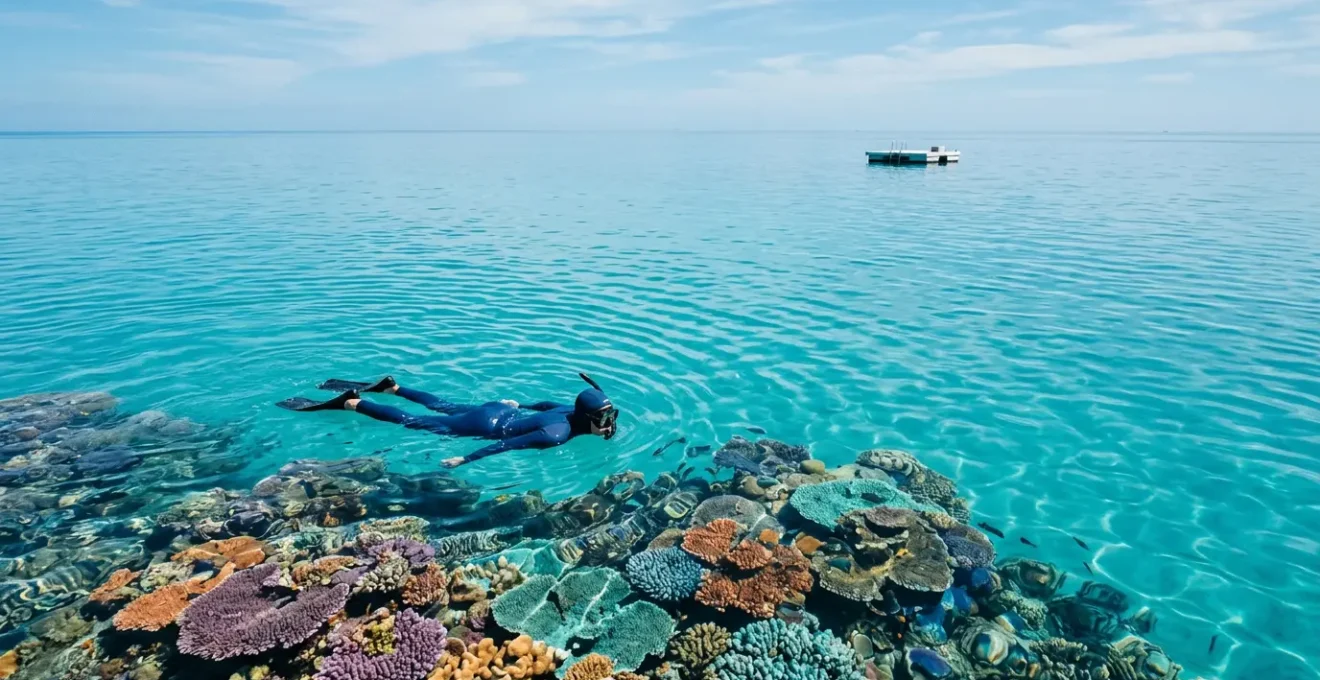
The brochure shows a lone snorkeller suspended in crystalline water, surrounded by vibrant coral and a kaleidoscope of fish. The reality, too often, is a crowded pontoon with hundreds of people, churning waters, and the feeling you’re in a theme park, not one of the world’s greatest natural wonders. For the eco-conscious traveller, the fear is twofold: a disappointing experience and the worry that you are contributing to the very pressure damaging the ecosystem you came to admire.
The common advice is simplistic: « Go from Port Douglas, it’s less crowded, » or « Choose a smaller boat. » While not entirely wrong, this advice misses the fundamental point. These are tactics, not a strategy. They don’t explain why some small boats are still packed or why some Cairns-based tours offer more pristine experiences than those from Port Douglas. They ignore the critical factors of timing, reef health, and the business models of the tour operators themselves.
But what if the key to an authentic reef experience wasn’t just about location, but about understanding the logistics? The secret lies in decoding the system: knowing why a liveaboard offers exponential value, why your sunscreen choice is a non-negotiable act of conservation, and how to float effortlessly even if you can’t swim a lap. This is not another list of « best tours »; it is a strategic framework from a dive master’s perspective, designed to empower you to make informed choices that protect both your investment and the reef itself.
This guide will equip you with a new lens to evaluate your options. We will dissect the departure points, analyse the true cost of your time on the reef, and provide actionable checklists for everything from safety to protecting your expensive camera gear.
Summary: A Strategic Approach to the Great Barrier Reef
- Cairns or Port Douglas: Which Departure Point Is Closer to Pristine Reefs?
- Why Must You Wear Stinger Suits Between November and May?
- How to Snorkel for the First Time If You Are Not a Strong Swimmer?
- The Sunscreen Error That Damages Coral: What Ingredients to Ban?
- Liveaboard vs Day Trip: Is Spending a Night on the Reef Worth £300 Extra?
- Cape Tribulation: Where the Rainforest Meets the Reef Explained
- Whitehaven Beach Silica: Why Will It Damage Your Phone and Camera?
- Daintree Rainforest Walks: Which Trail Is Safe Without a Guide?
Cairns or Port Douglas: Which Departure Point Is Closer to Pristine Reefs?
The classic dilemma for reef-goers is the choice between Cairns and Port Douglas. The conventional wisdom states Port Douglas is superior due to its smaller size and proximity to the outer reefs. While there’s truth to this, the strategic answer is far more nuanced. It’s not about which port is « better, » but which port’s logistical model aligns with your goal of avoiding crowds. The first thing to understand is the sheer concentration of tourism; an incredible 86% of tourism visits occur in the waters off Cairns, Port Douglas, and the Whitsundays. This means your choice of operator is more critical than your choice of port.
Cairns is the larger, more bustling hub. It serves as the primary departure point for a massive variety of tours, including large catamarans heading to pontoons, but most importantly, it’s the undisputed capital of liveaboard trips. If your ultimate goal is to spend meaningful, quiet time on the reef, a multi-day liveaboard from Cairns is the single best strategy. These trips inherently avoid the day-trip crowds by being on-site before they arrive and after they leave. Port Douglas, on the other hand, excels in the boutique day-trip market, with smaller, faster catamarans heading to exclusive reef sites like the renowned Agincourt Reef system. These trips often carry fewer passengers and offer a more personalised feel for a single-day experience.
The decision tree is simple: for the most immersive and crowd-free experience, a liveaboard from Cairns is the answer. For the highest quality single-day trip, a boutique operator from Port Douglas is likely your best bet. The following table breaks down the key differences:
| Factor | Cairns | Port Douglas |
|---|---|---|
| Travel time to Outer Reef | 30 minutes to 2 hours | 45 minutes to 1 hour |
| Tour variety | Almost 30 daily departures, widest range | Fewer options, boutique focus |
| Vessel types | Larger pontoons, catamarans, variety | Smaller catamarans, intimate groups |
| Primary reef sites | Norman, Hastings, Michaelmas, Moore Reefs | Agincourt Reef, Opal Reef, Low Isles |
| Liveaboard availability | Extensive overnight options | Limited to none |
| Crowd level | Bigger boats, more tourists | Smaller groups, less crowded feel |
Why Must You Wear Stinger Suits Between November and May?
The term « stinger season » can sound alarming, but it shouldn’t deter you; it should simply inform your preparation. Between November and May, the warmer waters of Tropical North Queensland see an increase in marine jellyfish, most notably the tiny, near-invisible Irukandji and the larger Box Jellyfish. While serious incidents are rare— official figures show 50-100 Irukandji stings per year require medical treatment out of millions of visitors—the risk is real and easily mitigated. Your number one defence is a full-body stinger suit, typically made of lycra or nylon.

Think of the stinger suit not as an inconvenience, but as essential equipment, just like your mask and snorkel. These suits create a physical barrier between your skin and the jellyfish tentacles. The material is too thick for the stinging cells (nematocysts) to penetrate. Their effectiveness is well-documented; research confirms that full-coverage lycra suits reduce sting risk by up to 95% for box jellyfish and around 70-80% for the smaller Irukandji. Reputable tour operators will insist you wear one and provide them, usually for a small hire fee. This is a sign of a responsible operator; any tour that treats stinger suits as optional during these months should be a red flag.
Beyond jellyfish protection, these suits offer two significant secondary benefits. Firstly, they provide excellent UPF 50+ sun protection, reducing the amount of sunscreen you need to apply (and thus reducing chemical runoff into the reef). Secondly, they add a slight layer of warmth, making your time in the water more comfortable, even on cooler, overcast days. Wearing one is a non-negotiable part of a safe and enjoyable reef experience during the warmer months.
How to Snorkel for the First Time If You Are Not a Strong Swimmer?
One of the biggest misconceptions about the Great Barrier Reef is that you need to be an athletic swimmer to enjoy it. This is completely false. In fact, the best snorkelling is done with minimal effort—it’s about floating, not swimming. The goal is to be a calm, quiet observer, and tour operators are experts at making this accessible to everyone, regardless of their confidence in the water. Many pontoons and boats feature options like semi-submersible tours and underwater observatories, allowing you to see the coral and fish without getting wet at all.
For those who want to experience the water, but feel nervous, the key is a gradual approach. All reputable tours provide flotation devices, from life rings and « pool noodles » to buoyancy vests. These aids do the work for you, allowing you to lie flat on the surface and simply breathe through your snorkel. Your guide will show you how to clear your mask and snorkel, and you can practice in a calm, designated area. The secret is to relax, breathe slowly, and let the buoyancy aid support you fully.
To build confidence, follow a simple sequence. Don’t just jump in and head for the open reef. A structured approach can make all the difference for nervous first-timers. The best way is to start small and master each step before moving to the next, ensuring you feel in control at all times.
Your Action Plan: 4-Step Water Confidence Sequence for Nervous Snorkelers
- Master breathing techniques on the pontoon’s submerged steps or in shallow water while holding onto a stable platform.
- Practice floating with a life ring or buoy in the designated snorkel area without attempting directional movement – focus purely on relaxed breathing and observing the reef below.
- Graduate to using a pool noodle or flotation vest for gentle directional floating, accompanied by a guide or buddy.
- Remember that great snorkeling is about effortless floating and minimal movement – you don’t need to be an athletic swimmer to enjoy the reef.
The Sunscreen Error That Damages Coral: What Ingredients to Ban?
As an eco-conscious traveller, your impact on the reef goes beyond your carbon footprint. One of the most direct and damaging impacts comes from an everyday item: your sunscreen. It’s estimated that a staggering 8,000 to 16,000 tons of sunscreen wash into coral reef environments each year worldwide. The « sunscreen error » isn’t forgetting to apply it; it’s choosing the wrong kind. Chemical sunscreens contain compounds that are catastrophic for coral health, even in minuscule concentrations.
The primary culprits are chemicals like Oxybenzone and Octinoxate. These ingredients act as endocrine disruptors in coral, interfering with their reproduction, causing DNA damage, and, most visibly, accelerating coral bleaching. They essentially make corals more susceptible to dying from heat stress. Many popular, big-brand sunscreens contain these and other harmful chemicals. Visiting the Great Barrier Reef with a chemical sunscreen is akin to walking through a pristine national park and leaving a trail of poison in your wake.
The only responsible choice is a « reef-safe » mineral sunscreen. These products use non-nano Zinc Oxide or Titanium Dioxide as their active ingredients. These are physical blockers; they create a barrier on your skin that reflects UV rays, rather than a chemical one that absorbs them. It is critical to check the « active ingredients » list on any sunscreen bottle before you purchase and pack it. To protect the reef, you must avoid the following chemicals at all costs:
- Oxybenzone: Disrupts coral reproduction and exacerbates bleaching.
- Octinoxate: A primary driver of coral bleaching.
- Octocrylene: Harms coral reproductive cycles and causes DNA damage.
- Benzophenone-1 & Benzophenone-8: Damages coral reproductive health.
- 4-Methylbenzylidene camphor: A known cause of coral bleaching.
- Butylparaben: Proven to cause coral bleaching.
Choosing a reef-safe sunscreen is one of the most powerful and direct conservation actions you can take as a visitor. It’s a simple switch that has a profound, positive impact on the ecosystem you’ve travelled so far to see. It is also advisable to use a stinger suit or rash guard as your primary sun protection, reducing the total amount of sunscreen needed.
Liveaboard vs Day Trip: Is Spending a Night on the Reef Worth £300 Extra?
At first glance, the price difference between a day trip (around £150-£200) and a two-day/one-night liveaboard (around £450-£550) seems substantial. The question is, are you really getting three times the value? From a strategic, crowd-avoiding perspective, the answer is an unequivocal yes. The value isn’t just in the extra time; it’s in the *quality* and *exclusivity* of that time. A day trip gives you, at most, 4-5 hours at the reef, competing with multiple other boats at the same sites during the busiest part of the day.
A liveaboard completely changes the equation. You are living on the reef. This grants you access to snorkelling and diving during the « golden hours »—at sunrise, sunset, and even at night. This is when the day-trippers are gone, and the reef’s ecosystem transforms. The cost-per-hour analysis is revealing: while the upfront cost is higher, the value proposition is often stronger when you consider the sheer amount of quality, crowd-free reef time you get. Furthermore, liveaboards travel to more remote, less-visited dive sites that are simply out of reach for day tours.
This is the ultimate strategy for the traveller who truly wants to immerse themselves in the reef environment. As tourism experts from Tropical North Queensland note, the experience is transformative:
Overnight divers also witness the significant difference in marine life on a night dive and wake to see the flourish of morning activity on the reef with an early morning dive.
– Tropical North Queensland Tourism, Cairns & Port Douglas Guide
The table below breaks down the true value beyond the sticker price. The liveaboard is not just a longer trip; it’s a fundamentally different and superior experience for avoiding crowds and seeing the reef at its most active and magical.
| Aspect | Day Trip | Liveaboard (2 day/1 night) |
|---|---|---|
| Typical cost | £150-200 (AUD $285-380) | £450-550 (AUD $850-1,050) |
| Hours at reef | 4-5 hours | 10+ hours across 2 days |
| Cost per reef hour | £37.50/hour | £45/hour |
| Unique experiences | Daytime snorkeling only | Sunrise, sunset, and night snorkeling sessions |
| Crowd avoidance | Share sites with other tours | Access reef before/after day-trippers arrive |
| Number of dive sites | 2-3 sites | 5+ sites including remote locations |
| Departure availability | Cairns & Port Douglas | Cairns only |
Key takeaways
- The ultimate strategy to avoid crowds is logistical, not geographical; liveaboards from Cairns beat day trips from any port.
- Your choice of sunscreen is a direct conservation act. Always opt for non-nano mineral-based products and avoid chemical ingredients like oxybenzone.
- Protecting your gear, especially at Whitehaven Beach, requires a specific toolkit to combat the unique threat of fine silica sand and salt.
Cape Tribulation: Where the Rainforest Meets the Reef Explained
North of Port Douglas lies a place of almost mythical significance in the natural world: Cape Tribulation. This is the only place on Earth where two UNESCO World Heritage sites meet—the Daintree Rainforest, the oldest tropical rainforest on the planet, and the Great Barrier Reef. The experience of standing on a beach where ancient, jungle-clad mountains sweep down to meet the coral-fringed sea is profoundly moving. The name, given by Captain Cook after his ship ran aground on a nearby reef, belies the area’s incredible beauty and ecological importance.
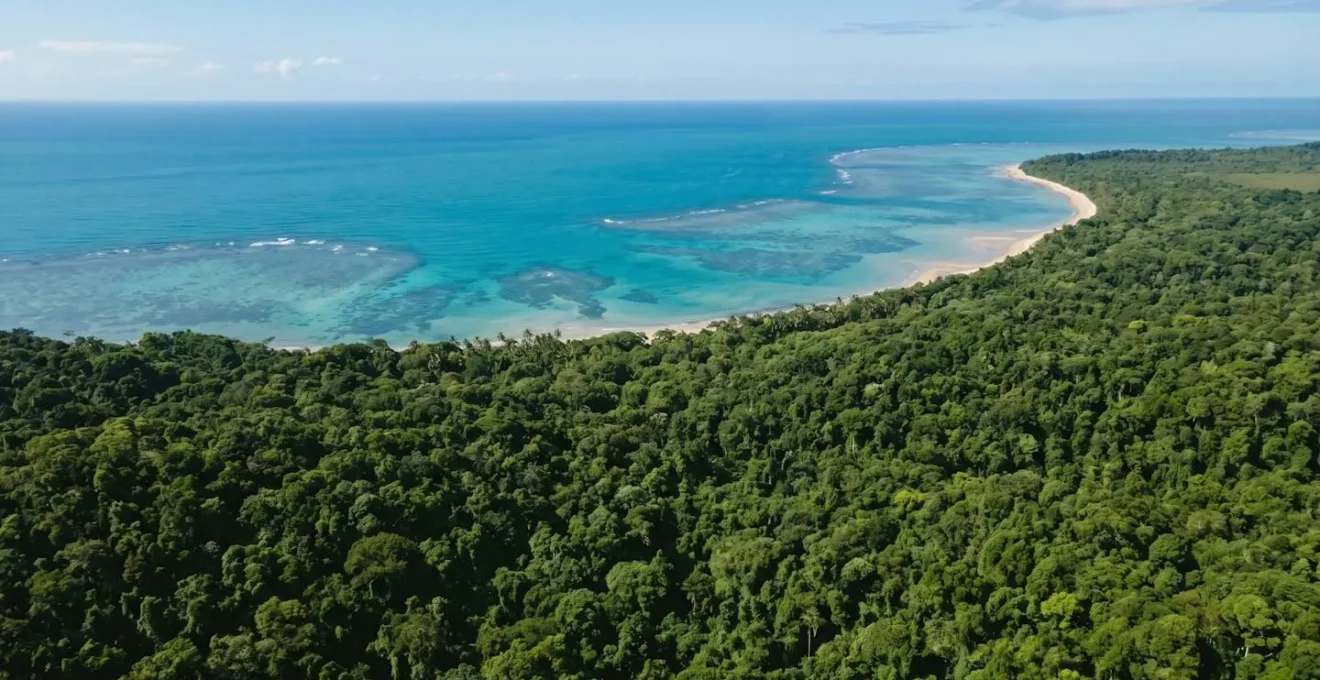
For the visitor, this unique geography offers a dual experience. You can spend the morning trekking through the ancient rainforest, listening to the sounds of exotic birds, and then spend the afternoon snorkelling just offshore (with a responsible tour operator, as coastal waters here have crocodiles). The reef in this region is a fringing reef, different from the outer reefs visited by large catamarans. It offers a more intimate snorkelling experience, often with a chance to see sea turtles feeding on seagrass beds close to shore.
Understanding Cape Tribulation is to understand a living, breathing connection between land and sea. The nutrients washing down from the rainforest feed the coastal ecosystems, creating a complex web of life. It’s a powerful reminder that these two environments are not separate, but deeply intertwined. A visit here adds a rich, terrestrial dimension to your Great Barrier Reef journey, connecting the vibrant life under the water with the ancient world on the shore.
Whitehaven Beach Silica: Why Will It Damage Your Phone and Camera?
Whitehaven Beach is a jewel of the Whitsundays, famous for its seven kilometres of brilliant white sand. But the very thing that makes it so beautiful is also a major threat to your expensive electronics. This isn’t ordinary sand; it’s composed of 98% pure silica, which gives it its colour and flour-like texture. This sand is both incredibly fine and incredibly hard, a disastrous combination for phones and cameras.
Case Study: The Hidden Threat of Whitehaven’s Silica Sand
The extreme fineness of Whitehaven’s silica sand allows microscopic particles to work their way into the tiniest crevices of your devices: charging ports, speaker grilles, microphone holes, and especially the delicate, moving parts of a camera’s zoom lens. Once inside, they are nearly impossible to remove. Because silica is very hard (ranking 7 on the Mohs scale, harder than most metals), these trapped particles act like internal sandpaper, grinding away at sensitive mechanisms. Furthermore, the particles can permanently scratch glass camera lenses and phone screens. When combined with the salt spray from the boat, the silica forms an abrasive, corrosive paste that can destroy electronic contacts. Whitsunday tour operators consistently report high rates of guest equipment failure directly linked to this unique sand.
Standard protective measures are not enough. A simple case or bag can easily be contaminated. To truly safeguard your gear, you need a dedicated system. This means treating your trip to Whitehaven like a mission into a hostile environment for electronics. The following checklist is not optional; it’s essential insurance for your expensive equipment.
Your Action Plan: Photographer’s Great Barrier Reef Protection Toolkit
- High-quality waterproof phone pouch with a double-seal closure (test it before your trip by submerging it with a piece of tissue paper inside).
- Multiple microfiber lens cloths, each kept in its own sealed plastic bag to prevent sand contamination.
- A rocket air blower for safely removing fine sand grains from camera ports and phone charging points without scratching surfaces.
- Reusable silica gel packets stored inside your camera bag to combat the damaging effects of tropical humidity.
- A small spray bottle filled with fresh water for immediately and gently rinsing any salt spray off your equipment casing.
- Enable automatic cloud photo backup on your phone and camera before you leave. If the worst happens, your memories are safe.
Daintree Rainforest Walks: Which Trail Is Safe Without a Guide?
The Daintree is the world’s oldest rainforest, a place of immense beauty and powerful, ancient energy. It’s also a wild environment with inherent risks, from venomous snakes to the formidable Southern Cassowary and saltwater crocodiles in its waterways. Venturing off-path is not an option for the uninitiated. However, you do not need a guide to safely experience its magic. The key is to stick exclusively to the well-maintained, designated boardwalk trails.
These boardwalks are designed for safety and accessibility. They elevate you above the forest floor, keeping you clear of wildlife and preventing you from getting lost. They also protect the delicate root systems of the ancient trees. Several boardwalks offer a fantastic, safe, and self-guided immersion into the rainforest. Each has its own character, from the high canopy views at the Daintree Discovery Centre to the pristine swimming hole at Mossman Gorge. This scorecard highlights the best options for a safe solo exploration.
| Trail Name | Length | Difficulty | Safety Features | Wow Factor |
|---|---|---|---|---|
| Marrdja Botanical Walk | 1.2 km loop | Easy | Elevated boardwalk, interpretive signs, impossible to get lost | High – diverse plant species, creek views |
| Daintree Discovery Centre | Multiple loops, 2.5 km total | Easy | Canopy tower access, elevated walkways, educational signage | Very High – aerial rainforest views, wildlife spotting |
| Mossman Gorge Baral Marrjanga | 2.4 km circuit | Moderate | Well-marked boardwalk sections, regular patrols, ranger station nearby | Very High – pristine swimming hole, mountain views |
| Jindalba Boardwalk | 700 m | Easy | Fully elevated boardwalk, wheelchair accessible, clear signage | Medium – fan palms, mangroves, birdwatching |
Even on these safe trails, wildlife encounters are possible and require respect and caution. Saltwater crocodiles are a serious threat in ALL Daintree waterways, and the territorial cassowary, while beautiful, can be dangerous if it feels threatened. Following a few simple rules is non-negotiable for your safety and the well-being of the animals.
- Cassowary Safety: Never, ever feed a cassowary. It is illegal and teaches them to approach humans, which is dangerous for both parties. If you encounter one, back away slowly and calmly. Do not run or turn your back. Give it a wide berth.
- Crocodile Safety: Heed all warning signs. Stay at least 5 metres from the edge of any river or creek. Never swim in any waterway unless it is a designated, signed swimming area like the one at Mossman Gorge. Crocodiles are ambush predators and can be present even in shallow, calm-looking water.
- General Safety: Stick to the boardwalk. This keeps you visible, prevents you from getting lost, and minimizes your impact on the fragile ecosystem.
Armed with this strategic framework, you are now prepared to look beyond the glossy brochures and make choices that lead to a more authentic, respectful, and unforgettable Great Barrier Reef experience. The next logical step is to use this knowledge to vet tour operators and build an itinerary that prioritises quality time on the reef over convenience.