In summary:
- Your body’s thirst mechanism is a dangerously late indicator; by the time you feel thirsty in the dry heat, you are already significantly dehydrated.
- The Outback’s environmental physics—from extreme UV intensity to the behaviour of insects—actively works against you and your equipment.
- Technology is a primary point of failure. Your survival depends on analogue backups like paper maps, a compass, and mechanical recovery tools.
- Heat-related illness is not a gradual decline; heat stroke is a sudden medical emergency requiring immediate, decisive action.
The Australian Outback is not a theme park. It’s a landscape of profound beauty and equally profound hostility, an environment governed by unforgiving physics. Many hikers and drivers arrive with preparations that would be adequate for a European heatwave or a Californian desert, believing a good 4WD and a modern smartphone are sufficient. This is a dangerous miscalculation. The common advice— »drink plenty of water, » « stay with your vehicle »—is not wrong, but it’s dangerously incomplete. It fails to account for how this specific arid zone attacks your physiology and your technology.
The real key to survival here isn’t about rugged determination; it’s about a fundamental mental shift. It requires understanding that the arid zone is an active antagonist. It will find the weaknesses in your planning, your body, and your gear with brutal efficiency. The sun isn’t just strong; it operates on a different level of intensity. Dehydration isn’t just about being thirsty; it’s a cognitive poison that can lead to a state of « dehydration dementia » where you become your own worst enemy. Every action, from changing a tyre to making a cup of tea, must be a calculated effort to conserve water and energy.
This guide moves beyond the platitudes. We will dissect the specific threats of the Australian arid zone, from the medical realities of heat stroke and the insidious attack of bush flies, to the practical mechanics of vehicle recovery and navigating after total GPS failure. You will learn not just what to do, but why the physics and physiology of this unique environment demand it. This is not about being scared; it’s about being prepared for the reality, not the holiday brochure.
To navigate these critical survival topics, this article is structured to address the most common and underestimated threats you will face. Each section provides practical, life-saving knowledge based on expert advice and the harsh lessons learned in the field.
Summary: A Survival Instructor’s Guide to the Australian Arid Zone
- Heat Stroke vs Heat Exhaustion: When Should You Call the Flying Doctor?
- Bush Fly Season: Why Is a Head Net More Effective Than Repellent?
- Bogged in Sand: How to Use Maxtrax Boards Correctly?
- Total Fire Bans: Can You Use a Gas Cooker on High Risk Days?
- GPS Failure: Why Must You Carry Paper Maps in the Red Centre?
- Dehydration in Dry Heat: How Much Water Before You Feel Thirsty?
- Why Is Australian Sun So Much Stronger Than in the Mediterranean?
- Walking Around Uluru: Why Is the Base Walk Better Than the Old Climb?
Heat Stroke vs Heat Exhaustion: When Should You Call the Flying Doctor?
In the arid zone, the line between feeling unwell and a life-threatening emergency is terrifyingly thin. It’s crucial to understand that heat exhaustion and heat stroke are not a gentle progression; they are two distinct states. Heat exhaustion is your body’s final warning siren. You’ll feel dizzy, nauseous, and weak, with profuse sweating and cool, clammy skin. This is the moment for immediate action: get into shade, hydrate with electrolytes, and rest. Ignoring it leads to the cliff edge: heat stroke.
Heat stroke is a catastrophic failure of your body’s temperature regulation system. The defining symptom is a change in mental state: confusion, slurred speech, irritability, or loss of consciousness. The skin may become hot and dry as the sweating mechanism fails. This is not the time for debate. This is a medical emergency equivalent to a heart attack, and you must call for help immediately. The Royal Flying Doctor Service is a lifeline in the Outback, and according to RFDS operational data, someone needs them every two minutes. Your hesitation could be fatal. The case of Ricky Megee, who survived 71 days stranded in the Tanami Desert, is a stark reminder of the severe physiological toll of prolonged heat exposure, even for the toughest individuals.
When you call for help, clarity is critical. Activate your Personal Locator Beacon (PLB) or satellite phone and provide your GPS coordinates first. Then, describe the patient’s state clearly: Are they conscious? Can they speak? What is their skin like? While waiting, begin aggressive cooling. Move them to the deepest shade available, remove excess clothing, and douse them with water, focusing on the neck, armpits, and groin. Fan them continuously. You are in a race against irreversible organ damage.
Bush Fly Season: Why Is a Head Net More Effective Than Repellent?
Underestimating the Australian bush fly is a rookie mistake. These are not the passive insects of other continents. They are a relentless, morale-destroying force of nature that directly impacts your ability to survive. Their goal is not to annoy you; it is to harvest protein and moisture from the wettest parts of your body: your eyes, nose, mouth, and any open sores. This isn’t just unpleasant; it’s a significant vector for infection and a constant drain on your psychological endurance.
The reason repellents often fail is twofold. First, the sheer number of flies can be overwhelming; research shows that a single female can lay up to 250 eggs, leading to population explosions. Second, in the intense dry heat, your sweat can wash away chemical repellents in minutes, leaving you exposed. As Dipterist Dr. Lambkin explains, the flies’ biological drive is powerful: « They need protein for egg development – from your skin, sweat, eyes, nose. » This primal need overrides any mild chemical deterrent.
This is why a physical barrier is the only truly effective solution. A simple, cork-hat-style or full-cover head net is non-negotiable equipment. It creates a no-fly zone around your face, preventing the constant contact that leads to distraction, potential infection, and mental fatigue. It allows you to breathe, see, and think clearly, which are critical faculties when navigating a high-stress environment. The image below shows the exact resource they are after: moisture on your skin.
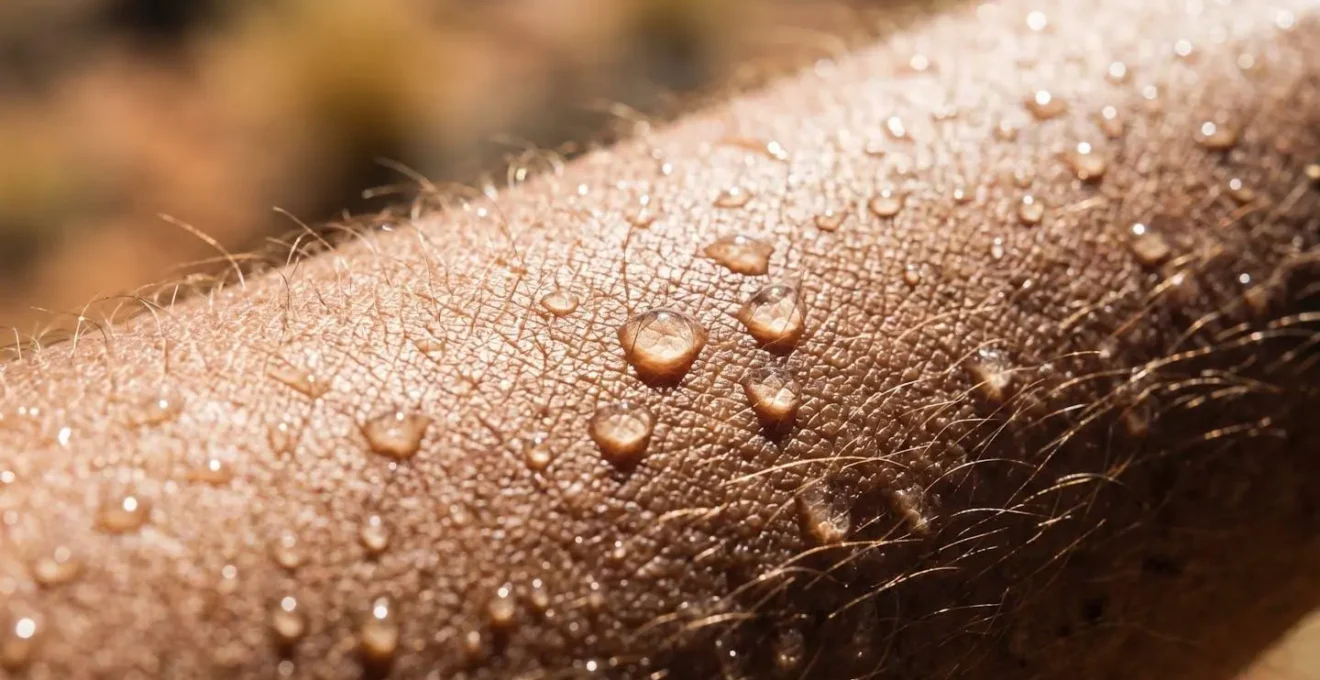
By protecting your face, you conserve the mental energy you would otherwise spend swatting and flinching. In a survival situation, this conserved energy is a resource as vital as water. Don’t think of a fly net as a comfort item; think of it as a critical piece of cognitive protection equipment.
Bogged in Sand: How to Use Maxtrax Boards Correctly?
Getting your 4WD bogged in sand is not a matter of ‘if’, but ‘when’. How you react in the first 30 seconds determines whether it’s a 10-minute recovery or a multi-day disaster. The instinct is to floor the accelerator. This is the single worst thing you can do. Spinning your wheels digs you deeper, turning your vehicle’s chassis into an anchor and wasting precious energy and water in the process. The correct approach is one of calculated effort, not brute force.
Before you even touch a shovel or recovery board, your first step is to drastically lower your tyre pressure to around 15-20 PSI. This elongates the tyre’s footprint, increasing its surface area and allowing it to ‘float’ on the sand rather than digging in. Only after this should you begin to prepare for extraction. Use your recovery boards (like MAXTRAX) as shovels to clear sand from around the tyres and, crucially, from underneath the vehicle’s differentials and chassis, which are likely bearing the load.
The technique for using the boards is also counter-intuitive. Do not lay them flat.
- STOP: The moment you lose forward momentum, stop accelerating immediately.
- PREPARE: Lower tyre pressures. Clear sand from around all four tyres and under the vehicle’s chassis.
- WEDGE: Jam the boards firmly against the tyre tread at an angle, pointing in your intended direction of travel. They must be able to bite into the tread.
- EXECUTE: Engage low-range first gear and apply the accelerator gently. The goal is slow wheel rotation. Let the tyre’s lugs grip the cleats on the board and pull the vehicle up and onto them. Wheel spin will melt and destroy your expensive boards.
As MAXTRAX founder Brad McCarthy notes, « The aggressive large cleats on MAXTRAX sink their teeth into the tyre tread and the terrain under your 4WD vehicle to prevent it from slipping back. » Trust the tool’s design, not your adrenaline.
Total Fire Bans: Can You Use a Gas Cooker on High Risk Days?
Fire in the Outback is not an accident; it’s an inevitability. Understanding and strictly adhering to fire regulations, especially during a Total Fire Ban (TFB), is a life-or-death responsibility. A TFB is an absolute prohibition on open flames. The common question is whether modern gas cookers are exempt. The answer is yes, but with a strict set of conditions that are non-negotiable. Misunderstanding these rules can lead to catastrophic bushfires, severe penalties, and putting lives at risk.
The core principle is risk management. Solid fuels like wood and charcoal are completely banned because they produce embers that can travel for kilometres. Liquid fuels are also typically prohibited. Gas and electric appliances may be used, but only if you can satisfy several mandatory conditions designed to mitigate their risk. You must be in a cleared area, have an immediate supply of water, and be under constant supervision. The following table, based on data from fire authorities like the NSW Rural Fire Service, clarifies the rules.
| Fuel Type | Permitted During TFB? | Mandatory Conditions | Risk Profile |
|---|---|---|---|
| Solid Fuel (wood, charcoal, heat beads) | NO – Prohibited | Not applicable – complete ban | High radiant heat, flying embers, uncontrolled combustion |
| Liquid Fuel (methylated spirits, kerosene, petroleum) | NO – Prohibited | Not applicable – complete ban in NSW National Parks | Volatile, unpredictable flame spread |
| Gas (LPG, butane) – Open burner stoves | YES – Conditional | • Responsible adult present at all times • Clear 2-3m of flammable material • Immediate water supply (10L minimum) • Within 20m of permanent dwelling OR approved picnic area |
Medium – open flame, wind sensitivity |
| Gas – Enclosed burner (Jetboil-style) | YES – Conditional | • Same conditions as open burner • Stable ground positioning • 3m clearance from spinifex grass |
Lower – contained flame, better wind protection |
| Electric cookers | YES – Conditional | • Adult supervision • 2m clearance of combustible material • Immediate water supply |
Lowest – no open flame |
Even with permission, using a gas stove on a TFB day requires a rigorous personal risk assessment before you even strike the igniter. Spinifex grass, a dominant feature of the Red Centre, is incredibly flammable, and the radiant heat from a cooker alone can be enough to ignite it.
Your Pre-Cooking Fire Risk Audit on TFB Days
- Environmental Audit: Assess wind speed (are branches swaying? If yes, abort) and establish a 3-metre radius completely clear of all flammable materials, especially spinifex.
- Appliance Check: Know your gear. Is it an enclosed-burner stove with low risk, or an open-burner with a higher risk profile in windy conditions?
- Suppression Readiness: Confirm you have a minimum of 10 litres of water set aside exclusively for fire suppression, immediately accessible and ready for use.
- Supervision Protocol: Designate one responsible adult for constant, arm’s-reach supervision of the appliance. It must never be left unattended for a single second.
- Thermal Radius Audit: Position the stove considering its radiant heat zone, not just the flame. Check that dry grass and leaves are well outside this invisible circle of heat.
GPS Failure: Why Must You Carry Paper Maps in the Red Centre?
In our hyper-connected world, we have outsourced the skill of navigation to silicon chips. In the vast, featureless expanses of the Red Centre, this is a gamble you cannot afford to take. Technology failure is not a possibility; it’s a statistical certainty. Batteries die in the extreme heat, screens crack when dropped, and satellite signals can be unreliable in deep gorges or simply fail. Believing your phone or GPS unit is infallible is the first step toward becoming a headline.
As outback survival expert Scott Heiman states in Hema Maps’ guide, « The difference between a bad day on the road and kicking up daisies for eternity can boil down to whether you’ve conducted proper trip planning. » A core part of that planning is carrying and knowing how to use analogue navigation tools. A high-quality paper topographic map and a simple baseplate compass are your most reliable lifelines. They don’t run out of batteries, they don’t have software glitches, and they work everywhere on the planet.
The key is not just to carry them, but to have a basic proficiency in their use. This means understanding how to orient your map to the north, how to identify features in the landscape (a distant range, a dry creek bed) and find them on your map, and how to take a simple bearing to walk in a straight line. These are ancient, fundamental survival skills that modern convenience has tried to make obsolete, but which the Outback still demands. The image below shows the essential, unbreakable toolkit for real navigation.
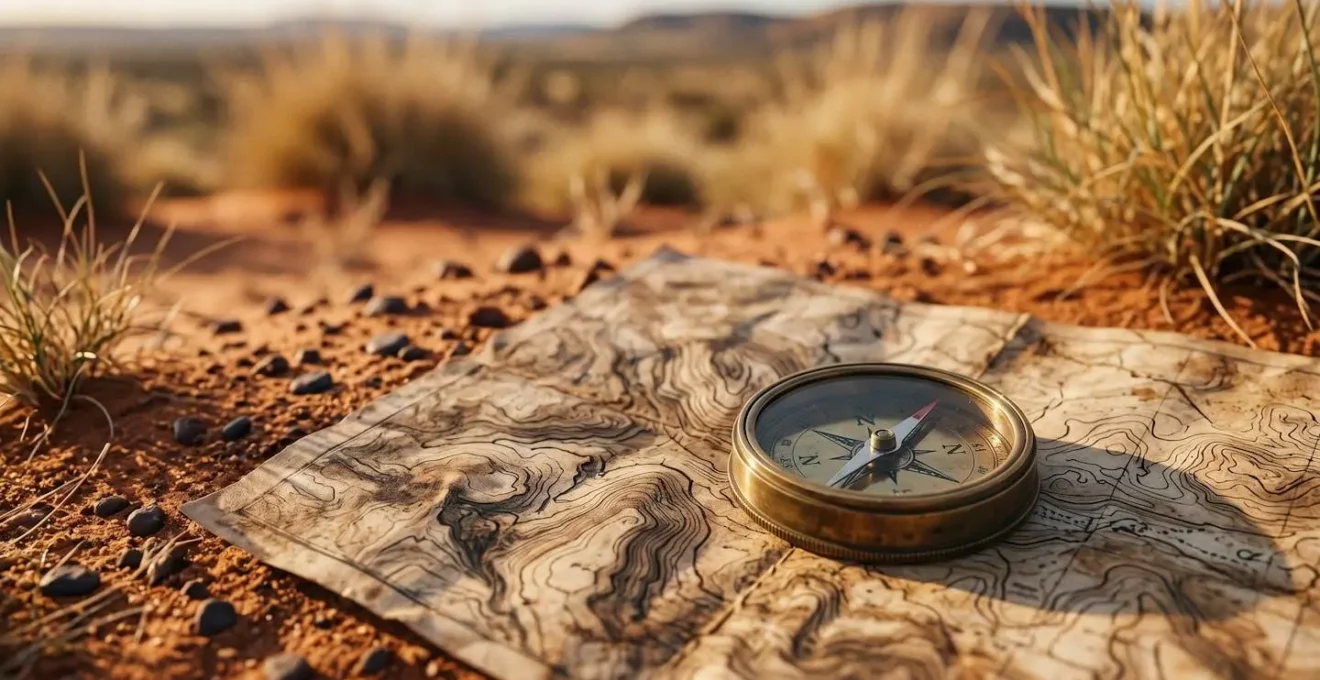
Your analogue navigation kit should be a trinity of essential items:
- High-Quality Topographic Maps: Choose maps that show contour lines, tracks, bores, and fence lines. Digital screenshots are useless when the device fails.
- Baseplate Compass: A simple, reliable compass is essential for orienting the map and taking bearings.
- Knowledge: Practice before you leave. Learn to read contours and identify landmarks. This skill is as important as the tools themselves. According to guidance from seasoned experts, you must also protect these tools; store maps in waterproof cases to shield them from moisture and heat.
Dehydration in Dry Heat: How Much Water Before You Feel Thirsty?
This is the most critical concept to understand for arid zone survival: thirst is a liar. In the dry, low-humidity heat of the Outback, your sweat evaporates almost instantly. You don’t feel drenched and sweaty as you would in a humid climate, so your brain is tricked into underestimating your rate of water loss. This is a fatal deception. As survival experts document, you can lose one litre of fluid every 30 to 60 minutes through perspiration and respiration alone while performing physical tasks in the desert.
By the time you feel thirsty, you are already 1-2% dehydrated. At this stage, your cognitive function and physical performance are already impaired. You are making poorer decisions, your reaction times are slower, and your mood is degrading. This is the beginning of a dangerous spiral. The 5-litre per person, per day rule is an absolute, sedentary minimum for simply existing in the shade. If you are hiking, driving, or performing any physical activity like changing a tyre, that requirement can easily double to 10 litres or more.
The most terrifying aspect of severe dehydration is its effect on the mind. It’s a state Australian survival instructor Bob Cooper has chillingly termed ‘dehydration dementia’.
We dehydrate from the head down. Meaning most people lose their ability to think pretty quickly, eventually succumbing to ‘dehydration dementia’. People have even unknowingly committed crimes against other people in this compromised state of low sodium.
– Bob Cooper, Australian Survival Instructor
The only way to combat this is through a disciplined, proactive hydration strategy. You must drink water on a schedule, not in response to thirst. Sip continuously throughout the day. Monitor the colour of your urine: if it is not pale and clear, you are not drinking enough. Adding electrolyte powders or tablets is also vital to replace the salts lost through sweat, which are essential for nerve and muscle function.
Why Is Australian Sun So Much Stronger Than in the Mediterranean?
The sensation is real: the Australian sun feels different. It feels more aggressive and burns skin far quicker than the sun in Mediterranean Europe or North America, even at equivalent temperatures. This is not an illusion; it’s a result of a combination of astronomical and atmospheric factors—the « environmental physics » of the continent. Understanding why this is the case is crucial for appreciating the real risk of UV exposure in the Outback.
There are three main reasons for this increased intensity. First is the Earth’s elliptical orbit. The planet is actually closest to the sun during the Southern Hemisphere’s summer (December and January), receiving about 7% more solar radiation than the Northern Hemisphere does during its summer. This astronomical fact gives the summer sun an inherent power boost.
Second is the ozone layer. The ozone layer over the Antarctic is naturally thinner than in the mid-latitudes of the Northern Hemisphere. While the « ozone hole » is a distinct phenomenon, this general thinness means less UV radiation is filtered out before it reaches the ground in Australia. This effect is most pronounced in the southern parts of the continent but contributes to higher overall UV levels nationwide. Finally, Australia’s famously clear, unpolluted skies play a role. The low levels of industrial pollution and atmospheric haze mean that more of the sun’s raw UV radiation reaches the surface unimpeded. While beautiful, these clear blue skies offer less of a protective filter than the hazier skies of more industrialized regions. This combination means the UV Index is frequently in the ‘Extreme’ category (11+), a level that can cause skin damage in as little as 10-15 minutes for unprotected, fair skin.
Key Takeaways
- Survival is a mental game: your primary tool is a mindset that respects the Outback’s power and prioritises calculated effort over brute force.
- Water is life support: Drink on a schedule, not based on thirst. Five litres per day is a sedentary minimum; double it for any activity.
- Analogue over digital: Your most reliable tools are those without batteries. Master the use of paper maps, a compass, and manual recovery gear.
Walking Around Uluru: Why Is the Base Walk Better Than the Old Climb?
The closure of the Uluru climb in 2019 was a decision rooted in deep cultural respect for the Aṉangu people. From a survival instructor’s perspective, however, it was also an objectively sound decision based on risk management. Choosing the 10km Base Walk over the historical climb is not a « softer » option; it is the smarter, safer, and more rewarding way to experience this monolithic wonder, perfectly aligning with the principles of Outback survival.
The climb was a high-risk activity masquerading as a tourist attraction. It was a steep, 1.6km ascent up a sun-baked rock face with little to no shade. In 40°C heat, this exposed incline became a crucible for heat-related illnesses. The physical exertion required was immense, dramatically increasing water loss and the risk of heat exhaustion and heat stroke. Medical emergencies on the climb were frequent and logistically difficult for rescue teams. For the unprepared, it was a potentially fatal undertaking.
In contrast, the Uluru Base Walk is a masterclass in smart environmental engagement. It is a relatively flat track, which allows you to manage your exertion levels and conserve energy and water effectively. The path weaves in and out of the shadow of the rock, offering regular periods of shade and rest from the intense solar radiation. It provides intimate access to rock art, waterholes, and the varied geology of Uluru, offering a far richer experience than the sterile, exposed slope of the climb. You can carry adequate water, pace yourself according to the conditions, and remain at a low altitude, minimising every major risk factor associated with the climb. By choosing the Base Walk, you are not missing out; you are actively choosing the superior survival strategy.
Your journey through the Outback will be one of the most memorable of your life, but its success hinges on replacing romantic notions with a healthy respect for its realities. The knowledge in this guide is your first line of defence. To truly be prepared, the next step is to translate this knowledge into tangible skills and robust planning.