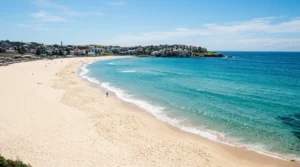
You’ve arrived in Sydney to find its world-famous beaches closed, despite the sun now shining. This isn’t just about a bit of dirt; it’s a systemic issue. After heavy rain, the city’s vast network of roads and drains—an urban circulatory system—funnels a hidden cocktail of pollutants directly into the ocean. This guide explains the science behind this temporary transformation, revealing why the water is unsafe for up to three days and how you can make informed decisions before you swim.
It’s a picture-perfect Sydney day. The storm has passed, the sky is a brilliant blue, and the iconic coastline beckons. Yet, as you approach the sand, you’re greeted not by the joyful sounds of swimmers but by stark red and yellow signs: “BEACH CLOSED – POLLUTION.” For a tourist, the confusion is understandable. How can this pristine-looking water be dangerous? The common answer, that rain washes pollution into the sea, feels too simple and fails to capture the scale of the phenomenon.
The reality is far more complex and fascinating. It involves a hidden, sprawling infrastructure lurking beneath the city streets. To truly understand why a swim is off-limits, we can’t just look at the beach; we must look at the entire urban catchment as a single, interconnected system. While topics like natural water clarity, algal blooms, or even the dangers of stingers might seem unrelated, they are all pieces of the same puzzle: the delicate and often disrupted balance of a coastal ecosystem.
But what if the key to understanding Sydney’s post-rain pollution wasn’t just knowing *that* it happens, but *how* the city’s own design is the mechanism? This article moves beyond the simple warnings to reveal the science at play. We will explore how stormwater runoff acts as a transport network for a complex cocktail of contaminants, transforming beautiful beaches into temporary health hazards. This is the story of Sydney’s urban circulatory system and its powerful, temporary impact on the sea.
By understanding these interconnected environmental factors—from the sand that’s supposed to filter the water to the invisible threats that cloud it—you’ll gain a deeper appreciation for the coastline and the knowledge to navigate it safely during your visit. This guide breaks down the science behind the signs, offering practical advice and a new perspective on the stunning environment you’ve come to explore.
Summary: Understanding Sydney’s Coastal Health After Rainfall
- Jervis Bay Whiteness: Why Is the Sand So White and the Water So Clear?
- Red Algae Bloom: Is It Safe to Swim in Noctiluca Scintillans?
- Sunscreen Bans: Why Are Some Beaches Moving to Mineral-Only Rules?
- Hypersaline Lakes: Why Do You Float So Easily in Pink Lakes?
- Beachwatch App: How to Check Water Quality Before You Leave the Hotel?
- Flooded Roads: Why Does « If It’s Flooded, Forget It » Apply to 4WDs Too?
- Walking on Dunes: Why Is Restoration Vegetation So Sensitive?
- Whitsundays in Stinger Season: Is It Safe to Swim Without a Suit?
Jervis Bay Whiteness: Why Is the Sand So White and the Water So Clear?
To understand what goes wrong in Sydney after rain, it first helps to see what a perfectly functioning natural filtration system looks like. Jervis Bay, a few hours south of Sydney, is famed for having some of the whitest sand in the world, which is the primary reason for its breathtakingly clear water. This isn’t just a matter of aesthetics; it’s a matter of geology and chemistry. The sand here is composed almost entirely of pure quartz (silica).

Unlike the mixed-mineral sands of many urban beaches, quartz grains are fine, non-porous, and incredibly hard. They don’t create mud or silt when agitated. Instead, they settle quickly, allowing light to penetrate deep into the water, which creates the vibrant turquoise colour. In essence, the sand bed itself acts as a giant, natural water filter. Geological research confirms that such super mature sands can contain more than 95% quartz, with some deposits reaching 98% purity. This high purity is the foundation of the area’s ecological health.
This pristine environment stands in stark contrast to an urbanised coastline. While Sydney has beautiful beaches, their catchments are dominated by concrete and asphalt, not self-filtering quartz. As one Australian researcher noted in an article for The Conversation, this purity is also a sign of a fragile, healthy system. They state:
The reflectance of light off these sands through shallow waters near the beach creates a surreal, magical turquoise colour. White beaches are like the canary in the coalmine – once they’re spoiled, we know we’re in trouble.
– Australian researcher on whitest beach study, The Conversation
When a system is overwhelmed with pollutants, as Sydney’s is after rain, this natural clarity is the first thing to disappear. The « canary » has sent its warning.
Red Algae Bloom: Is It Safe to Swim in Noctiluca Scintillans?
Sometimes the impact of pollution isn’t just cloudy water; it’s a dramatic, colourful, and potentially hazardous event. One such phenomenon is the « red tide, » often caused by a bloom of the dinoflagellate Noctiluca scintillans. These are single-celled organisms that, when concentrated, can turn the water a startling tomato-soup red by day and create a magical blue bioluminescence by night. While visually stunning, these blooms are another « canary in the coalmine, » signalling an ecosystem under stress.
These blooms are often triggered by an excess of nutrients, particularly nitrogen and phosphorus, in the water. These are the very same nutrients found in fertilisers, sewage, and animal waste that get washed into the ocean via stormwater runoff. So, while a natural phenomenon, their frequency and intensity are directly linked to human-caused pollution. While Noctiluca itself is not typically toxic to humans, the conditions it creates are harmful to marine life and can pose indirect risks to swimmers.
Case Study: The Gulf of Mannar Mortality Event
In October 2021, a severe Noctiluca scintillans bloom in the Gulf of Mannar, India, resulted in the death of approximately 7.2 tonnes of marine organisms. The bloom was so dense that it killed 0.83 tons of damselfish (around 9 million individual fish) in just five days. The primary cause of death was hypoxia—a severe depletion of oxygen in the water as the massive algae bloom decayed. This event shows how a nutrient-fueled bloom, similar to those triggered by stormwater, can devastate a local marine ecosystem.
The main danger from these blooms is not the algae itself, but the high levels of ammonia it can release and the oxygen it consumes as it dies and decomposes. A 2020 scientific study documented that dissolved oxygen levels declined below 2 mg/l during such blooms, a level lethal to most marine life, causing widespread fish kills. Swimming in water with decaying organic matter and high bacteria counts is never advisable, and an algal bloom is a clear visual indicator that the water chemistry is dangerously out of balance.
Sunscreen Bans: Why Are Some Beaches Moving to Mineral-Only Rules?
The pollution that closes beaches after rain is visible and acute. However, tourists contribute to another, more chronic and invisible form of pollution every time they apply sunscreen and dive into the water. Growing concern over the impact of chemical sunscreens on fragile marine ecosystems, particularly coral reefs, has led destinations like Hawaii, Palau, and parts of Mexico to ban products containing specific UV-filtering chemicals like oxybenzone and octinoxate.
These chemicals, while effective at protecting human skin, have been shown to cause coral bleaching, damage the DNA of coral larvae, and disrupt the reproductive systems of other marine species. The scale of the problem is staggering; recent research on reef-safe tourism indicates that an estimated 8,000–16,000 tons of sunscreen wash into reef areas each year. The chemicals don’t just affect corals. As one expert explains, the damage extends to the entire food web.
Seagrass and algae are critical habitats and food for coral reef fish and other marine life. Damage to those plants puts more stress on the animals that depend on them.
– Craig Downs, PhD, Executive Director of Haereticus Environmental Laboratory
The alternative is mineral-based sunscreens, which use zinc oxide or titanium dioxide. These ingredients act as a physical barrier, sitting on top of the skin and reflecting UV rays, rather than being absorbed. They are considered « reef-safe » because they are not associated with the same level of marine toxicity. While Sydney’s beaches are not coral reefs, the principle of minimising chemical inputs into the ocean is the same. Choosing a mineral sunscreen is a simple, proactive step any visitor can take to reduce their environmental footprint, contributing to the overall health of the coastal waters they’ve come to enjoy.
Hypersaline Lakes: Why Do You Float So Easily in Pink Lakes?
To fully appreciate the unnatural chemical changes that stormwater causes, it’s interesting to look at one of nature’s own chemical extremes: hypersaline lakes. Australia is famous for its stunning pink lakes, like Lake Hillier in Western Australia. The vibrant colour is caused by microorganisms, specifically a type of algae called Dunaliella salina, which thrives in water that is incredibly salty—often many times saltier than the ocean.
The extreme salinity is also why you would float so effortlessly in one of these lakes, much like in the Dead Sea. The principle at work is density. A large amount of dissolved salt makes the water much denser than the human body. According to Archimedes’ principle, an object submerged in a fluid experiences an upward buoyant force equal to the weight of the fluid it displaces. Because the hypersaline water is so heavy, the buoyant force it exerts is greater than the force of gravity pulling you down, so you float.
This natural phenomenon provides a powerful contrast to the pollution in Sydney’s waters. In a pink lake, the water’s chemistry is altered by a high concentration of a natural compound: salt (sodium chloride). It’s an extreme but stable ecosystem. In contrast, stormwater runoff introduces an unnatural and chaotic cocktail of chemicals, heavy metals, low-salinity fresh water, and pathogens. This doesn’t just change the water’s density; it fundamentally disrupts its chemistry, pH, and temperature, creating a toxic environment that is hostile to both marine life and human health. While one is a natural marvel, the other is an artificial disturbance.
Beachwatch App: How to Check Water Quality Before You Leave the Hotel?
For any visitor to Sydney, the most crucial tool for navigating post-rain swimming is the official Beachwatch program. Run by the NSW Government, it provides daily pollution forecasts and water quality results for beaches across the state. This information is accessible via their website or dedicated app and should be your first port of call before planning a beach day, especially after rainfall.
On a typical day, the news is good. The State of the Beaches report consistently finds that around 95% of monitored ocean beaches in NSW have Very Good or Good water quality, making them suitable for swimming most of the time. However, this statistic plummets after significant rainfall. The « pollution forecast » becomes your most important indicator, as it predicts the likelihood of contamination based on recent weather, even before lab results are available. A « Pollution Likely » forecast is a definitive sign to stay out of the water.
Understanding what Beachwatch tests for—and its limitations—is key to using the tool effectively. The program primarily measures levels of a bacteria called Enterococci, which is an indicator of faecal contamination from sewage and animal waste. When these levels are high, it’s a sign that other dangerous pathogens, like viruses and E. coli, are also likely present. However, there is an inherent delay in this process. It takes time to collect samples, transport them to a lab, and culture the bacteria. This « data lag » means the water could already be contaminated before the results reflect it.
Your Action Plan: Using Beachwatch to Stay Safe
- Check the forecast first: Pay attention to the ‘pollution likelihood’ forecast, which is based on rainfall models and is more immediate than test results. If it says « Likely, » avoid swimming.
- Understand the indicator: Samples are tested for Enterococci, bacteria indicating faecal matter from stormwater or sewage. The safe threshold is 40 enterococci per 100ml, a level often exceeded after 10mm of rain.
- Note the sample date: When looking at test ‘results’, always check the date the samples were collected. Old data is not a reliable guide to current conditions.
- Acknowledge the data lag: Test results can take 24-48 hours. A ‘Good’ result from a sample taken before a major storm is meaningless. The rule is: the more recent the rain, the higher the risk.
- Know what isn’t tested: The tests primarily screen for faecal bacteria. They do not typically detect other stormwater pollutants like viruses, heavy metals, oils, or chemical contaminants.
Flooded Roads: Why Does « If It’s Flooded, Forget It » Apply to 4WDs Too?
The familiar safety slogan, « If it’s flooded, forget it, » is usually associated with the danger of driving through floodwaters. However, it also perfectly describes the source of Sydney’s beach pollution problem. Those flooded roads are the primary collectors and conduits in the city’s vast urban circulatory system. Unlike a natural forest floor that absorbs and filters rainwater, a city’s hard surfaces—roads, carparks, and roofs—do the opposite. They accumulate pollutants and then allow stormwater to gather speed and volume, washing everything into the drainage network.
This isn’t just clean rainwater. It’s a toxic soup. During dry periods, pollutants build up on our streets: oil and grease from cars, heavy metals from brake dust and tyres, pesticides from gardens, animal faeces, and general litter. When the rain hits, it flushes this entire cocktail into the stormwater drains. These drains, designed to prevent urban flooding, discharge directly onto our beaches or into our harbours with little to no treatment. An analysis of Randwick City’s 9,540 stormwater drains shows that about 70% of the captured pollutants are organic matter and soil, which carry bacteria and deplete oxygen.
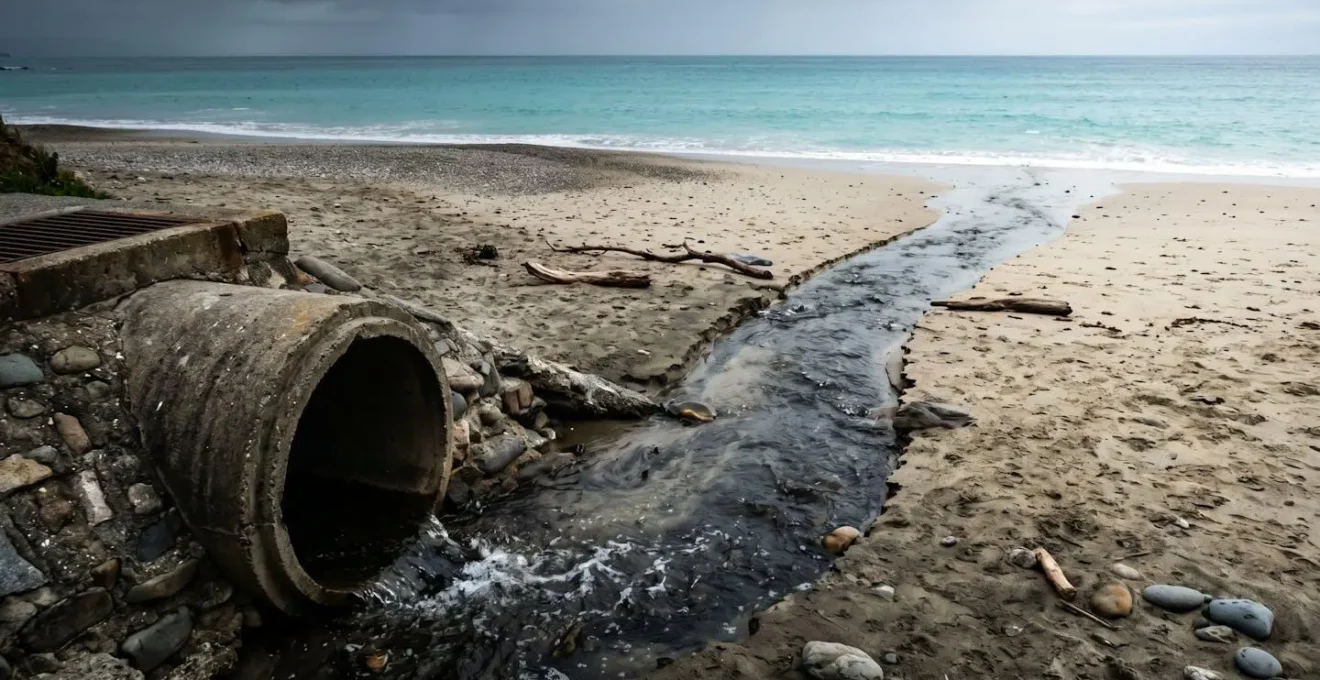
In heavy rainfall events, the situation is compounded when the wastewater (sewage) system is overwhelmed and overflows into the stormwater system. This means raw or partially treated sewage can mix with the runoff, introducing a host of dangerous pathogens directly into swimming areas.
Case Study: Sydney’s Widespread Contamination Event
In January 2025, after a single heavy rain event, a staggering 56 beaches around Sydney were flagged as contaminated with stormwater pollution. Experts warned that swimmers could be exposed to viruses and bacteria like E. coli. As environmental scientist Dr. Daryl McPhee stated in response to the event, « The biggest risk is not from sharks, it’s from the general water quality in Sydney and surrounds. Sydney Harbour is a jewel for Sydney but it is certainly tarnished due to stormwater runoffs. » This incident starkly illustrates how quickly the city’s infrastructure can turn from a convenience into a coastline contaminator.
Walking on Dunes: Why Is Restoration Vegetation So Sensitive?
While stormwater drains are the primary pathway for pollution, a healthy beach has its own natural line of defence: the coastal dunes. These mounds of sand, held together by specialised native vegetation, are not just a scenic backdrop; they are a critical and highly sensitive part of the coastal ecosystem. They act as a physical barrier against storm surges and, just as importantly, a natural filter for water running off the land.
The vegetation on these dunes, such as spinifex grass and coastal wattle, is incredibly resilient but also fragile. These plants have extensive root systems that bind the sand together, preventing it from blowing away and creating a stable dune structure. This vegetation is adapted to harsh conditions like salt spray, high winds, and nutrient-poor soil. However, it is extremely vulnerable to one thing: foot traffic. When people walk off the designated paths, they trample the delicate plants and compact the sand. This kills the vegetation, breaking the root network that holds the dune together.
Once the vegetation is gone, the dune becomes unstable. Wind can then erode the sand, creating « blowouts » and weakening the entire structure. A degraded dune system is less effective at absorbing the energy of storm waves, increasing erosion of the main beach. It also loses its ability to trap and filter pollutants from land-based runoff. Essentially, every person who takes a shortcut over the dunes is contributing to the degradation of the beach’s own immune system. This makes the coastline even more vulnerable to the impacts of both storms and pollution events. That’s why you see restoration areas fenced off—it’s a desperate attempt to help this vital, sensitive vegetation recover.
Key Takeaways
- Sydney’s post-rain pollution is a systemic issue where the city’s infrastructure acts as a delivery system for a « pollutant cocktail. »
- The risk is not just from visible dirt but from invisible pathogens like bacteria and viruses from stormwater and sewage overflows.
- Always use the Beachwatch app to check pollution forecasts before swimming, but understand there’s a data lag; if it has rained heavily, assume the water is polluted for 1-3 days.
Whitsundays in Stinger Season: Is It Safe to Swim Without a Suit?
While far north of Sydney, the dilemma of swimming in the Whitsundays during stinger season (typically October to May) offers a powerful lesson in compounded risk—a concept that applies directly to swimming in Sydney after rain. In the Whitsundays, the primary threat is the Irukandji and Box Jellyfish, whose stings can be excruciating and even fatal. The standard protection is a full-body lycra « stinger suit. »
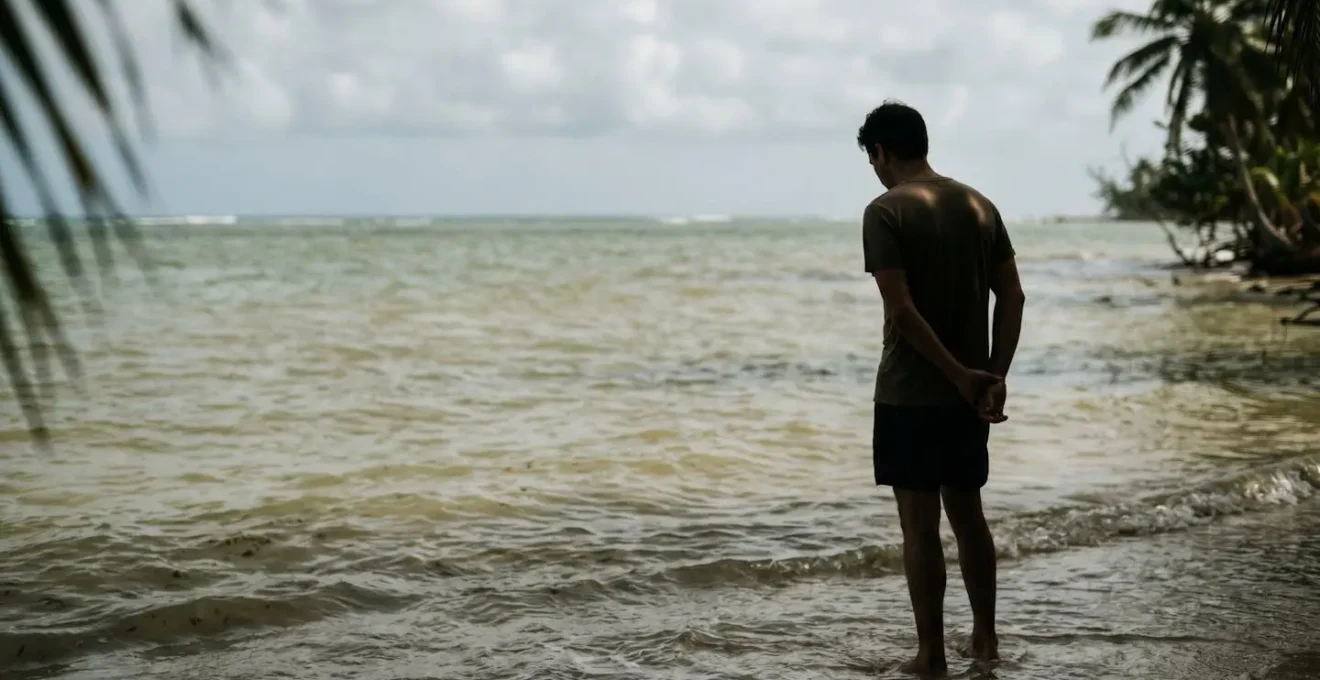
Is it safe to swim without one? The risk is a matter of probability. However, that risk is dramatically amplified when a second factor is introduced: poor water visibility. After a tropical downpour or cyclone, the usually crystal-clear waters can become murky and clouded with sediment, just like in Sydney. This murkiness creates a compounded problem. Not only is the water potentially filled with runoff contaminants, but your ability to see and avoid hazards—like a jellyfish—is reduced to zero. Swimming in clear water allows you to be aware of your surroundings; swimming in turbid water is swimming blind.
This is the perfect analogy for Sydney’s post-rain situation. The primary risk is the invisible pollutant cocktail in the water. But the murky, brown water also hides secondary physical hazards. Submerged logs, sharp debris, and other rubbish washed down through the stormwater system may be lurking just below the surface. You also can’t see marine life, whether it’s a harmless school of fish or something more hazardous. The cloudy water thus multiplies the danger, combining a known health threat (pathogens) with an unknown physical threat (hidden objects and reduced awareness). The question is no longer just « Is the water clean? » but « Is the water safe in any respect? » After heavy rain, the answer to both is a clear « no. »
By understanding that the city’s infrastructure is the source of the problem, you can see why clear-looking water isn’t always safe. Empower your travels by making informed decisions. Always check local advisories like Beachwatch, respect the warning signs, and protect the fragile coastal environment you’ve come to enjoy.