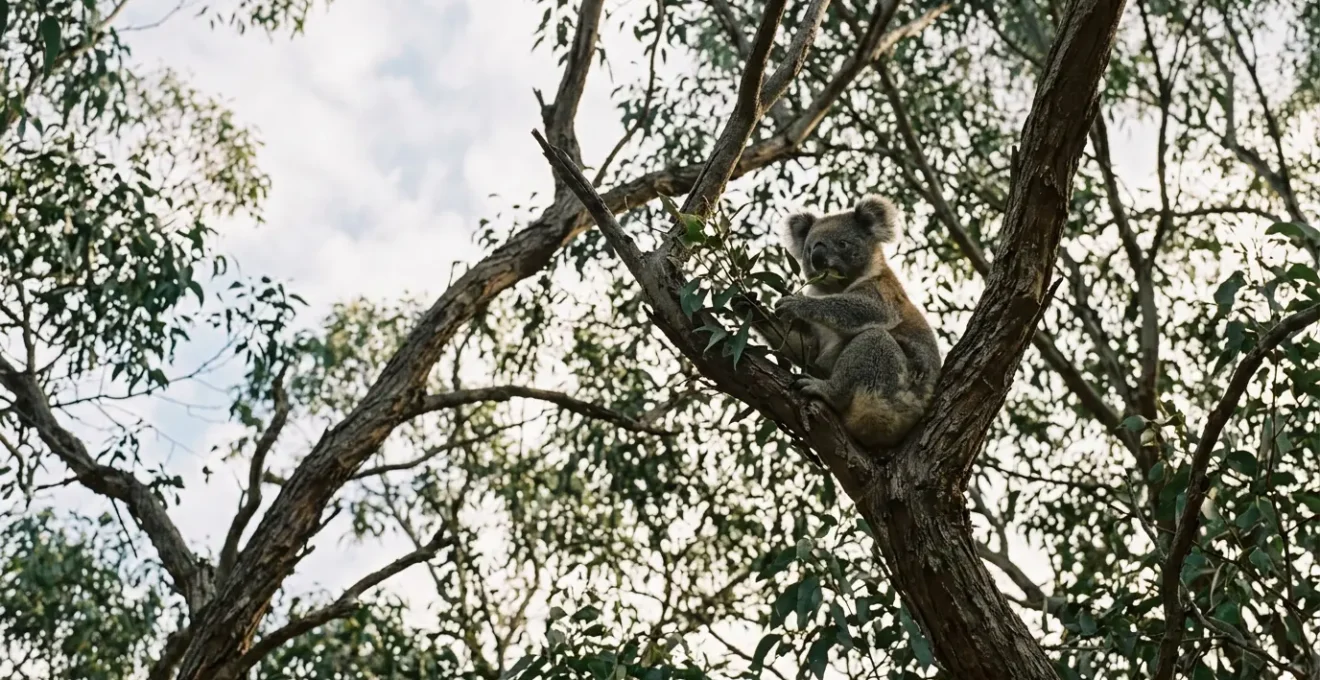
The most authentic wildlife encounters happen when you trade a tourist’s checklist for a naturalist’s patience, an approach that zoos, by their nature, cannot offer.
- Observing an animal in its natural habitat reveals its true behaviours, which are often suppressed in captivity.
- Ethical viewing means prioritizing the animal’s welfare over your photo opportunity, a mindset that builds deeper respect and understanding.
Recommendation: Shift from a ‘consumer’ of experiences to a quiet ‘observer’ of an ecosystem. Your reward will be a genuine connection that no staged encounter can replicate.
The dream of an Australian holiday is often painted with the image of a koala, perched sleepily in a eucalyptus tree. The easiest way to tick this off the list seems obvious: visit a zoo or sanctuary. Here, sightings are guaranteed, and you might even get to pat one. But as a conservationist, I urge you to reconsider. The most profound, memorable, and truly ethical wildlife encounters don’t happen behind glass or in enclosures. They happen in the wild, but they demand something more from us than an entrance fee. They require a fundamental shift in our perspective.
Many guides will give you a list of rules: don’t feed the animals, keep your distance, stay quiet. While correct, this advice misses the core principle. The key to authentic wildlife viewing is adopting an observer mindset. This means understanding that you are a visitor in an animal’s home, a complex world governed by instincts, territories, and social structures. It’s about appreciating the entire ecological context, not just the isolated animal. A koala isn’t just a furry creature; it’s a specialist herbivore navigating a landscape of specific food trees, social cues, and predator risks. Seeing it in this context is infinitely more rewarding than seeing it in a curated exhibit.
This guide moves beyond simple prohibitions. Instead, it explores the ‘why’ behind ethical practices through the lens of some of Australia’s most iconic species. From the incredible sensory world of a platypus to the complex social etiquette of kangaroos, you’ll learn how to transform your presence from a disruption into a moment of quiet, respectful observation. This is the path to an experience that is not only better for the animals but profoundly more meaningful for you.
To help you navigate this journey, this article breaks down the essential knowledge for responsible wildlife encounters across a range of Australia’s unique inhabitants. By understanding their world, you can learn to see them in a way that respects their wildness and enriches your own experience.
Summary: A Guide to Ethical Encounters with Australian Wildlife
- Where to Find Wild Platypus: The Patience Required for a Sighting
- Feeding Wallabies: Why Human Food Causes « Lumpy Jaw » Disease?
- Male Kangaroo Aggression: How to Read the Warning Signs?
- Kookaburra or Magpie: Which Bird Swoops You in Spring?
- Rottnest Island Quokkas: How to Get the Selfie Without Touching?
- Feral Cat Control: How Are Rangers Saving Small Mammals?
- Shark Alarms: What Exactly Should You Do When the Siren Sounds?
- Respecting Country: What Does « Welcome to Country » Actually Mean?
Where to Find Wild Platypus: The Patience Required for a Sighting
Spotting a platypus in its natural habitat is a pinnacle experience for any wildlife lover, precisely because it cannot be rushed. These monotremes are shy, crepuscular (active at dawn and dusk), and live in a world of sensory information we can barely imagine. The key to seeing one is not a specific location, but a specific behaviour: stillness. A platypus hunts underwater using its bill, a remarkable organ equipped with around 40,000 electroreceptors and an even greater number of mechanoreceptors. It closes its eyes, ears, and nostrils and « sees » the world through the tiny electrical fields generated by the muscle contractions of its invertebrate prey.
This extreme sensitivity is why you must become part of the landscape. Find a quiet spot on a riverbank in eastern Australia, sit down well before dusk, and simply wait. Heavy footsteps, loud talking, or sudden movements send vibrations through the ground and water that are like a blaring alarm to a platypus. Your best chance is to sit silently and scan the surface for the signature ‘v’ shaped ripple it creates as it moves, or the trail of bubbles that appears when it dives.
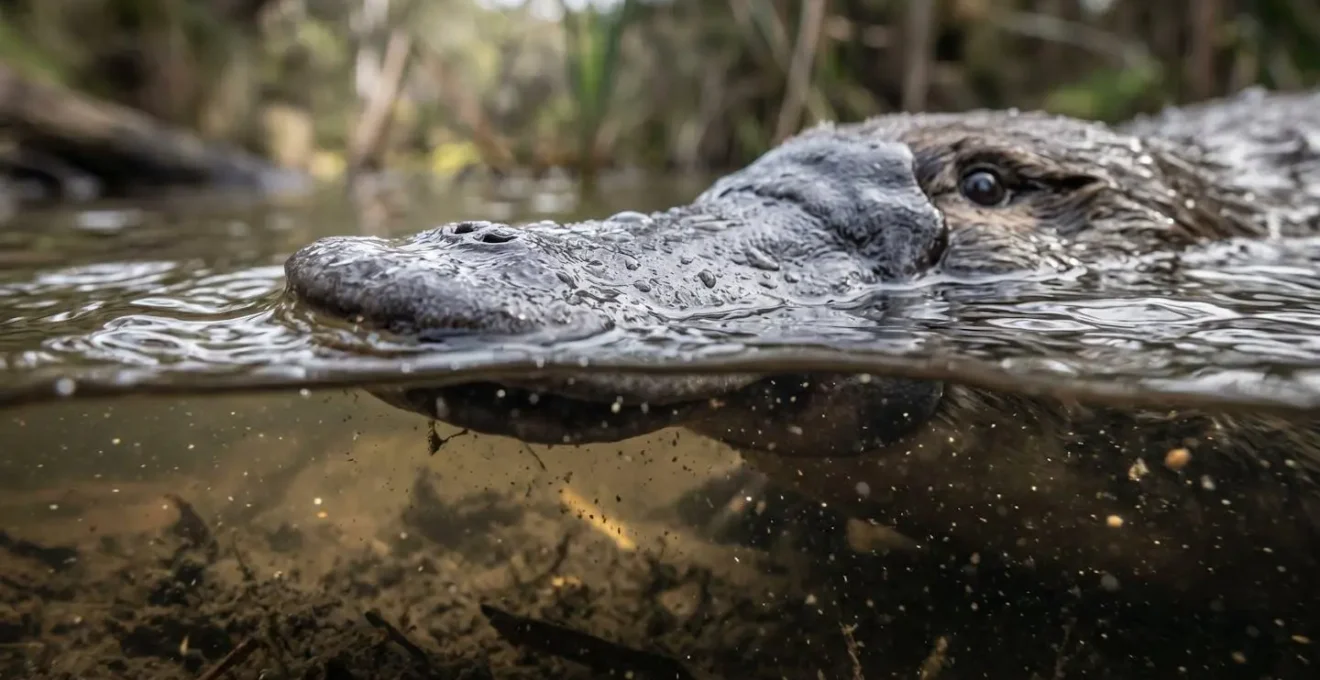
As the illustration above suggests, the platypus’s world is a murky, tactile one, completely different from the clear water of a zoo enclosure. An encounter in the wild, even a brief one, is a glimpse into this unique sensory reality. It is a reward earned through patience and a testament to the observer mindset. You are not demanding an appearance; you are waiting for a privilege. This quiet anticipation is the essence of ethical wildlife watching.
Feeding Wallabies: Why Human Food Causes « Lumpy Jaw » Disease?
It seems like a harmless, even kind, gesture: offering a piece of bread or a chip to a cute, doe-eyed wallaby. It’s an interaction that brings the animal close for a great photo. The tragic reality, however, is that this act of « kindness » can be a death sentence. Wild wallabies and kangaroos have evolved for millions of years to eat a tough, high-fibre diet of grasses and native plants. Their teeth and gut are perfectly adapted for this. Human food is the exact opposite: soft, sugary, and starchy.
When a wallaby eats food like bread, it doesn’t require the same vigorous chewing as its natural diet. Small, sticky particles get trapped between its teeth and gums, creating the perfect breeding ground for bacteria. This can lead to a condition called actinomycosis, colloquially known as « lumpy jaw. » It’s a painful and often fatal infection of the bone and soft tissue in the jaw. The animal develops large, swollen abscesses on its face, making it impossible to eat. It ultimately starves to death, a slow and agonizing process caused directly by a well-intentioned tourist.
There is no ambiguity here: never feed native wildlife. It disrupts their natural foraging behaviours, creates dependency, and can cause horrific diseases. The best way to show you care is to observe from a distance, allowing them to eat their natural diet. A photo of a wallaby peacefully grazing on native grasses is a far more authentic and respectful memento than a close-up that contributed to its suffering. This is a hard line where the animal’s welfare must unequivocally come before the visitor’s desire for an interaction.
Male Kangaroo Aggression: How to Read the Warning Signs?
Kangaroos are a national symbol, often depicted as gentle grazers. While largely true, it’s crucial to remember they are powerful wild animals, and large males, or « boomers, » can be territorial and aggressive, especially during mating season. Respecting these animals means understanding their personal space and being able to read their body language. Some large Red Kangaroos can stand up to 2 meters tall and weigh 90 kilograms, possessing formidable strength in their legs and sharp claws on their feet. Approaching a large male is not just unethical; it’s dangerous.
An aggressive kangaroo will give you plenty of warning signs before it attacks. Your responsibility is to recognize these signals and retreat immediately. A common behaviour is posturing: the kangaroo will stand up tall on its hind legs, puff out its chest, and may even scratch its belly or chest to release a scent. This is a display of dominance, a clear signal saying, « This is my space. Back off. » It may also emit a low, guttural cough or growl. Ignoring these warnings can escalate the situation.
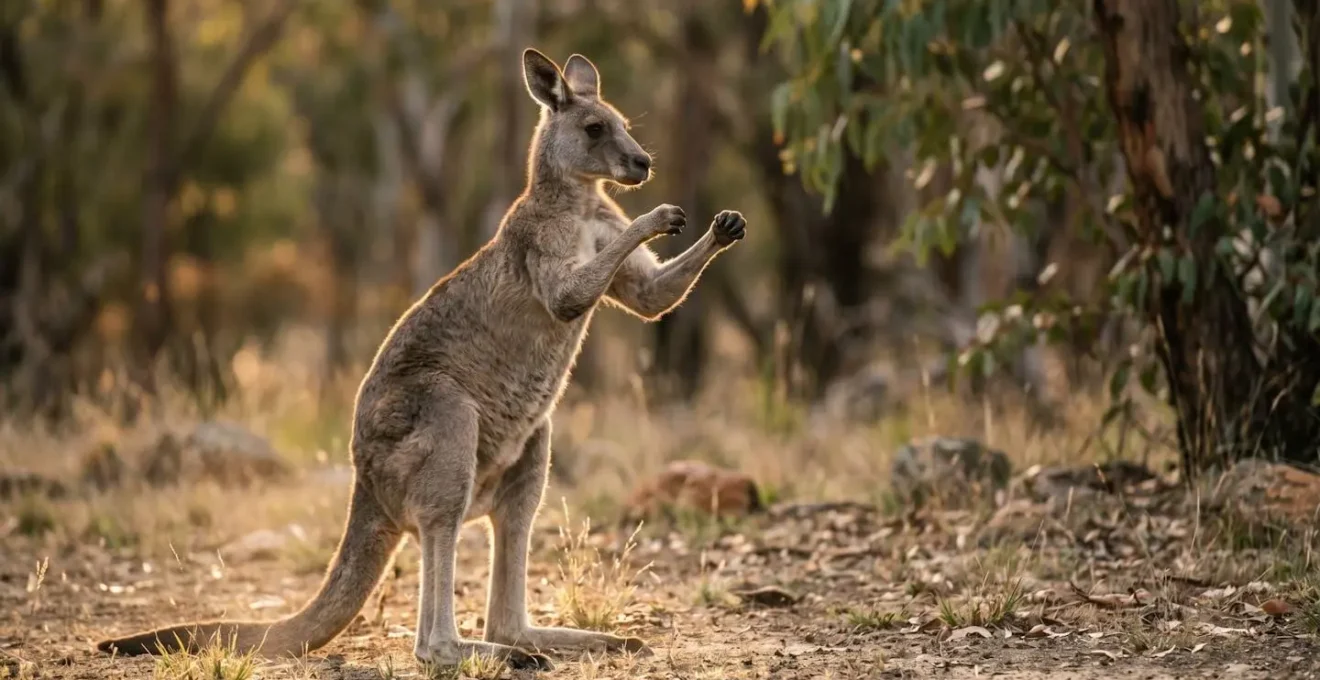
Learning to interpret these behaviours is a core tenet of the observer mindset. Instead of seeing a « mean » animal, you see a creature communicating its boundaries in the only way it knows how. Your role is to listen and respond appropriately, ensuring both your safety and the animal’s peace. The following checklist provides a clear plan for what to watch for and how to react.
Action Plan: Identifying and Responding to Kangaroo Warning Signs
- Watch for a kangaroo standing tall and presenting maximum height, often while sitting back on its tail.
- Listen for growling or deep coughing sounds, which signal distress or are a direct warning to you.
- Observe if its forearms are held out and high, similar to a boxer’s defensive stance.
- Notice if the kangaroo is staring intently at you, locking its gaze without breaking eye contact.
- If these signs appear, move away slowly. Give a short, deep cough (to signal you are not a threat), bow your head, and keep your arms close to your body.
- Never turn your back and run. A running human is perceived as a threat to be chased. Maintain awareness while retreating to a safe distance.
Kookaburra or Magpie: Which Bird Swoops You in Spring?
A common fear for visitors to Australia is being « swooped » by a bird. While the laughing kookaburra is an iconic sound of the bush, it’s the Australian magpie that is famous for this intimidating springtime behaviour. However, the reality of this phenomenon is more nuanced than the scary headlines suggest. Firstly, swooping is a defensive behaviour, not random aggression. It occurs during a short nesting period (typically August to October) when protective males perceive a threat to their eggs or chicks. Secondly, not all magpies do it. Ecologists suggest that only between 10 and 20 percent of magpies swoop.
What’s even more fascinating is that these birds are incredibly intelligent and don’t see all humans as equal threats. They have a remarkable ability for facial recognition and long-term memory. This means they often target specific individuals they have learned to associate with a threat, while ignoring dozens of others who walk the same path. As the NSW National Parks and Wildlife Service points out, this intelligence is key to understanding their behaviour.
Magpies can recognize up to at least 100 different people and we think the main factor is facial recognition.
– NSW National Parks and Wildlife Service, Magpie swooping safety guidelines
This insight changes everything. The swooping isn’t random; it’s a calculated risk assessment by a smart animal. For a wildlife observer, this means your calm and predictable presence can mark you as « safe. » Walk confidently, don’t run or wave your arms, and wear a hat and sunglasses. If you are targeted, the quickest way out of the small defensive territory is to keep moving calmly. Understanding the intelligence behind the behaviour transforms fear into a form of respect for a highly successful and clever native species.
Rottnest Island Quokkas: How to Get the Selfie Without Touching?
The « quokka selfie » has become a global phenomenon, turning these small, smiling marsupials from Rottnest Island into internet celebrities. While this has brought welcome attention, it has also created a significant ethical challenge. The desire for the perfect photo often leads tourists to touch, pat, or feed the quokkas, all of which are illegal and harmful. The key to the ethical quokka selfie is simple: let the quokka be in charge. These animals are naturally curious and have little fear of humans, so you don’t need to chase or corner them.
The correct technique involves patience and respect for the animal’s space. Find a quokka that is already in an open area, not one you have flushed from the bushes. Instead of looming over it, get down on its level. Lie on the ground a short distance away and extend your selfie stick. This creates distance and makes you appear less threatening. Then, simply wait. More often than not, the quokka’s curiosity will get the better of it, and it will approach you to investigate. This is the moment for your photo—one where the animal has willingly entered your frame.
Touching a quokka is prohibited for two main reasons. Firstly, human hands carry germs and bacteria that can be harmful to them. Secondly, it habituates them to human contact, which can lead to dangerous situations for them down the line. Remember the « observer mindset »: your goal is a photo *with* a wild animal, not a photo *of you handling* a wild animal. The distinction is crucial. The best selfies are those that show a happy, stress-free quokka behaving naturally, with you as a respectful guest in its world.
Feral Cat Control: How Are Rangers Saving Small Mammals?
The delightful wild encounters we seek are only possible because of a relentless, often unseen, conservation battle happening in the background. One of the greatest threats to Australia’s native wildlife is the feral cat. Introduced by European settlers, these highly efficient predators have spread across the entire continent and are a primary driver of extinction for many small to medium-sized mammals and birds. They are a catastrophe for an ecosystem that evolved without feline predators.
Rangers and conservationists are on the front lines, using a multi-pronged approach to protect vulnerable species. This is a far cry from the serene image of wildlife watching, but it’s an essential part of the ecological context. One of the most critical strategies is the creation of predator-free sanctuaries. These are large areas, often thousands of hectares, enclosed by specialized fencing that keeps out cats and foxes. Within these havens, critically endangered species like the bilby, the numbat, and the mala can be reintroduced and thrive without predation pressure.
Outside of these fences, control methods are more direct. Rangers employ targeted trapping programs in sensitive areas. They also deploy specially designed baiting systems, such as the Eradicat® baits, which use a toxin (1080) to which native Western Australian animals have a natural tolerance but is lethal to introduced predators like cats and foxes. It’s a harsh reality, but without these intensive and scientifically-managed control programs, many of the small, precious mammals that make Australia’s ecosystems unique would simply disappear. Appreciating a wild animal means appreciating the complex, difficult work that allows it to exist.
Shark Alarms: What Exactly Should You Do When the Siren Sounds?
Australia’s coastline is a magnificent wild space, and sharing it means respecting its most famous apex predator: the shark. While encounters are rare, many popular beaches are equipped with shark alarm systems to ensure public safety. Hearing that siren can be a frightening experience, but knowing the protocol is key to responding calmly and safely. The rules are simple, logical, and designed to minimize risk for everyone in the water.
The first and most important step is to exit the water immediately but calmly. Do not panic, shout, or splash frantically. Thrashing on the surface can be interpreted by a shark as a distressed fish, which may attract its curiosity. Move smoothly and purposefully towards the shore. Lifeguards or surf lifesavers will be on the beach or in inflatable rescue boats, directing people. It is essential to listen to their instructions without question. They are the experts on the water and are managing the situation.
Once you are safely on the beach, do not re-enter the water until the official « all-clear » has been given. The alarm indicates a shark has been sighted nearby. Authorities may be monitoring its movement via helicopter or drone, or using jet skis to gently herd it further out to sea. The alarm will be sounded again to signal that the area is safe. This system is a perfect example of co-existing with wildlife. It doesn’t eliminate the animal; it manages the interaction space to ensure human safety, allowing the shark to continue on its way. It’s a protocol built on respect for the ocean as a wild environment, not a swimming pool.
Key takeaways
- The most ethical wildlife encounter prioritizes the animal’s welfare over the tourist’s photograph.
- Understanding an animal’s natural behaviour and sensory world (like a platypus’s electroreception) is the key to respectful observation.
- Human actions, like feeding, have direct and deadly consequences (like « lumpy jaw »), making non-interference a critical rule.
Respecting Country: What Does « Welcome to Country » Actually Mean?
The ultimate expression of the « observer mindset » in Australia extends beyond the animals to the land itself and its traditional human custodians. You will frequently encounter the phrases « Welcome to Country » and « Acknowledgement of Country. » Understanding their meaning is fundamental to being a respectful visitor. A Welcome to Country is a formal ceremony performed by an Aboriginal or Torres Strait Islander Elder. It is a cultural practice that has been performed for tens of thousands of years to welcome visitors onto the traditional lands of their people. It is a profound spiritual and cultural offering, a granting of permission to enter.
An Acknowledgement of Country, by contrast, is something anyone can do. It is a statement of respect, a way of showing that you recognize and appreciate the Aboriginal and Torres Strait Islander peoples as the First Peoples and Traditional Custodians of the land you are on. It is a simple but powerful way to pay respect to the Elders and the deep, ongoing connection they have to Country.
This cultural framework provides the perfect metaphor for ethical wildlife viewing. Just as we respect the welcome given by a human custodian, our observer mindset calls on us to respect the « country » of the animals. We are visitors in their territory, their hunting grounds, their homes. The patience we show a platypus, the distance we give a kangaroo, the non-interference we practice with a quokka—these are all forms of an Acknowledgement of Country for the non-human inhabitants. It is a recognition that their right to exist peacefully in their habitat supersedes our desire for a mere holiday snapshot. This deep, layered respect is what creates a truly authentic Australian experience.
By shifting your perspective from that of a consumer to a respectful observer, every wildlife encounter becomes an opportunity for genuine connection. This approach not only ensures the well-being of Australia’s magnificent creatures but transforms your journey into a deeper, more meaningful exploration of this ancient land.