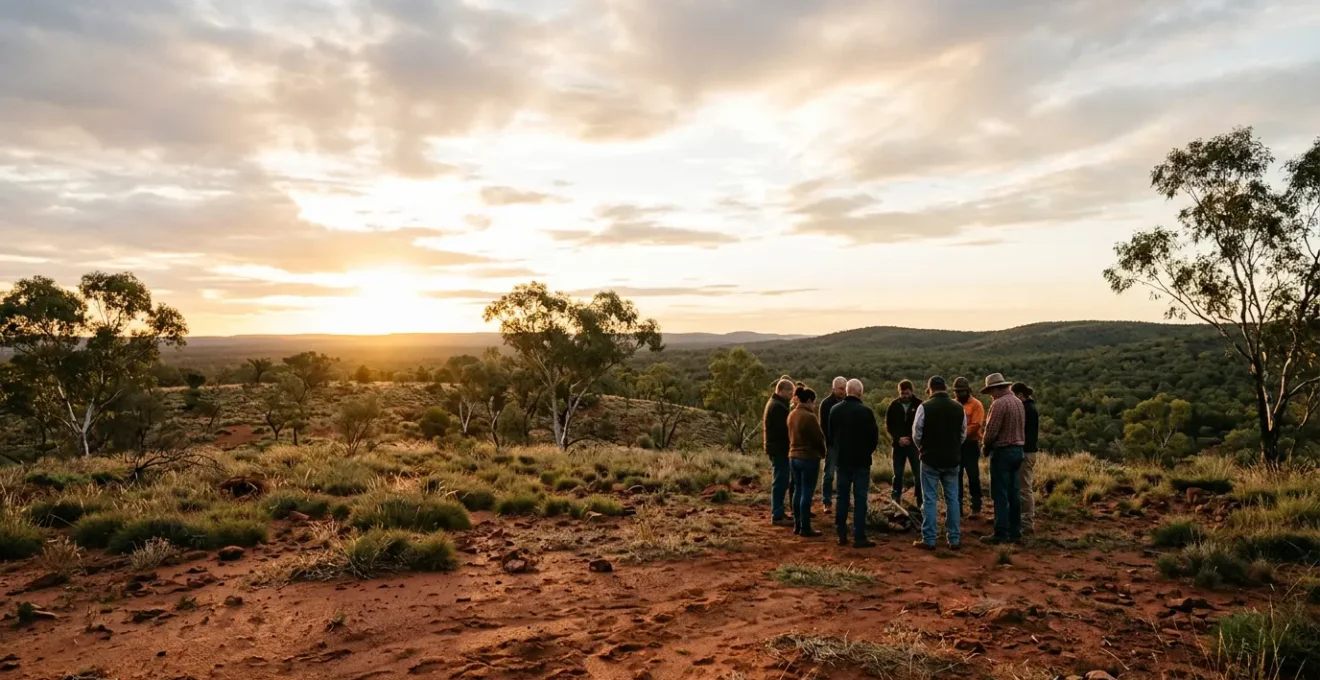
The common belief: ‘Welcome to Country’ is a polite Australian custom, similar to a formal greeting. The reality: It is a profound spiritual and political act, inviting you into a relationship with a living, ancestral landscape.
- A ‘Welcome’ is a right belonging only to Traditional Custodians; an ‘Acknowledgement’ is a duty for everyone else.
- Protocols around land, art, and stories are not arbitrary rules but safeguards for a culture with over 65,000 years of continuous history.
- Engaging ethically means understanding the ‘why’ behind the ‘what’, shifting your role from tourist to respectful guest.
Recommendation: Before your trip, take a moment to learn whose Country you will be visiting. This simple act is the first step towards meaningful respect.
For many visitors from the UK, the first encounter with a ‘Welcome to Country’ ceremony in Australia can be a moving, if slightly mystifying, experience. You might hear it at a conference opening, a festival, or even before a sporting match. It’s easy to categorise it as a formal pleasantry, the Australian equivalent of a civic greeting. This understanding, while well-intentioned, only scratches the surface. It misses the profound depth and spiritual significance of the act.
The common approach is to learn the basic distinction: a Welcome is given by an Elder, and an Acknowledgement can be said by anyone. While correct, this is simply the ‘what’. It doesn’t explain the ‘why’. To truly interact respectfully with the world’s oldest living cultures, one must look beyond the words themselves. The key is to understand the concept of ‘Country’ not as a patch of land, but as a living, breathing entity, imbued with the spirits of ancestors, stories, and law. Many protocols, from needing permits for certain lands to seeking permission before taking a photograph, are rooted in this worldview.
But what if the real key to respectful engagement wasn’t just memorising rules, but fundamentally shifting your perspective? This guide moves beyond tokenism to explore the spiritual architecture behind these ancient protocols. It reframes ‘Welcome to Country’ not as a formality, but as an invitation to see the land through a different lens—as an active participant in your journey, a place with which you can have a reciprocal relationship.
This article will guide you through the essential distinctions and protocols that shape respectful interaction. By exploring the spiritual significance behind each practice, you will gain a deeper appreciation that transforms your visit from a simple holiday into a meaningful cultural exchange.
Summary: Understanding the Deep Meaning of Welcome to Country
- Welcome to Country vs Acknowledgement of Country: Who Can Say Which?
- Entering Aboriginal Land: When Do You Need a Permit to Drive Through?
- Photography Rules: Why Should You Ask Before Taking Photos of Elders?
- The Indigenous Art Code: How to Ensure Your Money Goes to the Artist?
- 65,000 Years: How Do We Know It Is the Oldest Continuous Culture?
- Aboriginal vs Torres Strait Islander: Why You Should Not Use « Indigenous » Lazily?
- The « Supply Nation » Logo: What Does It Mean for Tourism Businesses?
- Dreamtime Stories: Why Are Some Tales Restricted to Men or Women?
Welcome to Country vs Acknowledgement of Country: Who Can Say Which?
The most frequent point of confusion for visitors is the difference between a ‘Welcome to Country’ and an ‘Acknowledgement of Country’. The distinction is not about the words used, but about spiritual jurisdiction. A Welcome to Country is a right, while an Acknowledgement of Country is a responsibility. Only the recognised Traditional Custodians of a specific area have the authority to formally welcome people to their ancestral land. It is an ancient diplomatic rite, a granting of permission to enter and an assurance of safe passage. It is a profound spiritual act that has been adapted into modern contexts, such as the ceremonial opening of the Australian Parliament since 2008.
To understand this, we must redefine ‘Country’. It is not just the physical landscape. As Professor Mick Dodson explains, it is a holistic concept encompassing all life, knowledge, and spiritual connection:
When we talk about traditional ‘Country’…we mean something beyond the dictionary definition of the word. For us, Country is a word for all the values, places, resources, stories and cultural obligations associated with that area and its features.
– Professor Mick Dodson, Australian of the Year at the National Press Club, 2009
An Acknowledgement of Country, by contrast, can and should be performed by anyone, visitor or non-Indigenous Australian. It is a demonstration of respect, acknowledging that you are a guest on ancestral lands. It shows you have taken the time to recognise the enduring connection of the Traditional Custodians. Think of it this way: a Welcome is from the host; an Acknowledgement is from the guest.
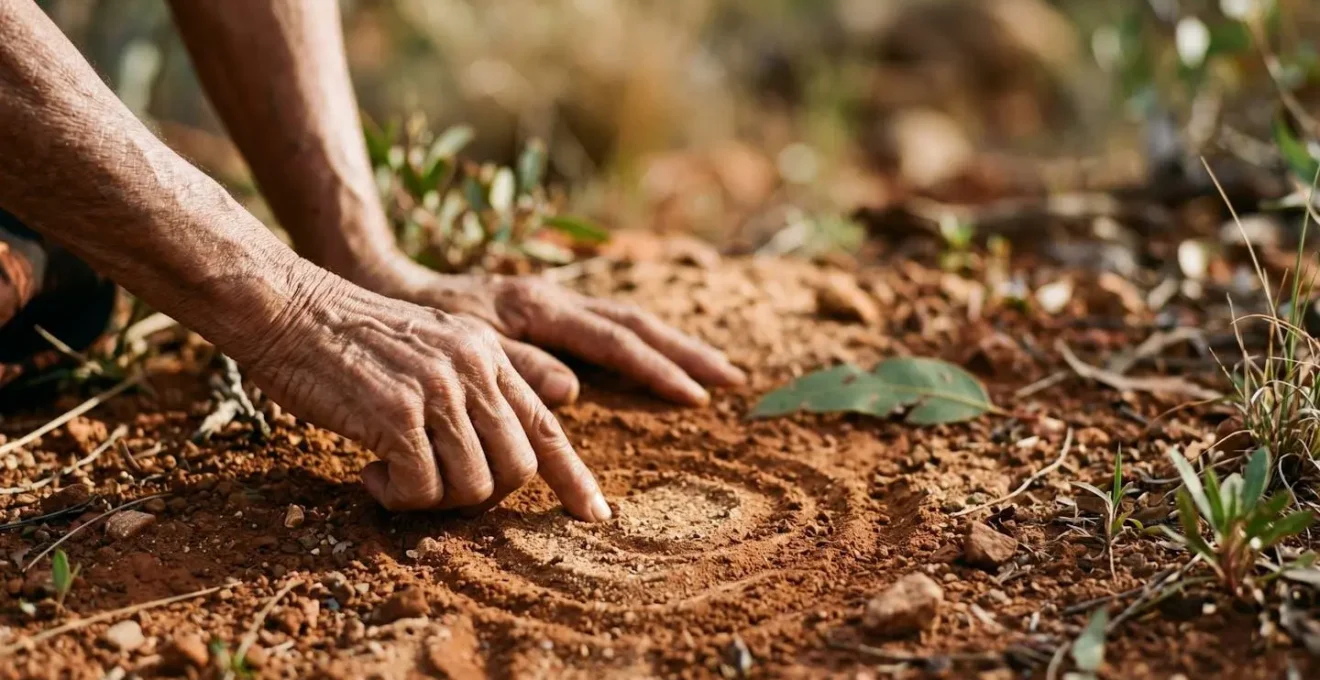
This visual metaphor captures the essence of this connection: a deep, tactile relationship with the earth itself. It is a bond of reciprocity and care built over millennia. So, when you give an Acknowledgement, you are not just saying words; you are participating in this ancient system of respect for the host and for the land as a living entity.
Entering Aboriginal Land: When Do You Need a Permit to Drive Through?
For many travellers, the idea of needing a permit to enter certain parts of Australia can seem like a bureaucratic hurdle. However, understanding this through the lens of ‘Country as a living entity’ changes the perspective entirely. Much of the land designated as Aboriginal Land is legally recognised private property under Australian law, but more importantly, it is someone’s ancestral home. Asking for a permit is not about paperwork; it is the equivalent of asking for permission to enter someone’s house.
A permit is required for most travel through Aboriginal lands that are not public roads or in national parks. This system is managed by regional Land Councils, which act on behalf of the Traditional Owners. The purpose is not to restrict visitors but to manage the visit respectfully. It ensures that travellers do not unknowingly enter or disturb sacred sites, which may not be marked on any public map but hold immense spiritual significance. These sites are integral to ceremony, law, and cultural identity.
The process also protects the privacy and daily life of the communities living there. Furthermore, as the Central Land Council notes, the permit system is a modern expression of an ancient spiritual responsibility to care for Country. It protects the environment, cultural heritage, and the intellectual property embodied in the land. Processing times for permits can vary significantly depending on the nature of the visit, as it often requires deep consultation with Traditional Owners to ensure the visit is appropriate and respectful. Therefore, planning well in advance is a crucial act of consideration.
Photography Rules: Why Should You Ask Before Taking Photos of Elders?
In the age of social media, it’s second nature to capture and share moments. When travelling, however, this impulse must be tempered with cultural awareness, especially regarding photography. The guiding principle is simple: always ask for permission before taking a photograph of a person, a piece of art, or a cultural performance. This is particularly crucial when it involves Elders.
Asking permission is not just about politeness; it’s about respecting an individual’s right to control their own image and story. For many First Nations people, a photograph is not just a fleeting image; it can capture a part of a person’s spirit. An Elder is a holder of immense cultural knowledge and authority, and their image carries that weight. Distributing it without consent can be deeply disrespectful. Furthermore, some cultural practices, such as specific ‘paint-up’ (ceremonial body paint), are tied to family groups or ceremonies and should not be documented or replicated without authorisation.
The same principle applies to certain rock art sites or cultural objects, as they may be sacred and not intended for public dissemination. Some communities may have specific protocols around filming or photography, and being clear about your intentions—where the images will be shared—is a vital part of building trust. This is not about secrecy, but about protecting the narrative integrity of a culture that has been misrepresented for centuries.
Your Action Plan: First Nations Photography Protocols
- Reach out to local land councils or Elders for permission to document on their land.
- Be clear about your motive and your intentions for distributing the material you capture.
- Connect with community members to get a localised understanding of the people and practices.
- Be conscious and respect that communities are not required to share information with you, as it may be sacred and protected.
- Consider if you’re the right person to tell the story and involve First Nations creatives when possible.
The Indigenous Art Code: How to Ensure Your Money Goes to the Artist?
Aboriginal and Torres Strait Islander art is one of the most vibrant and compelling reasons to visit Australia. Buying a piece of art can be a wonderful way to support artists and take home a meaningful memory of your trip. However, this industry is unfortunately rife with inauthentic ‘souvenirs’ and exploitative business models where the artist receives little to no payment for their work. To be a respectful and ethical buyer, your goal is to ensure your money supports the artist and their community directly.
The most powerful tool at your disposal is to seek out and purchase from galleries, art centres, and online stores that are signatories to the Indigenous Art Code. This code is a legally binding set of rules that ensures fair and ethical trade with Aboriginal and Torres Strait Islander artists. A dealer who is a signatory is committing to principles of transparency, fair payment, and respectful dealing. You can often see the Code’s logo displayed in the gallery or on the website. This provides a clear signal of an ethical source.
Even in a reputable gallery, it is your right and responsibility as a buyer to ask questions. An ethical dealer will welcome them. Inquire about the artist, the story behind the artwork (if it is not restricted), and how the artist is compensated. The artwork should come with a certificate of authenticity, which provides provenance and details about the artist and the work. By being a conscious consumer, you are participating in a system of economic reciprocity and helping to sustain a vital part of the world’s oldest living culture. To guide your purchase, here are key questions to ask:
- Has the work been consigned to the gallery, and what percentage will the artist receive?
- If the dealer purchased the work upfront, what was the artist paid?
- Is the gallery or dealer a signatory to the Indigenous Art Code?
- Does the artwork come with a certificate of authenticity from the artist or art centre?
65,000 Years: How Do We Know It Is the Oldest Continuous Culture?
The statement that Aboriginal cultures are the « oldest continuous living cultures on Earth » is not a romantic notion; it is a fact supported by extensive scientific and archaeological evidence. For visitors, understanding the scale of this deep time is essential to appreciating the resilience, sophistication, and continuity of the traditions you encounter today. The 65,000-year figure comes from archaeological dating of human occupation sites, such as the Madjedbebe rock shelter in Northern Australia, where artefacts have been scientifically dated to this period.
But science is only one part of the story. The other, more profound evidence of continuity lies in the culture itself. It’s found in the genetic studies showing an unbroken lineage from the first people to arrive on the continent to present-day Aboriginal Australians. It’s heard in the oral traditions, where stories of geological events from thousands of years ago, like the flooding of coastal areas after the last Ice Age, have been passed down with remarkable accuracy through countless generations.
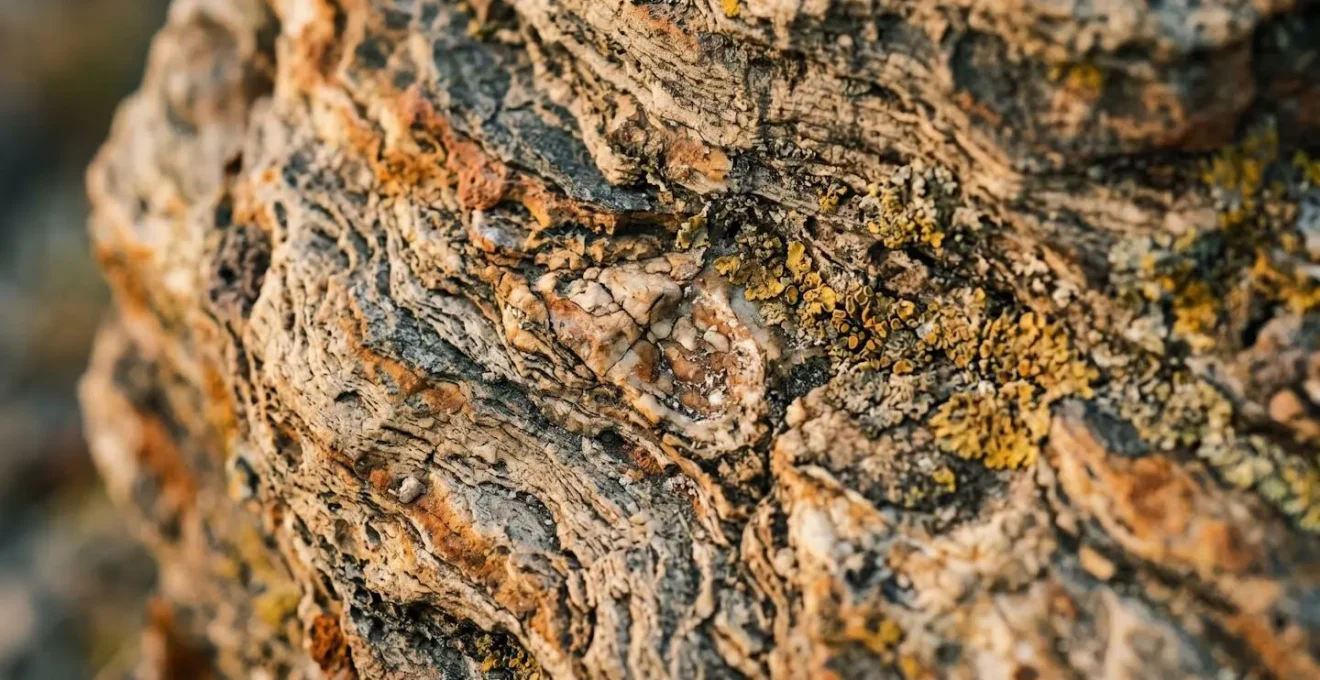
This immense timeline is etched into the land itself, on ancient rock surfaces that bear witness to millennia of human presence and artistry. This cultural continuity is what makes Aboriginal cultures unique. While many ancient civilisations have fallen or been assimilated, Aboriginal societies have maintained their spiritual and cultural frameworks despite the cataclysmic disruption of colonisation. When an Elder shares a story or performs a ceremony, you are witnessing a practice that is part of an unbroken chain stretching back to the dawn of modern humanity. It commands a unique level of respect.
Aboriginal vs Torres Strait Islander: Why You Should Not Use « Indigenous » Lazily?
While the term ‘Indigenous Australians’ is often used as a collective noun, it’s important for visitors to understand that it encompasses two distinct peoples with their own unique cultures, histories, and traditions: Aboriginal peoples and Torres Strait Islander peoples. Using these terms with specificity is a fundamental sign of respect. Aboriginal peoples are the First Peoples of mainland Australia and Tasmania. Torres Strait Islander peoples come from the islands between the northern tip of Queensland and Papua New Guinea.
Lumping them together under the general term ‘Indigenous’ can inadvertently erase the unique identity of Torres Strait Islander people and flatten the incredible diversity within Aboriginal Australia. Research confirms that Australia is made up of over 250 distinct Aboriginal Nations, each with its own languages, customs, and systems of law. There is no single ‘Aboriginal culture’ any more than there is a single ‘European culture’. The traditions, languages, and art styles of the Anangu people of the central desert are vastly different from those of the Gadigal people of the Sydney basin.
This is why one of the most respectful things you can do is to learn and use the name of the specific Nation whose Country you are on. For example, instead of saying « I acknowledge the Traditional Owners, » you can say, « I acknowledge the Kaurna people, the Traditional Owners of the land on which Adelaide is built. » This act of specificity demonstrates a deeper level of engagement and respect. It shows you see and honour the distinct identity of the people and their ancestral connection to that particular place. It moves beyond a generic acknowledgement to a personal and meaningful one.
The « Supply Nation » Logo: What Does It Mean for Tourism Businesses?
As a traveller, your spending choices have a direct impact. When you choose to support First Nations-owned businesses, you are contributing to economic self-determination and ensuring that the benefits of tourism flow back into the community. But how do you identify these businesses? One of the most reliable indicators to look for is the Supply Nation certification.
Supply Nation is a non-profit organisation that maintains a directory of verified Aboriginal and Torres Strait Islander-owned businesses. When you see a tourism operator—be it a tour guide, a hotel, or a catering company—displaying the ‘Supply Nation Certified’ logo, it is a guarantee. It confirms that the business is at least 51% owned, managed, and controlled by First Nations people. This certification provides a clear, transparent, and trustworthy way for you to make informed decisions and support the Indigenous economy directly.
Choosing a Supply Nation certified business is an act of economic reciprocity. It moves beyond passive tourism to active partnership. You are not just consuming an experience; you are investing in a community. This is particularly important in the tourism sector, where cultural experiences are often delivered by non-Indigenous operators. By actively seeking out First Nations-owned tour companies, art galleries, and accommodation, you ensure you are hearing stories from the source and that your financial contribution has a positive and empowering impact. Before your trip, you can browse the Supply Nation directory online to identify businesses in the regions you plan to visit.
Key Takeaways
- Country is a living entity: View the Australian landscape not as scenery, but as a complex, conscious system of relationships, laws, and ancestral memory.
- Protocol is reciprocity: Cultural rules are not arbitrary; they are the framework for a two-way relationship of respect between people, and between people and Country.
- Specificity is respect: Avoid generic terms. Learning and using the specific Nation name of the land you are on is one of the most profound signs of respect you can offer.
Dreamtime Stories: Why Are Some Tales Restricted to Men or Women?
Listening to a Dreamtime or Dreaming story is a privilege, offering a glimpse into the spiritual cosmology that forms the basis of Aboriginal law and culture. These are not ‘myths’ or ‘fables’ in the Western sense. They are complex narratives that encode geography, kinship systems, law, and creation itself. However, visitors may find that some stories are restricted, with access limited to certain people or specific genders. This is not an act of exclusion, but of protection.
Within Aboriginal societies, knowledge is often separated into different domains. Some knowledge is public, available for all to learn. Other knowledge is senior, earned over a lifetime of learning and responsibility. And some knowledge is specific to men or women, tied to their distinct roles and ceremonies. This is a core part of maintaining the narrative integrity and spiritual power of the stories. A story is not just a tale; it is a piece of cultural property with associated responsibilities. To tell a story you are not authorised to tell is a serious breach of protocol.
Men’s business and women’s business refer to these separate domains of knowledge and ceremony. They deal with aspects of life, spirituality, and law that are the specific responsibility of each gender. Sharing this knowledge outside of the appropriate context would diminish its power and be deeply disrespectful to the cultural laws it represents. As a visitor, the respectful approach is to accept this without question. If a guide says a story or a site is for men or women only, that is not a rejection of you, but an affirmation of their cultural law. It is a sign that the culture is alive and its protocols are being actively maintained.
As you travel through Australia, carry this understanding with you. Look beyond the surface of the protocols to the deep, spiritual worldview they represent. It transforms you from a mere tourist into a respectful guest, and your journey into a true exchange. Every time you acknowledge Country, buy art ethically, or respect a restricted story, you are actively participating in honouring the world’s oldest continuous living cultures.