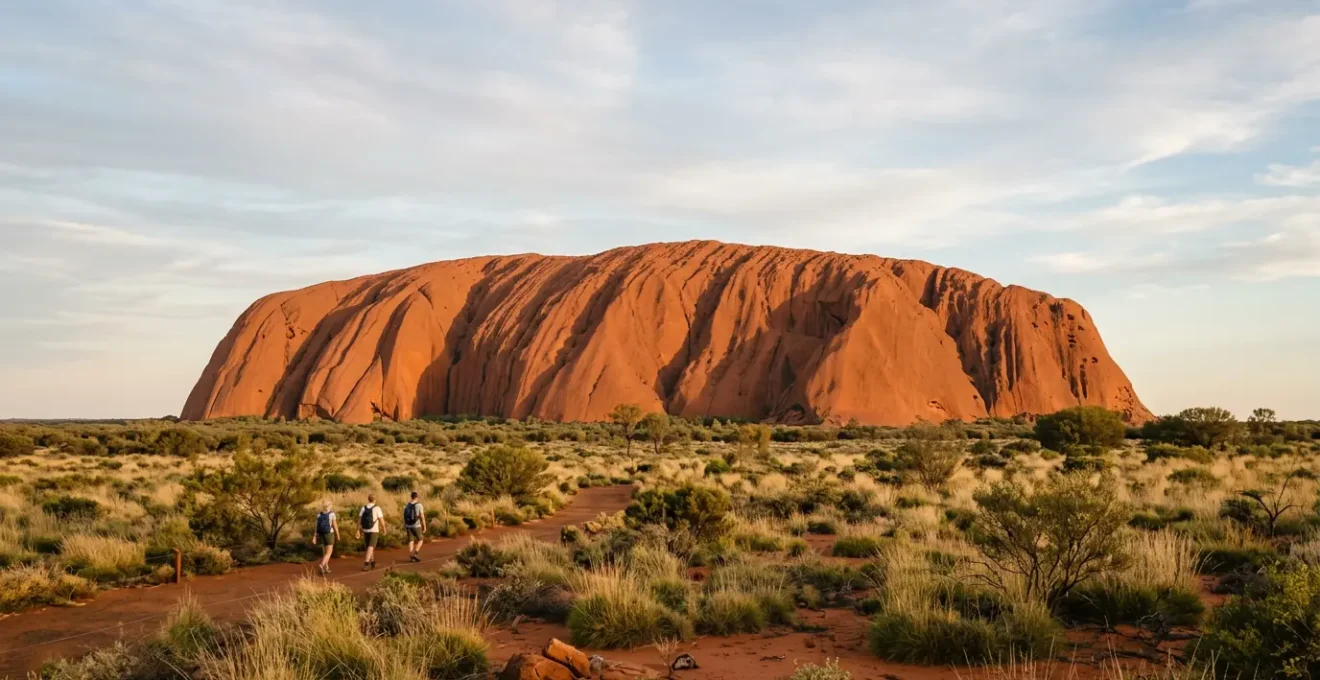
Many remember photos of people climbing Uluru, believing the summit was the ultimate goal. However, the closure of the climb wasn’t a loss; it was a profound correction. This guide reveals that the Uluru Base Walk is not a secondary option but the primary, intended experience. It shifts the visitor’s perspective from one of physical conquest to one of deep cultural connection, offering a chance to ‘read’ the living stories written into the rock by the Aṉangu people, the traditional owners of the land.
For decades, the image of a line of tourists scaling the steep, red spine of Uluru was an iconic, if misleading, symbol of Australian tourism. For many visitors, reaching the summit was the entire point of the journey. So when the climb was permanently closed in 2019, a decision celebrated by the traditional Aṉangu owners, some felt they had missed out on the ‘real’ experience. This feeling, however, is based on a fundamental misunderstanding of what Uluru truly is.
The truth is, the Base Walk is not a consolation prize. It’s the main event. Shifting your journey from a vertical conquest to a horizontal connection is the key to unlocking the soul of this place. The climb was an act of imposition, a trail worn onto the back of a sacred being. The walk, in contrast, is an invitation. It’s a chance to walk alongside this incredible entity, to listen to its stories, and to see it not as a thing to be conquered, but as a living cultural library waiting to be read. As a guide, I’ve seen countless visitors arrive with the goal of ‘doing’ Uluru and leave having ‘felt’ it instead, all because they chose to walk with it, not on it.
This article explores the different facets of visiting Uluru-Kata Tjuṯa National Park, from the practical to the profound. By understanding the geology, the cultural protocols, and the ancient storytelling embedded in the landscape, you will see why the 10.6-kilometre path around its base offers a richer, more authentic, and ultimately more memorable experience than the now-historic climb ever could.
Summary: A Deeper Journey Around a Sacred Icon
- Sunrise or Sunset: Which Offers the Best Colour Change on the Rock?
- Monolith or Inselberg: How Did Uluru Actually Form?
- Valley of the Winds Walk: Is It Harder Than the Uluru Base Walk?
- No Photography Signs: Why Are Certain Angles of Uluru Censored?
- Field of Light: Is the £30 Ticket Worth It for Looking at Lightbulbs?
- Entering Aboriginal Land: When Do You Need a Permit to Drive Through?
- Songlines Explained: How Do Stories Function as Maps?
- Respecting Country: What Does « Welcome to Country » Actually Mean?
Sunrise or Sunset: Which Offers the Best Colour Change on the Rock?
The classic Uluru postcard shot is of the rock glowing fiery red, a spectacle that happens at both sunrise and sunset. While both are breathtaking, they offer distinctly different experiences. Sunset is often more popular, with dedicated viewing areas filling up as crowds gather to watch the rock’s surface shift from ochre to blazing crimson and then to deep purple. The peak transformation window is brief but intense, lasting for the roughly 30 minutes surrounding the moment the sun disappears.
However, as a guide, I often recommend sunrise for a more profound connection with the place. The colours are softer, moving from shadowy blues to gentle pinks and warm oranges as the land awakens. More importantly, the experience is far more personal and tranquil. As travel writers Chris and Wren note in their guide, the park has a unique atmosphere at dawn.
During the first hour or two of daylight in the morning, the national park is eerily quiet, which can make for a more special experience.
– Chris and Wren, Complete guide to visiting Uluru for sunset and sunrise
This quietude allows you to hear the sounds of the desert and feel the immense presence of the rock without distraction. It sets a contemplative tone for the day, perfectly aligning with the spirit of the Base Walk. You aren’t just watching a show; you’re witnessing the start of a day in a place that has seen over 100,000 sunrises. It’s the difference between attending a concert and having a private audience.
Monolith or Inselberg: How Did Uluru Actually Form?
Often mistakenly called the world’s largest monolith (a single stone), Uluru is more accurately described as an inselberg, meaning « island mountain. » It’s the visible tip of a massive, tilted slab of rock that continues for an astonishing distance underground. Geological surveys suggest the formation extends down for up to 6,000 metres below the surface. What you see is only a fraction of its true scale. This isn’t just a rock resting on the desert; it’s an ancient mountain buried by time, with its peak still standing proud.
This ‘island mountain’ is made of arkose sandstone, a coarse-grained sandstone rich in the mineral feldspar. About 550 million years ago, this material was part of a vast alluvial fan, where sediment washed down from mountains that have long since eroded away. Over millions of years, this sediment was compressed into rock. Later, immense geological forces tilted this entire slab of rock to its current, near-vertical position. The « strata, » or layers of sand, are now visible as the vertical lines running up the rock’s face.

The caves, grooves, and features you see as you walk the base are not random; they are the result of erosion acting differently on the various layers of this tilted rock. Softer layers have worn away to create caves, while harder layers remain as ridges. For Aṉangu, this geology is inseparable from Tjukurpa (the creation law). The shape of a cave, the stain from a waterhole, the pattern of a fissure—these are not geological accidents. They are the physical evidence of the creation beings’ journeys and actions. The geology doesn’t just allow for the story; the geology *is* the story.
Valley of the Winds Walk: Is It Harder Than the Uluru Base Walk?
While Uluru is the main attraction, its sister formation, Kata Tjuṯa (The Olgas), offers an equally compelling but physically more demanding experience: the Valley of the Winds walk. Visitors often wonder how it compares to the Uluru Base Walk. While shorter in distance, the Valley of the Winds is significantly more challenging due to its terrain and elevation changes. The Base Walk is a cultural immersion on flat ground, while the Valley of the Winds is a breathtaking landscape hike among towering domes.
A direct comparison reveals their different purposes and difficulties, as shown by data from Parks Australia for walkers to plan accordingly.
| Feature | Uluru Base Walk | Valley of the Winds (Kata Tjuta) |
|---|---|---|
| Distance | 10.6 km loop | 7.4 km circuit |
| Duration | 3-3.5 hours | 3-4 hours |
| Difficulty Grade | Grade 3 (Moderate) | Grade 4 (Moderate-Difficult) |
| Terrain | Flat, compacted sandy path, wheelchair accessible sections | Steep, rocky, loose rocks, multiple climbs |
| Elevation Change | Minimal | Significant (climbing to lookouts) |
| Experience Type | Cultural narrative journey – reading Tjukurpa stories | Landscape perspective – immersion among 36 domes |
| Heat Closure | Sections may close in extreme heat | Closes at first lookout at 11am when forecast reaches 36°C+ |
| Cultural Focus | Dense with Anangu stories, rock art, ceremonial sites | Sacred men’s area, photography largely restricted |
The choice between them depends on your goal. If you want to connect with the Tjukurpa and understand the stories, the Uluru Base Walk is unparalleled. Every few hundred metres, a new feature corresponds to a part of the Kuniya (python woman) and Liru (poisonous snake men) creation story. If your goal is a challenging hike with spectacular panoramic views, immersing yourself *between* the 36 domes of Kata Tjuṯa on the Valley of the Winds walk is an unforgettable adventure. Many visitors do both, experiencing the distinct spiritual energy of each site.
No Photography Signs: Why Are Certain Angles of Uluru Censored?
As you walk around the base of Uluru, you will encounter signs asking you not to photograph certain sections of the rock. For a visitor in the age of social media, this can be confusing. This is not censorship; it is a profound act of respect for Aṉangu culture. These areas are sacred sites, equivalent to a church’s altar, a mosque’s mihrab, or a synagogue’s ark. They are places of immense spiritual power and are often associated with specific ceremonies or knowledge that is not for public consumption.
The details on the rock face—the shapes, cracks, and discolourations—are not just pretty patterns. They are the text of Tjukurpa. As Parks Australia explains, sharing these images would be like photocopying and distributing pages from a sacred book that is meant only for initiated elders.
The rock details and features at these sites are equivalent to sacred scripture for Aṉangu – they describe culturally important information and should only be viewed in their original location and by specific people.
– Parks Australia, Uluṟu-Kata Tjuṯa National Park Photography Guidelines
Respecting these requests is a fundamental part of visiting Uluru. It’s a non-negotiable aspect of being a guest on Aṉangu land. By lowering your camera, you are actively participating in the preservation of the world’s oldest living culture. It is a powerful shift from a tourist’s mindset of ‘capturing’ everything to a guest’s mindset of ‘experiencing’ and respecting boundaries.
Case Study: The Northeast Face Photography Protocol
The northeast face of Uluru represents a model case study in cultural sensitivity. This side, highly visible from the resort, contains sites of deep significance. Rather than a total ban, Parks Australia and traditional owners created a compromise: photographers may take wide shots from a distance but must avoid showing details on the top-left side of the rock. The best time to photograph this face is 1-2 hours before sunset when natural shadows obscure the sacred sites, creating both cultural compliance and superior photographic composition. This approach demonstrates how cultural protocols can coexist with tourism when traditional owners retain decision-making authority over their Country.
Field of Light: Is the £30 Ticket Worth It for Looking at Lightbulbs?
As darkness falls over the desert, a different kind of spectacle emerges near Uluru: the Field of Light, or Tili Wiṟu Tjuta Nyakutjaku in the local Pitjantjatjara language. This critically acclaimed art installation by Bruce Munro consists of over 50,000 solar-powered stems and spheres of light that gently illuminate the desert floor, creating a shimmering carpet of colour with Uluru as a distant, dark silhouette. But with tickets costing around £30 per person, many wonder if it’s worth it.
The experience is undeniably beautiful and almost surreal. Walking through the gently pulsing colours on a pre-determined path is a meditative and highly photogenic experience. It feels like stepping into a fantasy landscape. However, it’s crucial to understand what the Field of Light is and what it isn’t. It is an external, temporary, and man-made artistic interpretation of the desert’s energy. It is not an Aṉangu cultural experience, although it was installed with the blessing of the traditional owners.
Is it worth it? If you appreciate large-scale art installations and are looking for a unique, visually stunning evening activity, then absolutely. It provides a beautiful contrast to the raw, natural power of Uluru and Kata Tjuṯa. However, if your budget or time is limited and your primary goal is to connect with the ancient culture and natural environment, your money and time are better spent on an Aṉangu-guided tour or simply sitting in silence to watch the stars appear over the rock. The Field of Light is a beautiful addition to a visit, but it should never be a substitute for engaging directly with the deep, enduring story of the place itself.
Entering Aboriginal Land: When Do You Need a Permit to Drive Through?
The concept of land ownership in Australia is complex. While Uluṟu-Kata Tjuṯa National Park is managed jointly by Parks Australia and its Aṉangu traditional owners, access is straightforward: you simply need a Park Pass, which can be purchased online. This pass is your permit to enter the park, and the fees contribute directly to conservation and the local Aṉangu community. No other permit is needed for the main tourist areas.
However, the moment you venture off the main highways and onto the vast network of unsealed roads in Central Australia, the rules change. Much of the land surrounding the national park is Aboriginal Land held under the Aboriginal Land Rights (Northern Territory) Act 1976. To enter or travel through these lands, you typically need a transit permit from the relevant Land Council (in this area, the Central Land Council). This is not just bureaucracy; it is a formal recognition of ownership. It is like asking for permission to drive across someone’s private farm or estate.
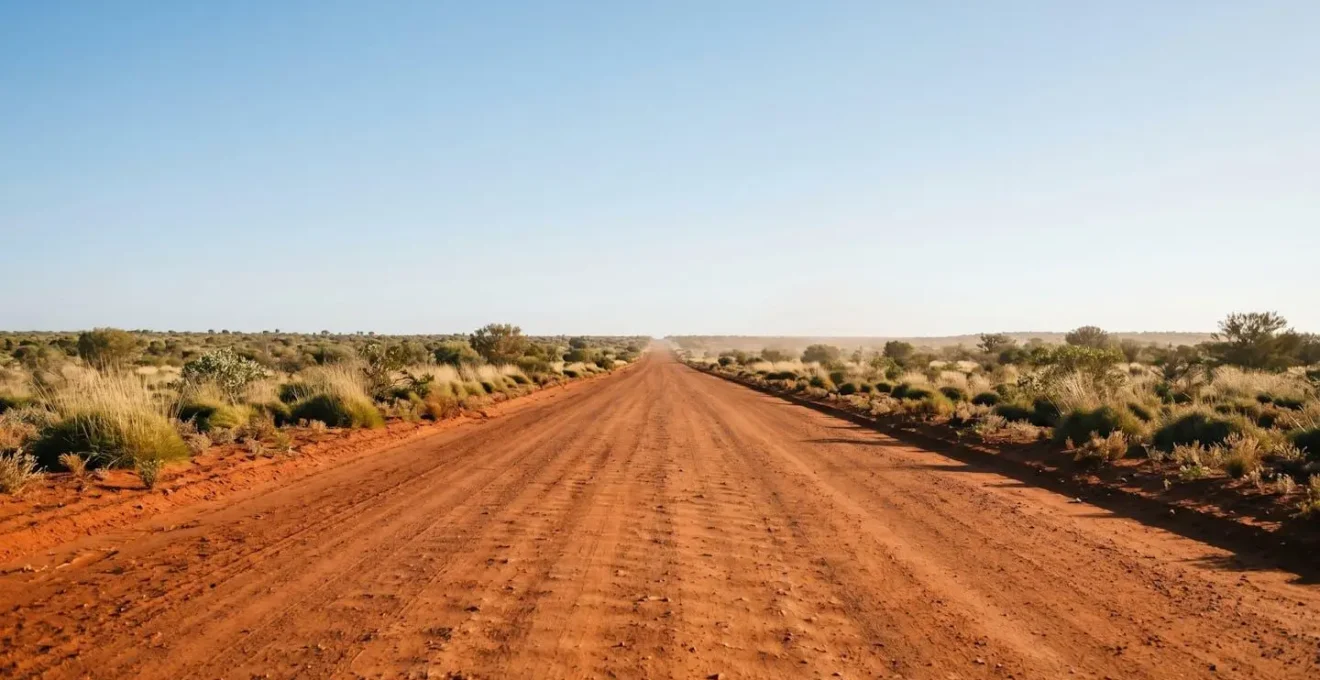
These permits are usually free and ensure that visitors are aware of any roads that may be closed for cultural reasons, such as ceremonies or sorry business (a period of mourning). It also ensures the privacy and safety of the remote communities that call these lands home. For the vast majority of visitors sticking to the sealed roads and the national park, only a Park Pass is necessary. But for adventurous travellers with a 4WD, planning ahead and securing the right permits is a non-negotiable sign of respect for the traditional owners and their enduring connection to Country.
Songlines Explained: How Do Stories Function as Maps?
One of the most profound and difficult concepts for outsiders to grasp is that of the ‘Songline’. In Western culture, we separate maps, stories, laws, and spirituality into different categories. For Aboriginal Australians, a songline is all of these things at once. It is an intricate oral map of the land, a creation narrative, and a legal and moral code that has been passed down for tens of thousands of years.
During the Tjukurpa, or creation period, ancestral beings travelled across the unformed land, shaping it with their actions. As they journeyed, they sang. They sang the rivers, mountains, and waterholes into existence. The path they walked and the song they sang became the songline. By singing the song in the correct sequence and rhythm, a knowledgeable person can navigate vast distances across the Australian continent, as each verse corresponds to a specific landmark—a rock formation, a waterhole, a bend in a creek.
The songline is therefore a navigational and memory tool of incredible sophistication. It is a map made of music. But it’s more than that; the lyrics also contain the laws of the land, the rules for social behaviour, and information about where to find food and water. The Uluru Base Walk is so significant because it is a physical journey along a key chapter of a major songline—the story of the battle between the Kuniya (Woma Python) and the Liru (Poisonous Snake) warriors. The features you see are the verses of the song made real. You are literally walking through the story. This is why walking the base is infinitely more meaningful than climbing it; you are engaging with the map, not just standing on a single point of it.
Key Takeaways
- The Uluru Base Walk is not a hike; it is an act of reading a living cultural library, where every feature tells a story.
- Tjukurpa, the foundation of Aṉangu law and spirituality, is not a myth from the past but a living truth written into the landscape.
- Respect is the cornerstone of the visitor experience, shown by following paths, heeding photography restrictions, and listening to the guidance of traditional owners.
Respecting Country: What Does « Welcome to Country » Actually Mean?
Throughout Australia, it is common for events to begin with a « Welcome to Country. » For many, this may seem like a polite formality. But for Aboriginal people, it is a vital and ancient protocol with deep meaning. It is not just a « welcome »; it is a grant of permission. When an elder welcomes you to their Country, they are giving you their blessing to enter their home, an assurance of safe passage, and a request that you respect their laws and their land during your stay.
The term « Country » itself carries immense weight. It does not mean land in the sense of property or real estate. Country is a living entity, infused with the spiritual energy of the ancestors and the stories of the Tjukurpa. It encompasses the land, the water, the sky, the plants, the animals, and the people. People do not own Country; they belong to it. They have a profound, reciprocal responsibility to care for it, and in turn, Country cares for them.
When you visit Uluru, you are a guest on Aṉangu Country. Showing respect is therefore the most important thing you can do. This goes beyond just following rules like « don’t litter. » It means understanding that you are in a sacred place. Touching the rock, for example, is not forbidden, but it is discouraged out of respect for its spiritual significance. Staying on the marked paths isn’t just about environmental protection; it’s about not treading on sacred sites or disturbing the physical manifestations of the Tjukurpa. It is about behaving as a thoughtful guest in someone else’s most holy place.
Your Action Plan: Showing Respect on Aṉangu Country
- Listen First: Visit the Cultural Centre upon arrival. Aṉangu culture is oral; listening to the stories from the traditional owners is the first and most important step.
- Check Signage: Pay close attention to all signs, especially those regarding photography restrictions. They are not arbitrary rules but vital cultural protocols.
- Stay on the Path: The marked tracks are designed to guide you safely and protect both the fragile environment and culturally sensitive areas.
- Acknowledge Traditional Owners: Understand that you are a guest. Acknowledge the Aṉangu as the traditional owners whenever you speak about your visit.
- Engage with Culture: Participate in an Aṉangu-led tour. This is the most authentic way to learn and your contribution directly supports the community.
Embracing this journey around Uluru is about a fundamental shift in perspective. It’s about letting go of the desire to conquer and instead opening yourself up to listen. By choosing the Base Walk, you are accepting an invitation to engage with a story 60,000 years in the making. Embrace this journey not as a tourist, but as a welcome guest, and discover a connection far deeper than any summit could ever offer.