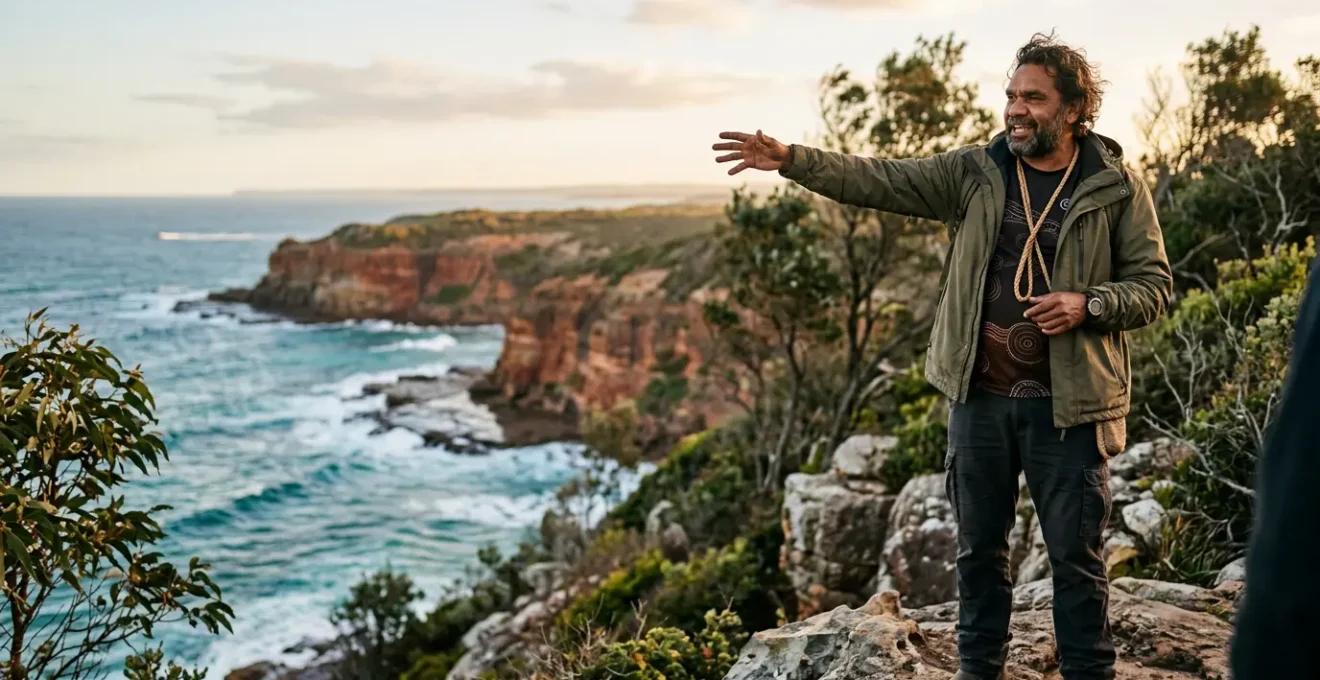
Verifying an authentic Indigenous tour goes beyond marketing; it requires a due diligence approach to ensure genuine community benefit and cultural integrity.
- Look for Supply Nation certification as the primary indicator, as it mandates a minimum of 51% Indigenous ownership and control.
- Book directly with the operator whenever possible to prevent « economic leakage » and ensure the majority of funds stay within the First Nations community.
Recommendation: Apply this audit framework to every cultural experience you consider, transforming your role from a passive tourist to an active and informed ally.
As a conscious traveller, you want your journey through Australia to be more than just sightseeing. You seek genuine connection, a deeper understanding of the world’s oldest living cultures, and the assurance that your tourism dollars are a force for good. Yet, this desire is often met with a nagging uncertainty. How can you be sure the « Aboriginal Cultural Experience » you’re booking is what it claims to be? The rise of « black-cladding »—non-Indigenous businesses using Indigenous branding and staff for commercial gain without genuine community ownership or benefit—makes this a valid and critical concern.
Conventional advice often falls short. Reading reviews or looking at a well-designed website offers no guarantee of ownership. A friendly guide who shares cultural stories may be a valued employee, but this doesn’t confirm that the business profits are reinvested into their community. To move beyond surface-level checks, you need to adopt a new mindset: that of an ethical auditor. It’s not about a simple checklist, but about understanding the structures of verification, the flow of money, and the concept of narrative control.
This guide provides a practical due diligence framework. It will equip you to dissect the claims of tourism operators, from deciphering logos and pricing structures to asking the right questions respectfully. We will explore why booking directly is a powerful act of economic support and how to differentiate between authentic cultural sharing and a mere performance for tourists. By the end, you will have the tools not just to choose a tour, but to make an informed, ethical investment in the preservation and empowerment of First Nations communities.
Contents: A Framework for Verifying Indigenous Tourism
- The « Supply Nation » Logo: What Does It Mean for Tourism Businesses?
- Questions to Ask: How to Politely Check If a Guide Is Indigenous?
- Why Are Indigenous Tours Often More Expensive Than Standard Tours?
- Desert vs Coast: How Do Cultural Experiences Differ by Location?
- Booking Direct: Why Is It Better for the Community Than Viator?
- The Indigenous Art Code: How to Ensure Your Money Goes to the Artist?
- Greenwashing vs Certified: How to Spot a Truly Sustainable Lodge in Tasmania?
- Dining in Sydney: Why Cabramatta Offers the Best Vietnamese Pho?
The « Supply Nation » Logo: What Does It Mean for Tourism Businesses?
In the complex landscape of cultural tourism, discerning genuine Indigenous-owned businesses from those engaging in black-cladding requires clear, verifiable standards. While many symbols and affiliations exist, the Supply Nation logo stands as the most robust and widely recognised benchmark for business ownership in Australia. It functions as a corporate auditor’s stamp of approval, moving verification from guesswork to a matter of public record.
Seeing the Supply Nation logo on a tourism operator’s website or promotional material is not a mere marketing claim. It is a declaration that the business has undergone a rigorous verification process. To achieve this certification, a business must prove it meets a strict criterion: having at least 51% Indigenous ownership, management, and control. This rule is the cornerstone of the certification, ensuring that the strategic direction and a majority of the profits are in the hands of First Nations people.
This is fundamentally different from a business that simply employs Indigenous guides or consultants. While Indigenous employment is positive, it doesn’t guarantee that the business’s wealth generation benefits the community. Supply Nation certification confirms that the business itself is a vehicle for First Nations economic empowerment. Therefore, when conducting your due diligence, making the search for this logo your first step is the single most efficient way to filter for genuine Indigenous-owned enterprises.
Questions to Ask: How to Politely Check If a Guide Is Indigenous?
While certification provides structural verification, the human element of a tour is equally important. However, directly asking a guide « Are you Aboriginal? » can be blunt, awkward, and place them in an uncomfortable position of having to ‘prove’ their identity. A more effective and respectful approach involves shifting the focus from personal identity to community connection and narrative authority. An auditor doesn’t just check a box; they ask probing questions to understand the system.
The goal is to invite storytelling, not to conduct an interrogation. The way a business representative or guide responds to these questions reveals much about their authenticity and the depth of their community ties. This interaction is a form of verbal audit that assesses the operator’s commitment to genuine cultural transmission.
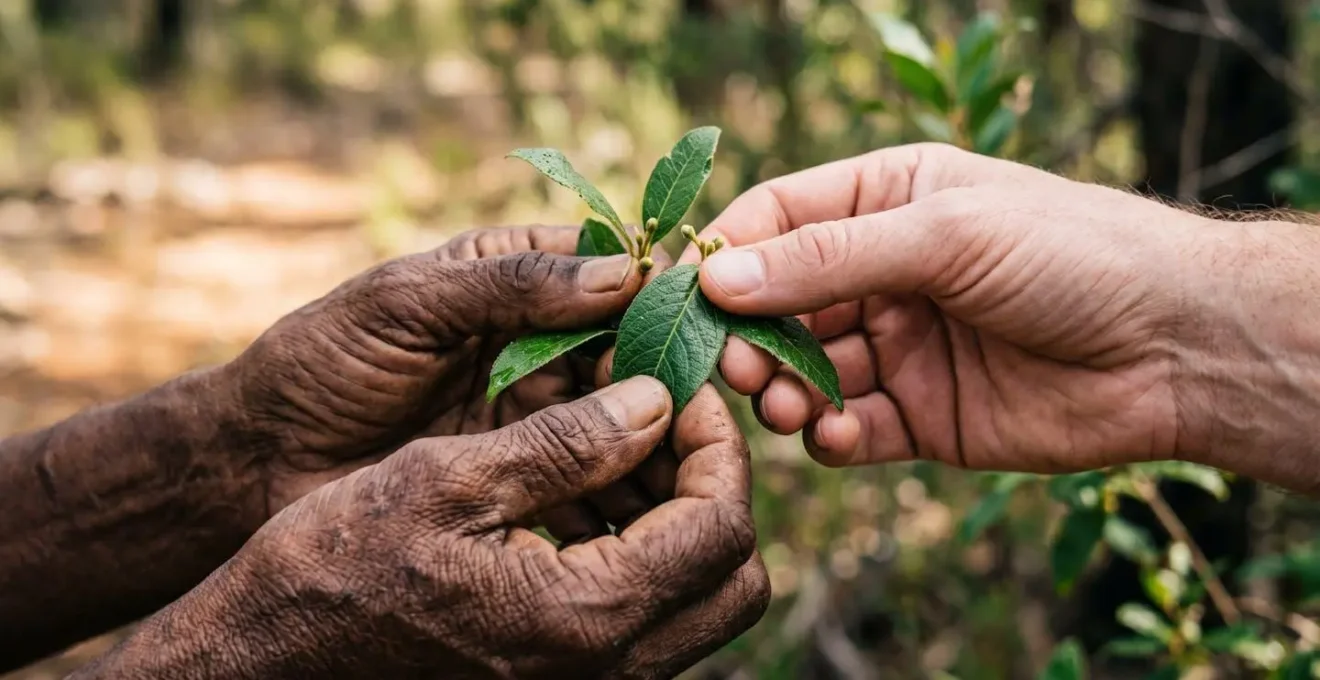
An authentic tour is defined by this transfer of living knowledge, passed down through generations. Your questions should be framed to open a dialogue about this heritage. Instead of demanding credentials, you are creating an opportunity for the guide to share the very essence of what makes their experience unique. A genuine operator will welcome these questions as a sign of a visitor’s sincere interest.
Here are some respectful, open-ended questions that achieve this goal:
- ‘Could you share about your family’s connection to this Country?’
- ‘Whose stories will we be learning today?’
- ‘How does this tour benefit the local community?’
- ‘Who developed the itinerary and ensures its cultural appropriateness?’
- ‘Is this a family-owned business or a community enterprise?’
Why Are Indigenous Tours Often More Expensive Than Standard Tours?
When comparing tour options, you may notice that authentic Indigenous-led experiences often come with a higher price tag than their mainstream counterparts. It’s easy to mistakenly perceive this as simply being « more expensive. » However, from an auditor’s perspective, this isn’t an apples-to-apples comparison. The price difference reflects a fundamentally different cost structure and a vastly superior value proposition: the social return on investment (SROI).
The demand for these authentic experiences is growing rapidly. In the 2023-24 period alone, a record-breaking 3.0 million trips in Australia incorporated First Nations activities, demonstrating a clear market shift towards meaningful travel. This demand allows Indigenous operators to price their offerings based on the true value they provide, which extends far beyond a simple sightseeing excursion. The higher cost directly funds fair wages, allows for smaller, more intimate group sizes that minimize environmental and cultural impact, and covers the extensive permissions and protocols required to access and share stories about specific areas of Country.
Most importantly, the premium you pay is a direct investment in community development. The profits don’t just enrich a distant shareholder; they circulate within the community, funding cultural preservation projects, education, and creating sustainable employment. As a leading report on Indigenous business impact highlights:
For every $1 of revenue, Certified Suppliers generate $4.1 of social return. First Nations businesses are 100 times more likely to employ First Nations people.
– Supply Nation, Supply Nation Indigenous Business Impact Report
Therefore, when you see a higher price, you are not being overcharged. You are being offered an opportunity to participate in a regenerative economic model where your tourism dollar generates a quantifiable positive impact.
Desert vs Coast: How Do Cultural Experiences Differ by Location?
A common mistake for travellers is to view « Aboriginal culture » as a single, monolithic entity. In reality, Australia is home to hundreds of distinct First Nations groups, each with unique languages, laws, and relationships to their specific Country. An essential part of your due diligence is recognising that the nature of a cultural experience is profoundly shaped by its geography. The knowledge, stories, and activities offered by a saltwater people on the coast will be fundamentally different from those of a desert people in the arid centre.
For example, the Ngadiku Dreamtime Walk in Mossman Gorge, Queensland, is an experience deeply rooted in the coastal rainforest environment of the Kuku Yalanji people. Here, the tour is about the abundant ecosystem—the sea and rainforest as providers. Guides demonstrate how to find bush tucker in mangroves, share stories of reef creation, and explain a culture where tidal patterns and fish migrations are central to survival and identity. The environment supports a deep, place-based knowledge system.
Contrast this with a tour around Uluru with Anangu guides. In the Central Desert, the land is a powerful and often harsh teacher. Survival has historically depended on an intricate knowledge of a vast, arid landscape. Here, the cultural focus is on tracking animals, identifying sparse water sources like rockholes, interpreting ancient rock art, and understanding the epic Songlines that connect sacred sites across immense distances. The experience is one of resilience, mobility, and a profound spiritual connection to landforms. The following table breaks down these critical distinctions.
| Aspect | Coastal Cultures (e.g., Kuku Yalanji, Daintree) | Desert Cultures (e.g., Anangu, Central Australia) |
|---|---|---|
| Relationship to Country | Sea and rainforest as abundant providers; identity tied to waterways, reefs, and seasonal coastal cycles | Desert as powerful teacher; intimate knowledge of water sources (soaks, rockholes) paramount for survival |
| Primary Activities | Fishing, mangrove foraging, reef exploration, seasonal gathering of seafood and tropical fruits | Tracking desert fauna, identifying waterholes, foraging for bush tomatoes and native grasses, rock art interpretation |
| Social Structure | Historically larger, more settled groups supported by abundant marine resources | More nomadic traditions with extensive Songlines connecting sacred sites across vast distances |
| Art & Story Focus | Sea creatures, rainforest spirits, tidal patterns, connection to coastal landmarks | Desert landforms (Uluru, Kata Tjuta), waterholes as sacred sites, astronomy, survival knowledge |
| Tour Examples | Dreamtime Dive & Snorkel (Great Barrier Reef), Ngadiku Dreamtime Walk (Mossman Gorge) | Sounds of Silence (Uluru), SEIT Outback Australia cultural tours |
Recognising these differences is key to choosing an experience that aligns with your interests and appreciating the immense diversity of First Nations cultures. It is a sign of a respectful and informed traveller.
Booking Direct: Why Is It Better for the Community Than Viator?
In the age of digital convenience, it’s tempting to bundle all your travel plans through a large Online Travel Agency (OTA) like Viator, GetYourGuide, or Klook. While these platforms offer a seamless user experience, they introduce a critical problem from an ethical auditing perspective: economic leakage. When you book an Indigenous tour through an OTA, a significant portion of your payment—often between 20% and 30%—is siphoned off as commission, never reaching the community it’s meant to support.
Booking direct, by going to the operator’s own website or calling them, is one of the most powerful actions you can take to ensure your money has the maximum positive impact. It guarantees that 100% of the revenue flows to the Indigenous-owned business, where it can be used to pay fair wages, maintain equipment, and fund community initiatives. This simple choice transforms your purchase from a partially effective contribution into a direct and efficient investment.
Beyond the financial aspect, booking direct fundamentally alters the relationship between you and the operator. It’s about more than a transaction; it’s about connection. As tourism experts note, the control of customer data is a hidden but crucial factor:
When booking through an OTA, the OTA owns the customer data, preventing the Indigenous operator from building a direct relationship, seeking feedback, or informing them of future offerings.
– First Nations Tourism Hub, Indigenous Tourism Distribution Analysis
This direct relationship is invaluable. It allows the small, family-run, or community-based enterprise to build its own brand, gather testimonials, and foster a loyal base of supporters. It respects their autonomy and empowers them to control their own business narrative, rather than being a generic listing on a multinational platform.
Choosing to take the extra five minutes to find and use the operator’s direct booking channel is a small effort with an outsized impact. It is a conscious decision to prioritise community benefit over minor convenience, shifting from a passive consumer to an active partner in sustainable tourism.
The Indigenous Art Code: How to Ensure Your Money Goes to the Artist?
Your commitment to ethical support shouldn’t end with the tour. The purchase of art and souvenirs is another area where conscious consumers can make a significant impact—or inadvertently support exploitative practices. The market is flooded with mass-produced items featuring Aboriginal-style designs, with none of the proceeds returning to the artists or their communities. Just as with tours, a due diligence framework is needed to navigate the art world ethically.
The primary tool for this is the Indigenous Art Code. While signing up to the Indigenous Art Code is voluntary, a fact established by the Australian Government in 2010, it provides a crucial set of standards for ethical conduct. Dealers and galleries who are signatories to the Code commit to fair and transparent dealings with artists, including fair payment and respectful representation. Looking for the Code’s logo is your first step, but because it’s voluntary, your audit must go deeper.
The most reliable way to ensure your money reaches the source is to buy from community-owned Art Centres. These organisations are owned and governed by Indigenous people and are the lifeblood of many remote communities, providing economic, social, and cultural benefits. When buying from a private gallery or dealer, your role as an auditor becomes even more critical. You must be prepared to ask questions and look for specific documentation that proves authenticity and ethical sourcing.
Your Checklist for Ethical Art Purchasing
- Look for the Logo: Prioritise galleries and dealers who are signatories to the Indigenous Art Code.
- Demand a Certificate of Authenticity: For any significant purchase (typically over $250), this certificate should detail the artist’s name, language group, the artwork’s story, and ideally a photo of the artist with the piece.
- Prioritise Community Art Centres: Seek out these Indigenous-owned hubs (verifiable through networks like Desart and ANKAAA) to ensure benefits flow directly to the community.
- Ask About the ‘Money Story’: An ethical dealer will transparently explain their payment structure, how they source art, and their relationship with the artists they represent.
- Identify Red Flags: Be wary of mass-produced, identical-looking pieces, a lack of artist information, high-pressure sales tactics, or an inability to answer basic questions about the artwork’s meaning.
Key Takeaways
- Verifying Indigenous ownership is a multi-step audit that goes beyond surface-level checks, with Supply Nation certification being the gold standard.
- The higher price of authentic tours reflects a significant social return on investment, fair wages, and a commitment to cultural and environmental preservation.
- Booking directly with an operator is the most effective way to combat economic leakage and ensure the majority of your money reaches the First Nations community.
Greenwashing vs Certified: How to Spot a Truly Sustainable Lodge in Tasmania?
The principle of authentic engagement extends beyond culture to sustainability, particularly in ecologically sensitive areas like Tasmania (lutruwita). Many operators use vague terms like « eco-friendly » or « green, » a practice known as greenwashing. However, for tourism in Tasmania to be truly sustainable, it must be inextricably linked with the island’s Traditional Owners, the Palawa people. True sustainability here means both caring for Country and genuine partnership with the community whose Country it is.
Vague claims of being « inspired by » local culture are a red flag. An authentic and responsible operator will have a formal, demonstrable relationship with the Palawa community. A key document to look for on a lodge’s website is a Reconciliation Action Plan (RAP). This is a formal framework that outlines an organisation’s commitment and practical steps towards advancing reconciliation, including creating opportunities for Aboriginal and Torres Strait Islander peoples.
Furthermore, an ethical operator will name their partners. They won’t use generic phrases like « working with the local Indigenous community »; they will specify their collaboration with a particular organisation, such as the Tasmanian Aboriginal Centre. They will employ Palawa staff in meaningful roles—as guides, cultural advisors, or managers—not just in token positions. This commitment to partnership and benefit-sharing is the ultimate differentiator between superficial greenwashing and deep, integrated sustainability.
Case Study: The wukalina Walk Model
The wukalina Walk is a perfect model of integrated sustainability. This four-day guided experience is 100% Palawa-owned, operated, and guided on the cultural homelands of northeast Tasmania. Every aspect embeds Palawa knowledge of ‘caring for Country,’ from the architecturally designed, low-impact ‘krakani lumi’ camp to an employment model that prioritises local Aboriginal guides. It exemplifies how true sustainability in Tasmania must integrate both ecological responsibility and genuine partnership with Traditional Owners, moving far beyond simple environmentalism.
When assessing a lodge or tour in Tasmania, your audit should focus on these concrete indicators of partnership. Look for evidence of co-design, where Palawa experts are involved in creating experiences, and investigate their benefit-sharing model. Do they contribute to Palawa land management or cultural preservation? This level of scrutiny ensures you are supporting a business that respects and empowers the custodians of the land.
Dining in Sydney: Why Cabramatta Offers the Best Vietnamese Pho?
To crystallise the difference between an authentic experience and a tourist-facing performance, consider a final analogy from outside the tourism sector: finding the best Vietnamese pho in Sydney. You won’t find it in a tourist-heavy area like Circular Quay, where restaurants adapt recipes for an international palate. You’ll find it in Cabramatta, a suburb where the Vietnamese community itself lives, eats, and socialises.
The food in Cabramatta is authentic for one simple reason: its primary audience is the community it serves. The chefs are not performing « Vietnamese-ness » for outsiders; they are cooking for people who know what pho is *supposed* to taste like. The flavours are unapologetic, the standards are high, and the purpose is sustenance and community connection, not entertainment. This is the critical distinction between a living culture and a cultural performance.
Living Culture vs. Tourist Performance. Cabramatta’s food is authentic because its primary purpose is to serve its own community, not to perform for tourists. This is the key difference between an authentic experience and a tourist trap.
– Cultural Tourism Analysis, Principles of Authentic Cultural Experiences
Apply this logic to Indigenous tourism. The most authentic experiences are those that feel less like a polished show and more like a genuine, if sometimes unvarnished, invitation into a living culture. They are run by people sharing their own stories on their own terms, much like a chef in Cabramatta serving a bowl of pho to a neighbour. The experience’s primary purpose is the continuation and sharing of culture, with tourism as the vehicle, not the other way around. When you find an operator whose focus is on caring for Country and community first, and satisfying tourists second, you’ve found the real thing.
Your next trip to Australia is an opportunity not just to see, but to participate. By applying this auditor’s framework—verifying ownership, asking respectful questions, understanding the value chain, and booking direct—you move beyond being a simple consumer. You become an informed ally, ensuring your journey contributes to the strength, resilience, and economic sovereignty of First Nations peoples.