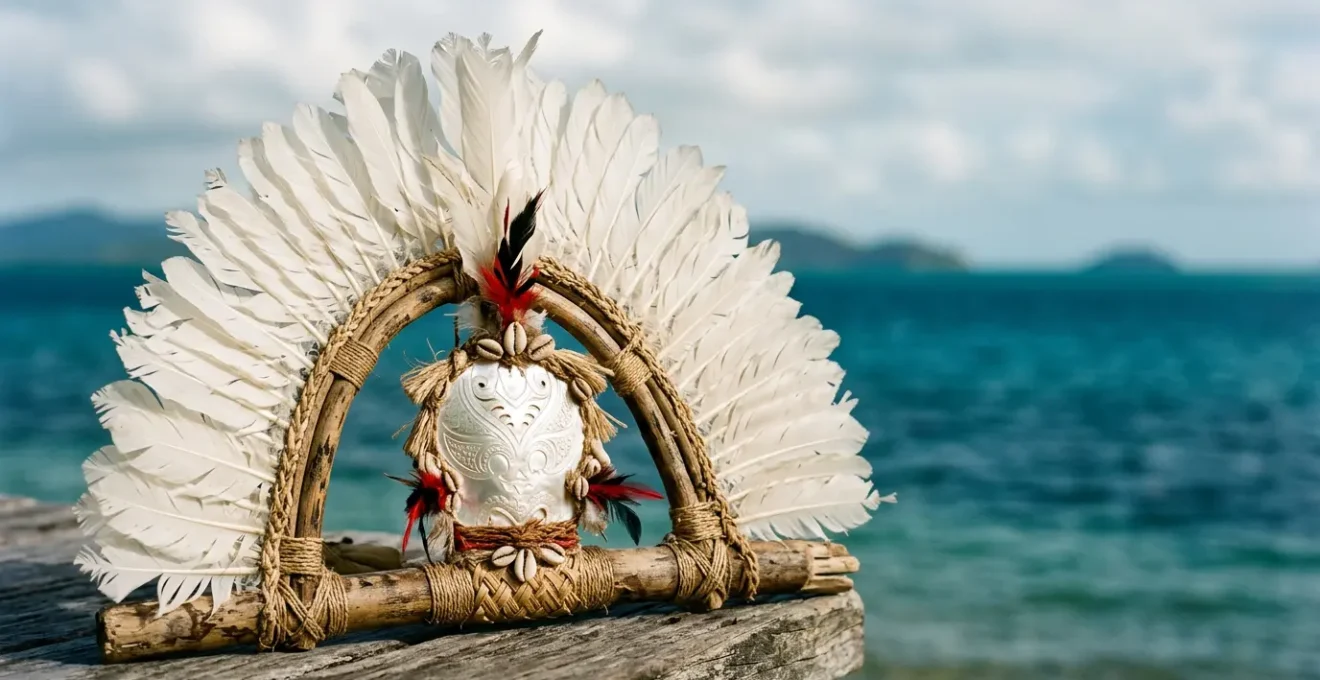
The Torres Strait Islander flag represents a distinct maritime nationhood, not just another Australian Indigenous group.
- Torres Strait Islanders have a unique Melanesian heritage and a culture deeply connected to the sea, which fundamentally differs from the continental focus of Aboriginal cultures.
- Key cultural identifiers, like the absence of the didgeridoo and the specific meaning of the *dhari* headdress, highlight this distinctiveness.
Recommendation: Always refer to « Aboriginal peoples and Torres Strait Islander peoples » separately to acknowledge their unique identities and histories.
You see it flying on government buildings and at cultural events: a flag with horizontal bands of green, blue, and black, featuring a white five-pointed star and a distinctive white headdress. For many visitors and even some Australians, it’s easy to group this emblem with the more widely recognized red, black, and yellow Aboriginal flag. Both represent the First Peoples of this land, but this assumption, while well-intentioned, overlooks a crucial truth. The Torres Strait Islander flag is not just a regional variant; it is the symbol of a people with a distinct history, a unique geography, and a culture shaped by the sea.
Many discussions about Indigenous Australia tend to flatten these two cultures into a single entity. They might mention differences in art or location, but they rarely explore the profound philosophical divergence that stems from one fundamental element: the environment. While mainland Aboriginal culture is intrinsically tied to the vastness of the continent—its deserts, rivers, and forests—Torres Strait Islander identity is forged by the waters, reefs, and islands of a unique archipelago. This isn’t just about living by the coast; it’s about a maritime nationhood with deep connections to Melanesian neighbours in Papua New Guinea and a spiritual worldview centered on « Sea Country. »
This guide moves beyond a simple decoding of the flag’s symbols. It aims to answer the deeper question of *why* this distinction matters. We will explore the specific geography, the protocols surrounding sacred symbols like the *dhari*, the unique sounds of Island music, and the very concept of « Country » as it applies to a sea-faring people. By understanding these differences, you move from passive observation to active respect, recognizing the Torres Strait Islander peoples, the Zenadth Kes, as a culture with its own sovereign identity.
To fully appreciate this unique cultural identity, this article will guide you through the key distinctions that define the Torres Strait Islander people, from their specific geography to their unique artistic expressions and cultural protocols.
Contents: Torres Strait Islander Flag: A Guide to a Unique Culture
- Where Is the Torres Strait: Why Is It Distinct from Mainland Australia?
- Dhari Headdresses: When Is It Appropriate to Wear or Display Them?
- Island Music Styles: How Does It Differ from Didgeridoo Traditions?
- Aboriginal vs Torres Strait Islander: Why You Should Not Use « Indigenous » Lazily?
- Sop Sop and Semur: Where Can You Taste Authentic Island Cuisine?
- 65,000 Years: How Do We Know It Is the Oldest Continuous Culture?
- Desert vs Coast: How Do Cultural Experiences Differ by Location?
- Respecting Country: What Does « Welcome to Country » Actually Mean?
Where Is the Torres Strait: Why Is It Distinct from Mainland Australia?
The Torres Strait is not simply a piece of water; it is a vibrant, strategic, and culturally rich archipelago of over 274 islands nestled between the tip of Cape York in Queensland and the coast of Papua New Guinea. This geography is the first and most fundamental point of distinction from mainland Australia. Unlike the vast, singular landmass of the continent, the Torres Strait is a world of water, reefs, and scattered island communities. This environment has cultivated a unique seafaring culture with a worldview oriented towards the ocean, not the land.
This maritime identity is reinforced by a distinct ethnic heritage. Torres Strait Islanders are predominantly of Melanesian descent, sharing ancestral, cultural, and trade links with the peoples of Papua New Guinea. This connection is visible in their art, music, languages, and social structures, setting them apart from the diverse nations of Aboriginal peoples on the mainland. The region is traditionally divided into five major island groups: the Top Western, Western, Central, Eastern, and Inner Islands, each with its own variations in customs and language.
This geographic position has also shaped their historical experience. While Aboriginal peoples navigated a continent, Torres Strait Islanders mastered the complex currents and seasonal winds of the Strait, becoming expert navigators, traders, and fishers. Their « Country » is not just the land of their island but also the surrounding sea, reefs, and even the stars they used for navigation. This concept of a connected land-and-sea domain is a core element of their identity and sovereignty.
Therefore, when you see the Torres Strait Islander flag, you are not just seeing a regional emblem but the flag of a distinct people whose identity is inextricably linked to this specific archipelago, separate from the Australian mainland in both geography and heritage.
Dhari Headdresses: When Is It Appropriate to Wear or Display Them?
The central symbol on the Torres Strait Islander flag is the *dhari*, a traditional dancer’s headdress. Its inclusion is not merely decorative; it is a powerful symbol of Torres Strait Islander identity, culture, and tradition. However, its significance comes with important cultural protocols. The *dhari* itself is a deeply personal and often sacred object. Traditionally worn only by men during ceremonies and dances, its design can signify a dancer’s clan, status, and connection to specific totems or ancestral stories.
This means that displaying or wearing a *dhari* is not something to be done lightly. For non-Torres Strait Islander people, it is generally considered inappropriate to wear an authentic *dhari*. Doing so would be akin to wearing a sacred religious vestment or a military medal you did not earn. It misappropriates a symbol of immense cultural weight. Displaying the flag, however, is an act of respect and recognition. The flag itself, designed by the late Bernard Namok from Thursday Island, is a unifying symbol for all Torres Strait Islanders.
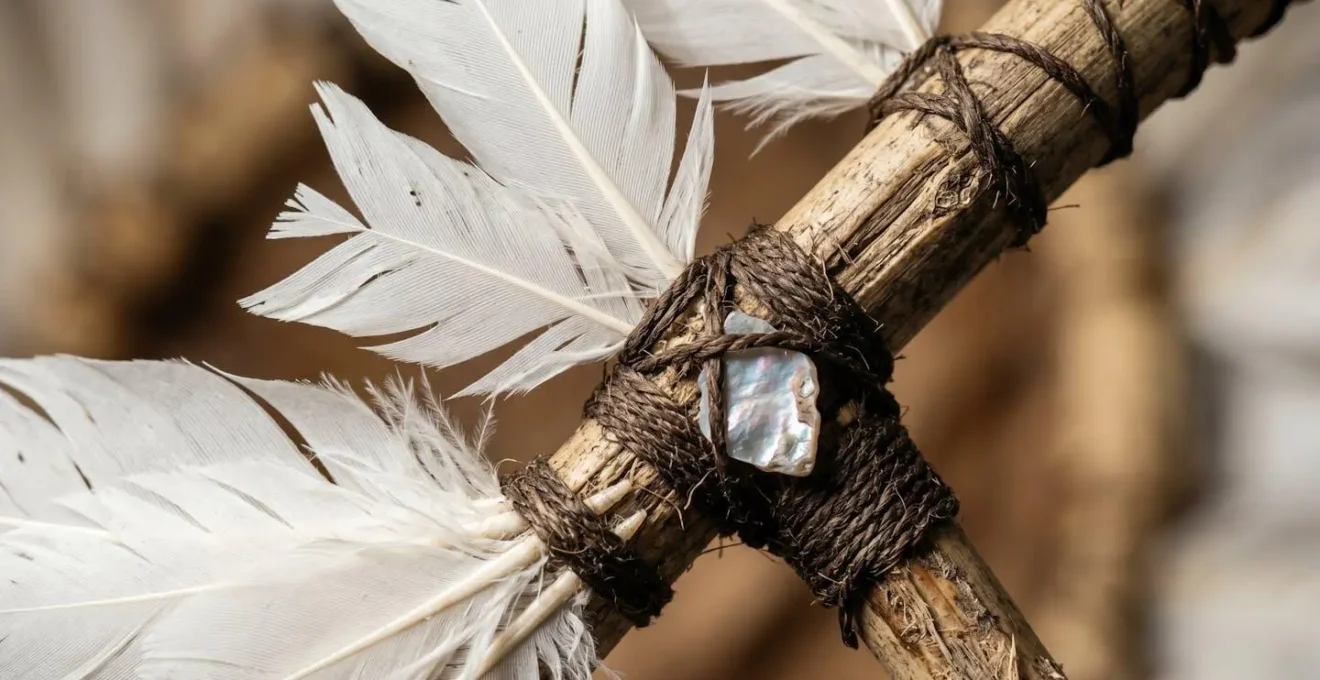
It is also crucial to understand the concept of cultural copyright. The design on the flag is a specific representation, and its ownership is a matter of collective pride and legal protection. As the Torres Strait Island Regional Council clarifies, the community holds the rights to this powerful symbol. This is stated plainly in their official communications:
The dhari on the flag is a specific design by Bernard Namok and is copyrighted. The Torres Strait Island Regional Council and our 15 communities own the copyright of the Torres Strait Islander Flag.
– Torres Strait Island Regional Council, TSIRC Official Statement on Flag Copyright
Using the *dhari* image in commercial products or art without permission is a violation of this cultural ownership. The most respectful way for an outsider to engage with this symbol is by proudly flying the flag, learning its meaning, and understanding the protocols that protect the sanctity of the headdress itself.
Ultimately, the *dhari* represents the strength, unity, and identity of the Torres Strait Islander people. Respecting the symbol means respecting the culture from which it originates.
Island Music Styles: How Does It Differ from Didgeridoo Traditions?
One of the most immediate and recognizable sounds associated with mainland Aboriginal culture is the deep, resonant drone of the didgeridoo. It is a powerful instrument that has become a global symbol of Australian Indigenous heritage. However, this sound is notably absent from the traditional soundscape of the Torres Strait Islands. This musical difference is a clear and tangible example of the distinct cultural paths of the two peoples.
Torres Strait Islander music is characterized by powerful vocal harmonies, rhythmic drumming, and a variety of percussion instruments that reflect their Melanesian connections and island environment. The primary instrument is the *warup* (island drum), a skin-covered, hourglass-shaped drum that drives the rhythm for songs and dances. This is complemented by other instruments that are unique to the region or shared with neighbouring Pacific cultures. As explained by cultural archivists:
The didjeridoo, used in all of mainland Australia, is not used at all across the Torres Strait Islands. Islanders used rattles (or kulup) made from beans or nuts, flutes and pan pipes from Papua New Guinea, and island drums as musical instruments.
– Creative Spirits cultural documentation, Torres Strait Islander culture – Creative Spirits
This distinct instrumentation creates a completely different musical texture. While didgeridoo music is often meditative and drone-based, Torres Strait music is typically structured around group singing, storytelling, and percussive dance rhythms. Songs are a vital part of everyday life, used to pass on history, teach navigation, and celebrate community events. This tradition continues to evolve in the hands of contemporary artists.
Case Study: Seaman Dan – Contemporary Torres Strait Islander musician
Seaman Dan exemplifies the evolution of Torres Strait Islander music. He recorded his first music CD at age 70 and by age 81 had published five CDs. His work demonstrates how contemporary Torres Strait Islander artists fuse traditional chants and rhythms with modern genres, maintaining cultural continuity while adapting to new musical forms and reaching new generations.
So, when thinking about the sound of First Peoples’ cultures in Australia, it is essential to recognize the rich, drum-and-vocal-driven traditions of the Torres Strait as a unique and separate stream from the didgeridoo traditions of the mainland.
Aboriginal vs Torres Strait Islander: Why You Should Not Use « Indigenous » Lazily?
While the term « Indigenous » is often used as a convenient shorthand, its lazy application can erase the profound differences between Aboriginal and Torres Strait Islander peoples. The Australian Constitution itself recognizes them as two distinct groups, and respecting this distinction is a fundamental part of cultural competence. Using the umbrella term without thought is like referring to the peoples of Japan, Korea, and China collectively as « Asian » in a context where their specific national identities are what matter.
The distinction is not about creating division; it is about acknowledging two unique sets of cultures, histories, languages, and identities. As we’ve seen, Torres Strait Islanders are a Melanesian people with a sea-based culture, while Aboriginal peoples are a continent-based people with ancient ties to the Australian landmass. Their languages, like Kala Lagaw Ya, Kala Kawa Ya, and Meriam Mir, are distinct from the hundreds of Aboriginal languages. Their kinship systems, spiritual beliefs, and cultural practices have evolved in different environmental and social contexts.
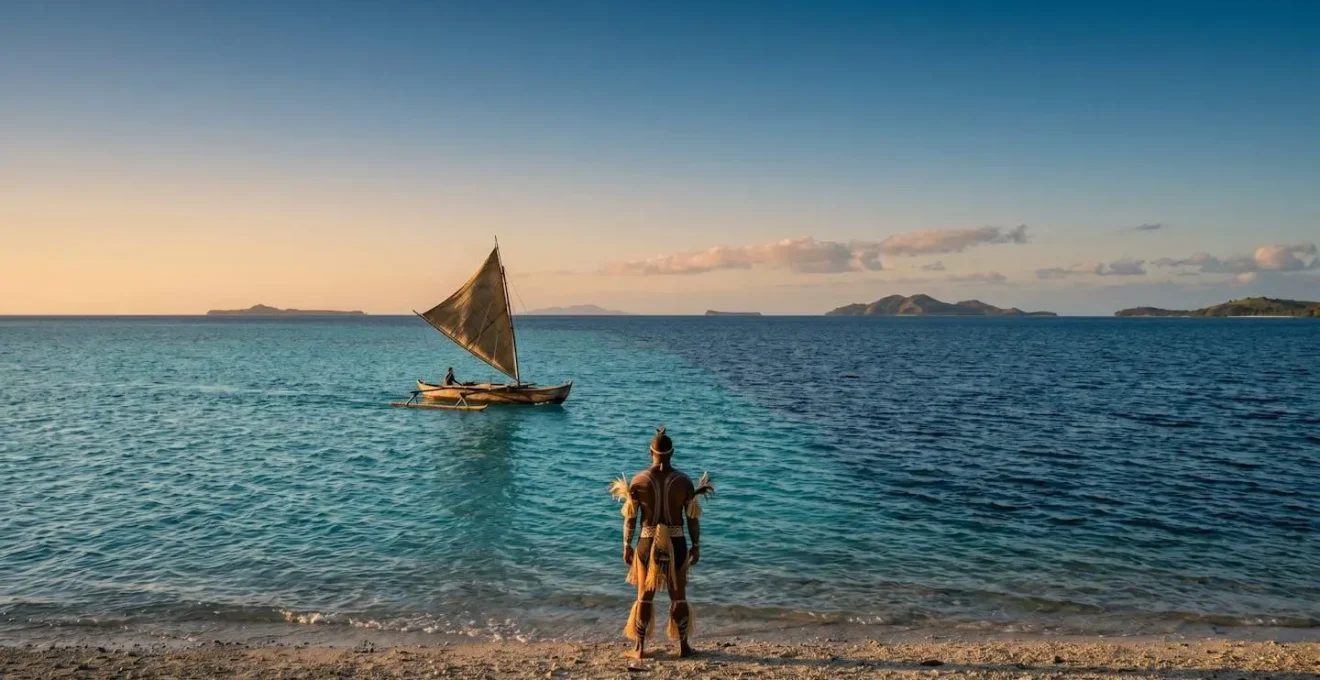
The correct and most respectful approach is to be specific. When referring to both groups, the proper term is « Aboriginal and Torres Strait Islander peoples. » When referring specifically to the people of the Torres Strait, use « Torres Strait Islander people(s) » or their own collective name, « Zenadth Kes. » This precision is not political correctness; it is an act of recognition. It acknowledges that their experiences, particularly post-colonization, have been different and that their aspirations for self-determination are unique to their identity as a separate people.
Failing to make this distinction can perpetuate the misconception that Torres Strait Islanders are a sub-group of Aboriginal Australia, which is factually and culturally incorrect. It diminishes their unique Melanesian heritage and their identity as a distinct maritime nation.
Action Plan: Respectful Terminology Checklist
- Identify the context: Are you talking about one group or both? Be specific whenever possible.
- Use the full phrase: Default to « Aboriginal and Torres Strait Islander peoples » when referring to both groups. Avoid shortening it to « Aboriginal and Islanders » or « ATSI. »
- Capitalize correctly: Always capitalize « Aboriginal, » « Torres Strait Islander, » and « Indigenous » when referring to peoples.
- Avoid conflation: Never use « Aboriginal » as a term to cover Torres Strait Islander peoples.
- Listen and adapt: Pay attention to how people and organizations self-identify and follow their lead. Terminology evolves, and respect means staying current.
By using precise and respectful language, we affirm the unique identity and sovereignty of both Aboriginal and Torres Strait Islander peoples, contributing to a more accurate and inclusive understanding of Australia’s First Peoples.
Sop Sop and Semur: Where Can You Taste Authentic Island Cuisine?
Just as the music and language differ, so does the food. The cuisine of the Torres Strait Islands is a direct reflection of its geography—a bounty of the sea and the tropical gardens cultivated on the islands. It offers a flavour profile distinct from the bush tucker of mainland Australia, incorporating ingredients and cooking styles that highlight its Melanesian and Southeast Asian trade connections. Central to the diet are seafood like fish, turtle, and dugong (hunted sustainably under traditional law), supplemented by yams, taro, coconuts, and bananas grown in island gardens.
Two iconic dishes that embody this culinary heritage are *sop sop* and *semur*. Sop Sop is a delicious, creamy dish made from yams, sweet potatoes, and other root vegetables cooked in coconut milk. It is a staple comfort food, often served at family gatherings and celebrations. Semur, on the other hand, shows the influence of Indonesian trade. It is a rich, savoury beef or chicken stew, slow-cooked with spices like nutmeg and soy sauce, a flavour combination not typically found in traditional mainland Aboriginal cooking.
Finding authentic Island cuisine can be a challenge outside of the Torres Strait itself or communities with a large Islander population, such as parts of Cairns, Townsville, and Brisbane. The best opportunities often arise during cultural festivals and events, such as the Winds of Zenadth Cultural Festival on Thursday Island or NAIDOC Week celebrations across Australia, where communities share their food and culture. As the Torres Strait Island Regional Council notes, food is central to their way of life.
Torres Strait Islander culture includes elements from Australia, Papua and the Austronesian region. Like Aboriginal people of mainland Australia, Torres Strait Islanders are traditionally agriculturalists, and food is supplemented through hunting and gathering. Cooking and hunting are synonymous to the Torres Strait culture and is taught from a young age.
– Torres Strait Island Regional Council, Our Region – TSIRC
These dishes are more than just sustenance; they are a living expression of the islands’ history, trade routes, and deep connection to the land and sea. Tasting them is tasting a piece of Torres Strait Islander identity itself.
65,000 Years: How Do We Know It Is the Oldest Continuous Culture?
The phrase « world’s oldest living continuous culture » is often associated with the 65,000-year history of Aboriginal peoples on the Australian continent. This remarkable timeline is supported by archaeological evidence from sites like Madjedbebe in Arnhem Land. However, applying this same timeline directly to the Torres Strait Islander people as they exist today requires careful clarification, as it can be a source of confusion. The history is intertwined but distinct, shaped by dramatic changes in sea level.
During the last ice age, when sea levels were much lower, the Torres Strait did not exist as a body of water. Instead, it was a land bridge connecting Australia and New Guinea, forming a single landmass known as Sahul. The ancestors of both Aboriginal and Torres Strait Islander peoples inhabited this continent for tens of thousands of years. However, as the ice caps melted, rising sea levels submerged this land bridge. The Torres Strait as we know it today was formed around 8,000 to 12,000 years ago.
The permanent settlement of the islands themselves is more recent. While people have been present in the region for millennia, archaeological evidence indicates that the current islands have been continuously inhabited for at least the last 2,500 years. This timeline doesn’t diminish their ancient heritage; rather, it highlights their incredible adaptation. They are the descendants of the ancient peoples of Sahul who developed a unique and sophisticated maritime culture in response to their changing world. Their story is one of resilience and mastery of a new, water-based environment.
The Torres Strait itself was a land bridge that connected the present-day Australian continent with New Guinea, forming a single landmass called Sahul, or Australia-New Guinea. This land bridge was most recently submerged by rising sea levels at the end of the last ice age glaciation (approximately 12,000 years ago).
– New World Encyclopedia, Torres Strait Islands – New World Encyclopedia
So, while Torres Strait Islanders share an ancient ancestral connection to the continent of Sahul that stretches back millennia, their specific identity as a seafaring people of the Torres Strait archipelago is a more recent, yet equally profound, chapter in human history, defined by their adaptation to the creation of the islands themselves.
Desert vs Coast: How Do Cultural Experiences Differ by Location?
The most profound difference between mainland Aboriginal and Torres Strait Islander cultures stems from their relationship with their environment. For many Aboriginal nations, especially those in the interior, cultural and spiritual life is deeply rooted in the land—the deserts, rock formations, river systems, and forests. The Dreaming stories map the continent, tracing the journeys of ancestral beings across vast terrestrial landscapes. « Country » is a living, breathing entity, but it is primarily experienced as land.
For Torres Strait Islanders, this concept is radically different. Their world is defined by the sea. This is not just a coastal existence; it is a fully integrated maritime identity where the ocean is not a boundary but the very centre of life. This worldview is encapsulated in the concept of « Sea Country. » It extends beyond the islands themselves to encompass the surrounding waters, the complex reef systems, the marine life, the seabeds, and even the sky above. The sea is the source of food, the highway for travel and trade, and the wellspring of spiritual and cultural inspiration.
This fundamental difference shapes every aspect of the culture. As anthropological records highlight, the sea is the organizing principle of their society. This perspective is critical to understanding their identity.
Given that 91 percent of their traditional area is open ocean, the sea is central to the Islander sense of identity having determined their way of life, subsistence practices, and ceremonial traditions. The sea remains the source of inspiration for many songs and stories and is regarded with great respect.
– New World Encyclopedia anthropological documentation, Torres Strait Islands – New World Encyclopedia
This sea-centric worldview manifests in their traditions. Their totems are often marine animals like the dugong, turtle, and crocodile. Their traditional calendar is governed by the cycles of the moon, the tides, and the seasonal patterns of winds and marine life. Their art, songs, and dances tell stories of the sea, of legendary voyages, and of the spiritual beings that inhabit the reefs and waters. In contrast, many desert cultures’ lore and laws are tied to waterholes, songlines that cross hundreds of kilometers of arid land, and the behaviour of terrestrial animals.
Understanding this is to understand the soul of Torres Strait Islander culture. It is a culture born of, and sustained by, the sea, making it a truly distinct maritime nation within the wider Australian context.
Key Takeaways
- Torres Strait Islanders are a distinct Melanesian people whose culture is centred around the sea (« Sea Country »), differing from the land-based focus of mainland Aboriginal cultures.
- Key cultural markers like the *dhari* headdress and drum-based music (without the didgeridoo) are unique to the Torres Strait and carry specific cultural protocols.
- Using the full, specific term « Aboriginal and Torres Strait Islander peoples » is an essential act of respect that acknowledges their separate and sovereign identities.
Respecting Country: What Does « Welcome to Country » Actually Mean?
The practice of « Welcome to Country » has become a familiar and important protocol at events across Australia. It is a ceremony performed by Traditional Owners to grant permission and welcome visitors to their traditional lands. For mainland Aboriginal nations, this welcome is tied to a specific area of land. But how does this concept translate to a people whose domain is as much water as it is land? For Torres Strait Islanders, « Country » is an expansive concept of « Sea Country, » and respecting it requires a shift in perspective.
When a Torres Strait Islander gives a Welcome, they are not just welcoming you to a specific island. They are welcoming you into a complex, interconnected system of land, sea, reef, and sky that their families have been custodians of for generations. It is an acknowledgement that you are entering their traditional waters and homelands, a domain with its own laws, stories, and spiritual significance. As described in comprehensive encyclopedias:
The waters and region of the Torres Strait are significant to the Torres Strait Islander peoples, who identify themselves by their home islands. In addition to the dozens of islands in the strait, there are also hundreds of islets, cays, reefs, and sandbanks, which are all traditionally named, owned, and used by the Torres Strait Islander peoples.
– Britannica Encyclopedia, Torres Strait Islander peoples – Britannica
Respecting Country in the Torres Strait means understanding that the reefs where you fish, the waters you sail, and the beaches you walk on are all part of someone’s ancestral heritage. It involves recognizing their inherent connection and authority over this maritime domain. This is why protocols around fishing, visiting certain sacred sites (which may be reefs or cays, not just landforms), and navigating traditional waters are so important. An « Acknowledgement of Country » in this context should acknowledge the Traditional Owners of the specific island and the surrounding Sea Country.
By understanding « Welcome to Country » through the lens of a sea-faring people, you move beyond a token gesture to a genuine act of respect for the deep, enduring, and sovereign connection Torres Strait Islanders have with their unique and beautiful home.