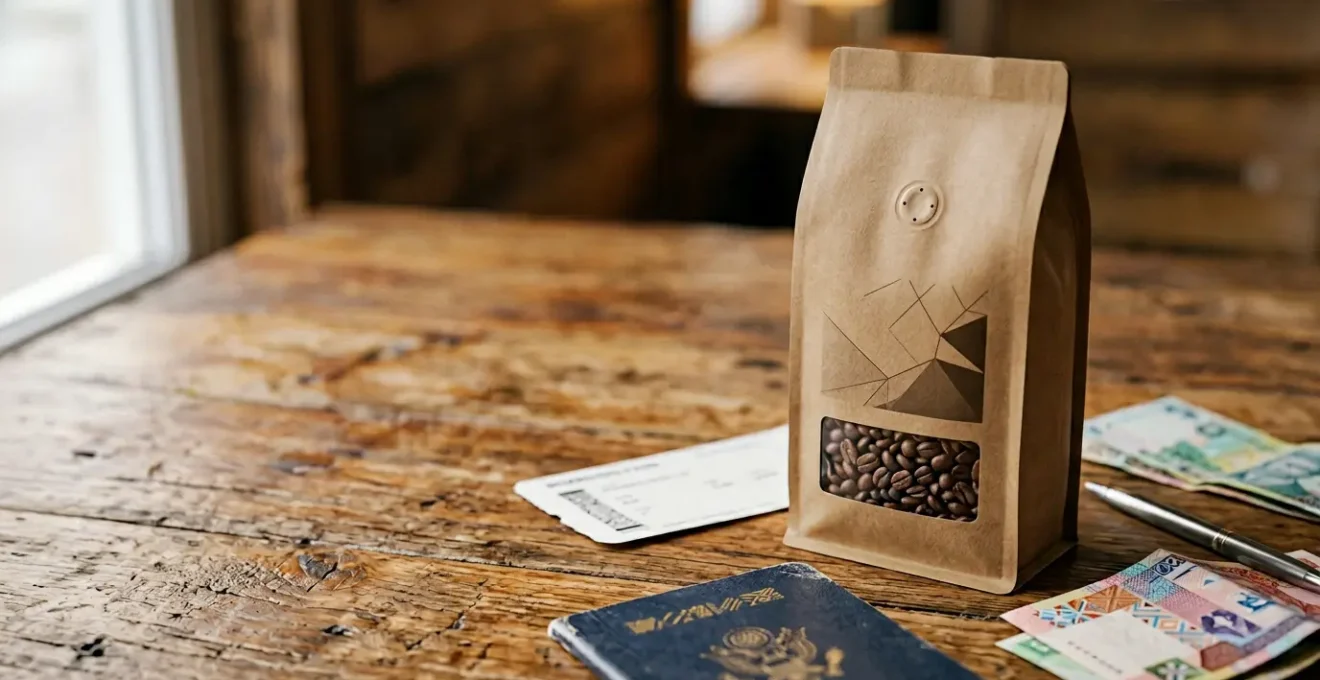
Contrary to common travel anxiety, bringing roasted coffee beans into the UK is perfectly legal and straightforward. The key isn’t luck at the customs gate, but understanding one simple rule: roasted coffee is a ‘processed plant product’ with low biosecurity risk. This guide explains the official regulations, the £390 personal allowance, and the exact steps to ensure your souvenir beans arrive home without issue.
The moment of truth for many returning tourists is the customs hall. You’ve just had an incredible trip, perhaps through Australia’s vibrant coffee scene, and your suitcase contains a few carefully chosen bags of specialty coffee beans. As you approach the « Goods to Declare » channels, a familiar anxiety sets in. You recall news stories of travellers facing hefty fines for seemingly innocent items, like the infamous « sandwich mistake » that can lead to thousands in penalties. This fear often leads to confusion and worry over a simple, enjoyable souvenir.
The common advice is often vague: « declare everything » or « it depends on the officer. » This uncertainty is unnecessary. The reality is that UK customs and biosecurity regulations are based on clear, logical principles. When it comes to coffee, the rules are not a matter of chance but of scientific classification. The core of the issue is not about food in general, but about managing phytosanitary risk—the danger of introducing foreign pests and diseases.
But what if the key to navigating customs with complete confidence wasn’t about memorising a long list of prohibited items, but about understanding a single, powerful distinction? The fundamental difference between a high-risk, fresh agricultural item and a low-risk, processed, shelf-stable plant product. Roasted coffee falls squarely and safely into the latter category.
This guide is designed to act as your official briefing. We will dismantle the myths and provide the clear, actionable information you need, not just on the legality of bringing beans back, but on how to choose, pack, and declare them like a seasoned professional. We will cover everything from packaging and roast dates to the specifics of customs duty, ensuring your liquid souvenir makes it from the roaster to your cup without a single issue.
To navigate this topic with clarity, this guide is structured to walk you through every step of the process, from the initial purchase decision to walking confidently through the UK customs channel.
Contents: Your Complete Guide to Importing Coffee as a Souvenir
- Valve Bags vs Sealed Tins: Which Keeps Beans Fresh in Cargo Hold?
- Single Origin vs Blend: Which Is Better for a Souvenir Gift?
- Roast Date Importance: Why Buy Beans Roasted Less Than 2 Weeks Ago?
- Why Does Geisha Coffee Cost $15 a Cup in Sydney?
- Grind Size for Travel: Should You Buy Whole Beans or Pre-Ground?
- Customs Duty and VAT: How Much Will You Pay When the Wine Arrives in the UK?
- The « Sandwich Mistake » That Could Cost You $2,664 AUD at Customs
- Flat White vs Latte: What Is the Difference in Milk Texture?
Valve Bags vs Sealed Tins: Which Keeps Beans Fresh in Cargo Hold?
Once you’ve established that roasted coffee is a permissible item, the next priority is protecting its quality during transit. The main challenge in air travel is the significant pressure change in the cargo hold. Freshly roasted coffee beans continuously release carbon dioxide (CO2) in a process called degassing. If this gas is trapped in a completely sealed package, the bag can expand and even burst, leading to a messy and disappointing arrival.
This is where the one-way valve, commonly seen on specialty coffee bags, becomes critical. This is not just a marketing gimmick; it’s a functional piece of engineering designed to let CO2 escape without allowing oxygen to enter. Oxygen is the primary enemy of freshness, causing the beans’ delicate aromatic compounds to oxidize and go stale. According to valve manufacturers, these devices are designed to operate at a low pressure release threshold of around 3 millibars, making them highly effective during flight.
A sealed tin, while offering excellent protection against physical damage and oxygen, does not allow for degassing. This makes it a better option for beans that are at least a week or two post-roast, when the most aggressive phase of CO2 release has passed. For beans roasted just days before your flight, a valve bag is unequivocally superior for air travel.
For maximum protection, especially if your beans are in a non-valved bag, a simple ‘double-bagging’ technique is advisable. Place the original coffee bag inside a larger, resealable plastic bag. Don’t seal the outer bag completely; leave a small opening. This creates a buffer zone, containing any potential spills if the primary bag were to fail, while still allowing for pressure changes. Finally, pack the coffee in the middle of your suitcase, insulated by soft clothing, to protect it from temperature fluctuations in the cargo hold.
Single Origin vs Blend: Which Is Better for a Souvenir Gift?
Choosing coffee as a souvenir is about more than just flavour; it’s about bringing back a story. The choice between a single origin and a blend is a choice between two different kinds of stories. As a gift, one is not inherently better than the other, but they serve different purposes and suit different recipients. Understanding this distinction ensures your gift will be truly appreciated.
A single origin coffee comes from a specific farm, producer, or region. Its story is one of ‘terroir’—the unique combination of soil, climate, and processing that gives the beans their distinct character. This is the perfect gift for a coffee enthusiast who enjoys exploring unique flavour profiles and appreciates the narrative of a specific place you visited. However, these coffees can be less forgiving to brew, sometimes requiring specific equipment like a pour-over dripper to truly shine.
An espresso blend, on the other hand, is a curated creation by the roaster. Its story is one of ‘artistry’—a craftsman combining beans from different origins to achieve a balanced, consistent, and often more versatile flavour profile. Blends are typically designed to be delicious as an espresso and to pair well with milk. This makes them a more forgiving and crowd-pleasing option, ideal for someone who primarily drinks espresso or milk-based coffees like lattes and flat whites.
The following table, based on an analysis of the UK coffee market, breaks down the key characteristics to help you decide.
| Characteristic | Single Origin | Espresso Blend |
|---|---|---|
| Story & Origin | Specific farm, region, processing method – gift of ‘terroir’ | Roaster’s curated flavor profile – gift of ‘artistry’ |
| Brewing Forgiveness | May require specific equipment and skill to extract properly | Balanced and forgiving across multiple brewing methods |
| Conversation Value | High – rare origin from visited region creates compelling travel story | Lower – less geographic connection to travel experience |
| Best For | Coffee explorers, filter/pour-over enthusiasts | Espresso drinkers, milk-based coffee lovers |
Roast Date Importance: Why Buy Beans Roasted Less Than 2 Weeks Ago?
Perhaps the single most important piece of information on a bag of specialty coffee is not the origin or the flavour notes, but the roast date. Coffee is a fresh product, and its flavour evolves dramatically after roasting. Immediately after roasting, beans release a large volume of CO2, which can interfere with brewing and create a harsh, gassy taste. After this initial degassing period, the coffee enters its peak flavour window.
This is where your travel timeline becomes crucial. According to research from specialty coffee roasters, most beans reach their peak between 7-21 days post-roast. Buying a bag that was roasted three weeks ago means you’ve already missed its best moment. Conversely, buying one roasted the day you fly home means it will still be in its aggressive degassing phase when you want to start brewing it.
The optimal strategy is to purchase beans with your consumption schedule in mind. To do this, engage with the barista or roaster. Explain your situation: « I’m flying home in two days and won’t be brewing this for another week. Which of your coffees will be peaking around that time? » This allows them to guide you to a bag roasted just a few days prior, ensuring it will enter its optimal window right when you’re ready for it.
As a general rule, you can create a ‘freshness portfolio’. If you plan to drink some coffee immediately upon return, look for a bag roasted 7-10 days ago. For coffee you intend to enjoy in the following weeks, buy bags roasted just 1-2 days before your departure. Remember that darker roasts degas more quickly and are often best after 3-7 days, while lighter, filter-style roasts develop more slowly and can benefit from a rest of 5-10 days or more.
Why Does Geisha Coffee Cost $15 a Cup in Sydney?
During your travels in a mature coffee market like Australia, you may encounter a coffee variety called Geisha (or Gesha) with a shockingly high price tag. Seeing it listed for $15 per cup or over $100 for a small bag can be confusing. This isn’t just clever marketing; it’s a reflection of extreme rarity, exceptional quality, and intense global demand. Understanding its value is key to deciding if it’s the right high-end souvenir.
The Geisha variety is an Ethiopian heirloom plant that was rediscovered in Panama in the early 2000s. It is notoriously difficult to cultivate, producing very low yields and thriving only in specific high-altitude microclimates. What makes it famous are its extraordinary flavour notes: intensely floral (like jasmine and bergamot), with a complex, tea-like body and delicate fruit acidity. It is unlike any other coffee.
This unique profile has led to fierce competition at international auctions. The world’s top roasters bid against each other for the best micro-lots, driving prices to astronomical levels. For context, one prize-winning Panamanian Geisha was sold at the 2025 Best of Panama auction for a record price of $30,204 per kilogram. That cost is passed down through the supply chain to the final cup. When you buy Geisha, you are paying for this unparalleled sensory experience and its prestigious pedigree.
However, this high value also attracts counterfeits. If you decide to invest in Geisha as a souvenir, it is crucial to verify its authenticity. A legitimate Geisha will always come with a high degree of transparency regarding its origin.
Your Action Plan: Authenticating a Geisha Coffee Purchase
- Farm Provenance: Look for specific, famous farm names on the packaging, such as Hacienda La Esmeralda, Lamastus Family Estates, or Ninety Plus.
- Processing Details: The bag should list detailed processing information, for example, ‘Washed’, ‘Natural’, or more exotic methods like ‘Carbonic Maceration’.
- Traceability: Ask the roaster for documentation or information about the specific lot. They should be able to trace it back to the farm and auction.
- Price Check: Be skeptical of cheap Geisha. Expect to pay at least $50-$100 AUD for a 250g bag for a quality lot. If it seems too good to be true, it is.
- Score Verification: High-quality Geisha is often accompanied by a cupping score from the Specialty Coffee Association (SCA). Look for scores of 90 points or higher.
Grind Size for Travel: Should You Buy Whole Beans or Pre-Ground?
From a customs and biosecurity perspective, there is no difference between whole bean and pre-ground coffee; both are considered permitted processed goods. From a quality perspective, however, the difference is night and day. The single most effective way to preserve the flavour of your expensive coffee souvenir is to buy it as whole beans and grind it yourself only moments before brewing.
Grinding coffee dramatically increases the surface area exposed to oxygen, causing it to go stale at an accelerated rate. While a whole bean can retain its character for several weeks after roasting, industry analysis reveals that pre-ground coffee can lose up to 60% of their aroma and flavor within just 15-30 minutes of grinding. Buying pre-ground coffee is like opening a bottle of fine wine and leaving it on the counter for a week before drinking it. By the time you get it home, its most vibrant and delicate notes will have vanished.
Investing in a small, portable hand grinder is the best travel accessory for any serious coffee lover. This allows you to bring back whole beans, preserving their full potential until you are ready to unlock it. If packing a grinder is not an option, the last resort is to ask the roaster to grind the beans for you. If you must do this, ask for a coarser grind. A coarser setting creates less surface area than a fine espresso grind, which will slow the staling process, albeit only slightly.
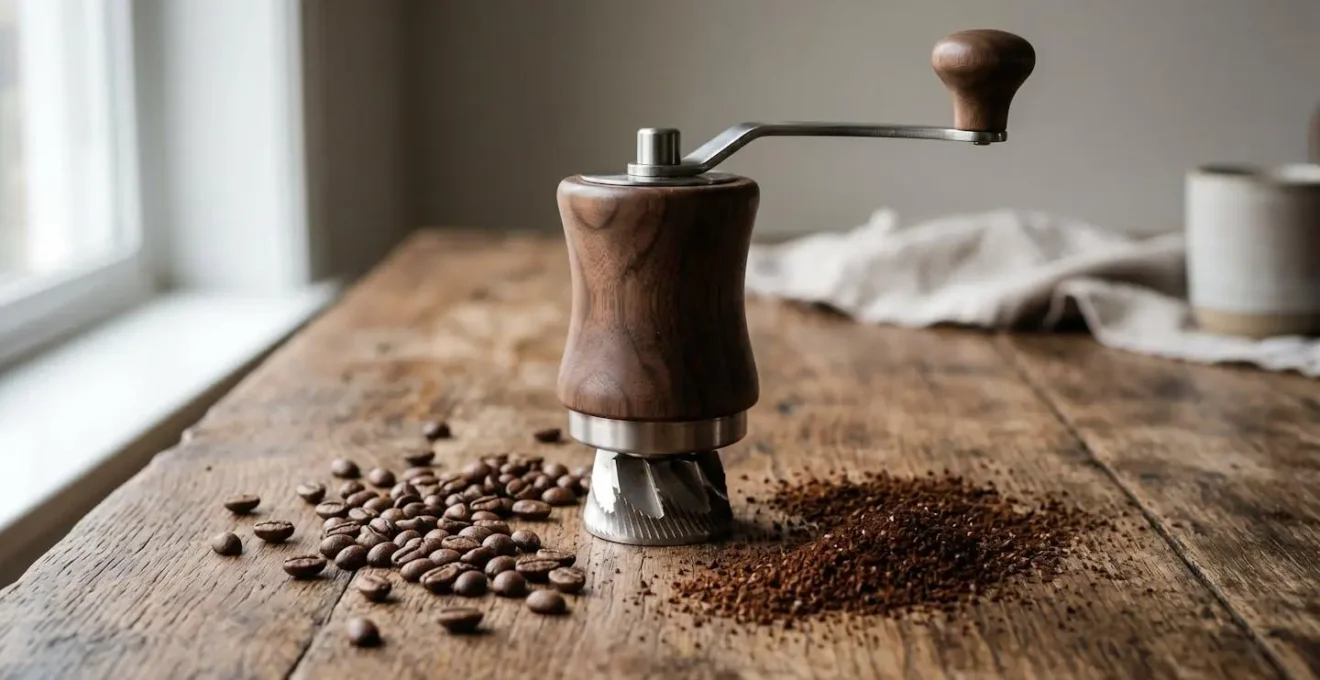
The market for travel grinders is diverse, catering to different needs from the minimalist backpacker to the flavour purist who doesn’t mind a bit of extra weight.
| Grinder Type | Size/Weight | Best For | Grind Quality |
|---|---|---|---|
| Ultra-Portable Manual (e.g., Porlex Mini) | Compact, fits in carry-on pocket | Backpackers, minimalist travelers | Consistent burr grind, requires hand effort |
| High-Performance Manual (e.g., Comandante) | Medium size, premium build | Flavor purists willing to hand-grind | Superior consistency, professional-grade burrs |
| Portable Electric | Larger, requires power source | Convenience-focused travelers with luggage space | Fast and consistent, plug-dependent |
| Coarse Pre-Ground (Preservation Tactic) | No equipment needed | Emergency option when grinder unavailable | Less surface area = slower staleness than fine grind |
Customs Duty and VAT: How Much Will You Pay When the Wine Arrives in the UK?
This is the central question that causes the most anxiety, and the answer is refreshingly simple for most travellers. There are two separate concepts to understand: biosecurity (controlled by DEFRA/APHA) and customs duty/VAT (controlled by HMRC). As we’ve established, roasted coffee passes the biosecurity check with ease. The customs duty check is purely about the monetary value of the goods you are bringing into the country.
The UK has a generous ‘personal allowance’ for goods brought in from any country outside the EU. According to UK customs regulations, you can bring in goods worth up to a personal allowance for goods of £390 without paying any duty or tax. This is your total allowance for all goods you have purchased abroad, including souvenirs, gifts, and clothing. It is crucial to note that this is separate from the specific allowances for alcohol and tobacco.
For the average tourist buying a few bags of coffee, the total value will almost certainly fall well below this £390 threshold. For example, four 250g bags of high-end specialty coffee might cost around £80-£100 total. As long as the total value of all the goods you’ve bought and are bringing back is under £390, you owe no duty or VAT on your coffee.
This leads to the declaration process. If your total goods are under the £390 limit, you can confidently walk through the Green Channel (« Nothing to Declare ») at customs. There is no requirement to declare permitted, processed food items for personal use that fall within your personal allowance. Should you be stopped for a random spot check, the process is straightforward. Simply state: « I have a few bags of roasted coffee for personal use, with a total value of approximately [state the value]. » It is wise to keep your receipts handy to prove the value if asked. Do not attempt to bring in green (unroasted) beans unless you are an experienced importer, as these are considered live plant material and are subject to much stricter phytosanitary controls.
The « Sandwich Mistake » That Could Cost You $2,664 AUD at Customs
The fear many travellers have is rooted in viral stories of individuals receiving massive fines for undeclared food. The most famous examples often involve Australia’s strict biosecurity laws, where a simple ham and cheese sandwich or a piece of fruit forgotten in a backpack can indeed lead to fines like the A$2,664 penalty. It is vital to understand why this happens and why your bag of roasted coffee is completely different.
These fines are not arbitrary punishments. They are levied to protect a country’s agricultural industry from devastating foreign pests and diseases. Fresh fruit, vegetables, meat, and dairy products can all act as vectors for these threats. A piece of fruit could carry fruit fly larvae, and meat products could carry diseases like foot-and-mouth. This is a matter of high phytosanitary risk. When you fail to declare such items, you are perceived as potentially endangering an entire ecosystem and national economy.
Roasted coffee, however, exists on the opposite end of the risk spectrum. The roasting process involves heating the beans to temperatures of around 200°C (400°F). This high-heat, sterilizing process eliminates any potential live pests, pathogens, or seeds that could germinate. It transforms the raw, green bean (a live seed) into an inert, shelf-stable food product.
This distinction is officially recognised by import authorities. As a customs broker, I rely on these precise classifications. The UK government’s own guidelines provide the ultimate reassurance. As the official guidance for food imports states:
Roasted coffee is a low-risk, processed, shelf-stable plant good.
– UK Customs Authority, GOV.UK Food Import Guidelines
This single sentence is the core of your confidence. Unlike the sandwich containing fresh or processed meat and dairy, your roasted coffee beans are classified as safe. You are not breaking the rules; you are operating well within them. This knowledge transforms you from an anxious tourist into an informed traveller who understands the ‘why’ behind the customs regulations.
Key Takeaways
- Roasted coffee is a permitted ‘processed plant product’ in the UK, carrying low biosecurity risk.
- You can bring goods worth up to £390 into the UK for personal use without paying any customs duty or VAT.
- For maximum quality, buy whole beans with a roast date that aligns with your travel timeline to enjoy them during their peak freshness window (7-21 days post-roast).
Final Consideration: Matching the Bean to its Ultimate Purpose
Now that you are equipped with the knowledge to select, pack, and legally import your coffee, there is one final, practical consideration: how will the coffee be consumed back home? The difference in milk texture between a flat white and a latte, for example, is subtle but significant, and it influences which beans will perform best. A flat white has a thin layer of velvety microfoam, while a latte has a deeper layer of foam. This distinction matters when choosing a coffee souvenir.
Your goal is to bring back a coffee that will shine in its intended application. If you or the person you’re buying for primarily drinks coffee with milk, this should be the guiding factor in your selection. Many delicate, acidic, and floral single-origin coffees (like a fine Ethiopian Yirgacheffe or a prized Geisha) have their subtle complexities completely overwhelmed by milk. Using such a bean for a latte is a waste of its unique character and your money.
Instead, for milk-based drinks, you should seek out beans with flavour profiles robust enough to cut through the richness of the milk. Look for tasting notes of chocolate, nuts, and caramel, with a low acidity and a full body. Espresso blends are often specifically designed for this purpose, and single origins from countries like Brazil or Colombia frequently exhibit these crowd-pleasing characteristics. The best approach is to consult the expert. Tell the roaster, « I mostly drink flat whites at home. Which of your beans would you recommend for that? » They can guide you to a coffee that is guaranteed to create a delicious, balanced cup when you get it home.
Before you buy, you can even conduct a ‘milk test’ at the café. Try their recommended bean as both an espresso and a flat white. If you enjoy both, you have found a versatile and worthy souvenir that will successfully complete its journey from a distant roastery to your kitchen table.
Armed with this knowledge, you can now confidently select and bring back a truly exceptional coffee souvenir. The next step is to explore the local roasters at your destination and put this guidance into practice, transforming a moment of potential anxiety into a rewarding part of your travel experience.